Derek Chisora Offers to Face Deontay Wilder on the Fury-Joshua Card — But the Rematch Would Lower the Stakes
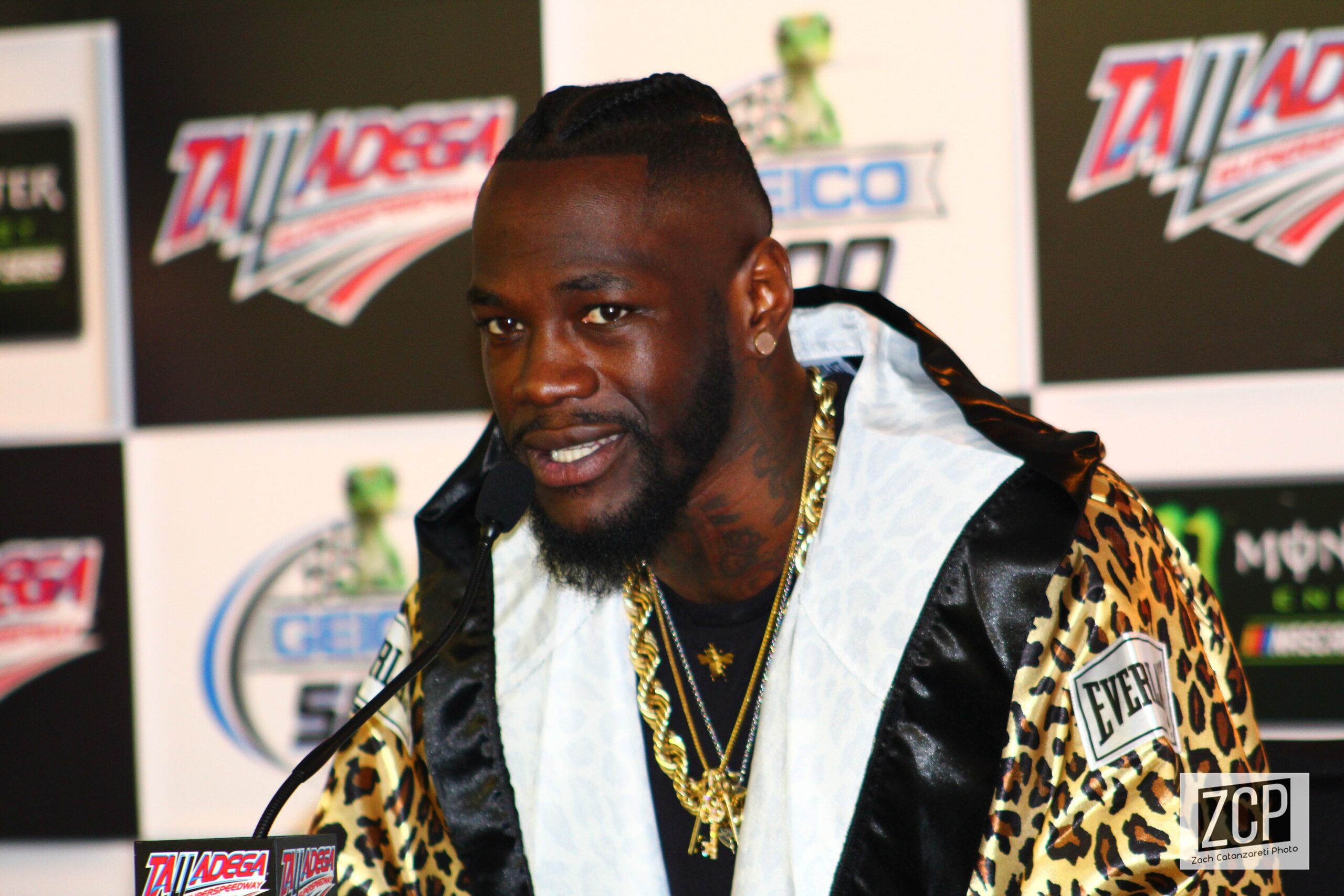
Heavyweight boxer Deontay Wilder posing at a public event in 2018.Image: Zach Catanzareti Photo / CC BY-SA 2.0 / Wikimedia Commons
Derek Chisora has offered to step into one of the most recognizable fights available if the Tyson Fury–Anthony Joshua undercard needs an emergency replacement.
Deontay Wilder was announced to face unbeaten Jai Opetaia in a featured heavyweight fight on the December 11 card at Principality Stadium in Cardiff. That matchup is now uncertain. BoxingScene and Boxing 247, citing boxing reporter Dan Rafael, reported on November 17 that Opetaia had withdrawn for an undisclosed reason and that organizers hoped to keep Wilder on the event with another opponent.
The reported withdrawal has not been publicly confirmed by Opetaia, his team or event organizers. Netflix also continued to list Wilder against Opetaia on its published fight card as of November 17. Until one of the involved parties addresses the situation or an updated lineup is released, Opetaia’s exit must be treated as unconfirmed.
Chisora has still made his position clear. According to Boxing News, he told FightHype that he would face Wilder in an eight-round rematch on December 11 if he received an offer he considered acceptable.
It is a practical proposal. Chisora is familiar to British boxing audiences, already shares a recent history with Wilder and could help preserve another major heavyweight name on the Fury-Joshua card.
But practical does not automatically mean compelling.
Wilder already defeated Chisora by split decision in April. Replacing an unbeaten opponent with a veteran Wilder beat eight months earlier would keep the card intact while reducing the amount of new information the fight could provide.
Chisora Has Offered a Solution, Not Secured the Fight
Chisora’s willingness gives organizers an obvious option if Opetaia’s reported withdrawal is confirmed. There would be no need to manufacture a rivalry or explain why the matchup matters. Wilder and Chisora have already shared a competitive 12-round fight, and the split decision gives Chisora a straightforward argument for another opportunity.
That does not mean the rematch is close to being finalized.
No promoter, broadcaster, fighter representative or event organizer has announced Wilder-Chisora II. No replacement opponent has been officially named, and there has been no public confirmation that organizers have accepted—or even formally pursued—Chisora’s proposed eight-round format.
The financial and contractual details are also unknown. No purse, contracted weight or other terms for a possible rematch have been disclosed. It is equally unclear whether Wilder is guaranteed another opponent on the card or whether organizers are considering fighters beyond Chisora.
Those gaps matter because boxing frequently turns public interest into assumed agreement long before contracts are signed.
At this stage, Chisora has offered his availability. That is the story.
Whether the offer becomes an actual fight depends first on official confirmation of Opetaia’s status and then on whether Wilder, Chisora and the organizers can reach terms. Until those steps occur, Wilder-Chisora II remains a possibility rather than a booked bout.
Opetaia Offered a Test the Rematch Cannot Reproduce
The original Wilder-Opetaia matchup carried obvious sporting interest because it placed Wilder against someone new and unbeaten.
Netflix lists Opetaia at 31-0 and Wilder at 45-4-1. Whatever questions existed around how the matchup might unfold, the central attraction was clear: Wilder would be facing a fighter who had not officially lost.
That gave the contest significance beyond having another famous heavyweight on a major card. It offered an opportunity to measure Wilder against an undefeated opponent rather than return him to a matchup the public had already seen.
A victory over Opetaia would not have answered every question surrounding Wilder’s remaining place in heavyweight boxing, but it would have added a fresh result to the discussion. The matchup created uncertainty because the two fighters did not have an existing result telling the audience how their rivalry had previously ended.
Chisora cannot offer that same uncertainty.
He can offer familiarity, name recognition and a legitimate desire to reverse a close decision. Those qualities are valuable when organizers need a replacement on relatively short notice. They do not transform the rematch into the same kind of test that the original matchup represented.
This is not an argument that Chisora would be harmless or that another Wilder victory would be guaranteed. Their first fight was competitive enough for one judge to score it for Chisora. The issue is that the rematch would revisit an answered question instead of introducing a new one.
Opetaia represented discovery.
Chisora represents continuity.
For an undercard trying to preserve its commercial appeal, continuity may be enough. For anyone trying to determine what Wilder can still accomplish against unfamiliar opposition, it is a clear reduction in stakes.
Wilder Already Answered the Chisora Question in April
Wilder defeated Chisora by 12-round split decision at London’s O2 Arena on April 4, 2026.
According to BBC Sport, two judges scored the fight for Wilder, 115-111 and 115-113, while the third scored it 115-112 for Chisora. Those cards establish two important points at the same time: Wilder officially won, and Chisora was competitive enough to persuade one judge that he deserved the decision.
That closeness gives Chisora a credible reason to want the rematch. He does not need to claim that the first fight was a complete mismatch or that he was denied any opportunity to compete. He can point to the split decision and argue that another attempt could produce a different result.
The official record still belongs to Wilder.
That distinction should not disappear simply because the card may need another opponent. Wilder has already gone 12 rounds with Chisora and received the victory. If he faced him again in December, the fight would take place only eight months after their first meeting.
Chisora’s proposed eight-round limit would also make the sequel shorter than the original. That could create a different contest, but it would not necessarily create a more revealing one. Instead of giving Chisora another 12-round opportunity to overturn a narrow defeat, the proposal would compress the rematch into a format with four fewer rounds.
The first fight was close enough to sell again.
It was not unresolved enough to pretend that nothing was settled.
That is why a second meeting would preserve Wilder’s activity more effectively than it would advance his case. If Wilder won again, he would have repeated a result already on his record. If Chisora reversed the decision, the rematch would immediately become significant, but the value would come from the upset rather than from the original logic of the replacement.
The Card Must Decide Whether It Is Testing Wilder or Protecting His Name
The possible change exposes a larger question about what Wilder’s presence on the Fury-Joshua undercard is supposed to accomplish.
Against Opetaia, Wilder would be facing an undefeated opponent he had never fought. The matchup could test how much he still has against someone bringing a clean record and no previous defeat to him.
Against Chisora, Wilder would be facing a familiar veteran he defeated recently. The rematch could still be competitive, especially given the first set of scorecards, but the standard for evaluating Wilder would become less clear.
Would another decision over Chisora prove that Wilder remains relevant against the division’s more demanding opposition? Would an eight-round victory tell the audience more than the 12-round result from April already did?
Probably not.
That does not make the rematch worthless. Major events need dependable fighters, recognizable names and matchups that can be explained quickly when plans change. Chisora is available, publicly willing and already connected to Wilder through a competitive fight. From an event-management perspective, he may be one of the simplest credible solutions.
The sporting calculation is different.
Keeping Wilder on the card would preserve star power. Replacing Opetaia with Chisora would reduce the originality of the test. The event could retain another established heavyweight attraction, but it would lose the central question created by matching Wilder with an unbeaten opponent.
That trade may be unavoidable if Opetaia is no longer participating and stronger alternatives are unavailable. There is not enough confirmed information to determine that yet. Organizers have not announced who else may be under consideration, and Opetaia’s reported departure has not received official confirmation.
The next meaningful development must therefore come from the people involved.
A statement from Opetaia, his team or the event organizers would establish whether the original matchup is actually off. An updated card from Netflix or the promoters would clarify whether Wilder remains part of the December 11 event. If Chisora is selected, confirmation of the opponent and scheduled number of rounds would allow the rematch to be evaluated as a real fight rather than an offered solution.
Until then, the proposal should be judged for what it is: logical, marketable and limited.
LET’S TALK ABOUT IT
If Jai Opetaia’s reported withdrawal is officially confirmed, should organizers accept Derek Chisora’s offer to keep Deontay Wilder on the Fury-Joshua card?
And after Wilder’s split-decision victory in April, would an eight-round rematch give Chisora a meaningful chance at redemption—or lower the stakes too far by replacing an unbeaten opponent with someone Wilder has already defeated?
Outlets cited in this story
- BoxingScene
- Boxing News
- Boxing 247
- BBC Sport
Spot an error? Send a correction.
More on Derek Chisora
All 3 Derek Chisora stories →
Deontay Wilder Has Five British Volunteers — Each One Brings a Different Risk
Deontay Wilder needs a new opponent, and Britain’s heavyweight division has not been shy about offering options. Jai Opetaia has withdrawn from his scheduled fight with Wilder on the December…
Jai Opetaia Withdraws From Deontay Wilder Fight — But Derek Chisora Claims Sparring Was the Real Cause
Jai Opetaia’s heavyweight gamble has been placed on hold before he could prove whether his championship qualities at cruiserweight would translate against one of boxing’s most dangerous punchers. Opetaia was…