Jai Opetaia Withdraws From Deontay Wilder Fight — But Derek Chisora Claims Sparring Was the Real Cause
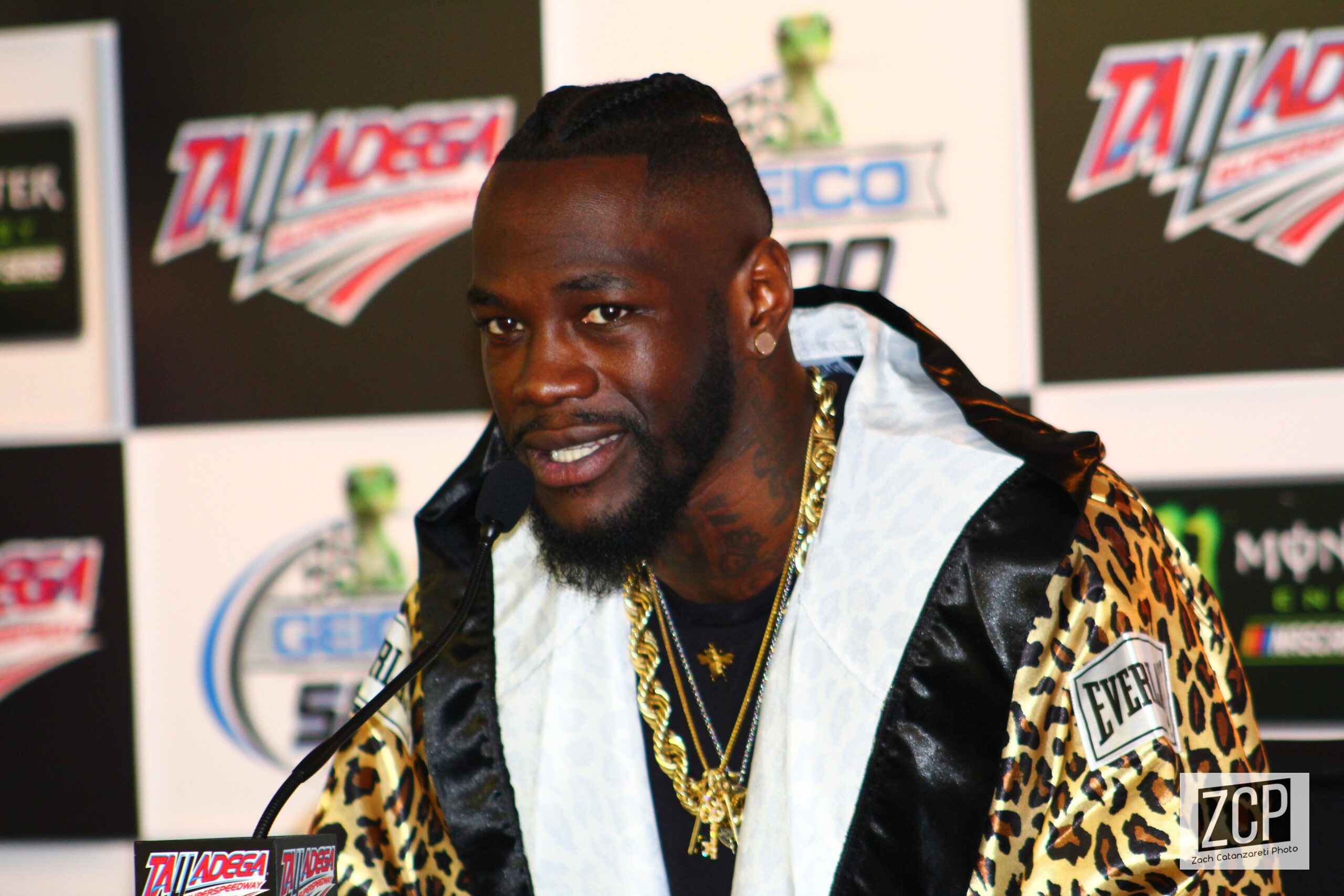
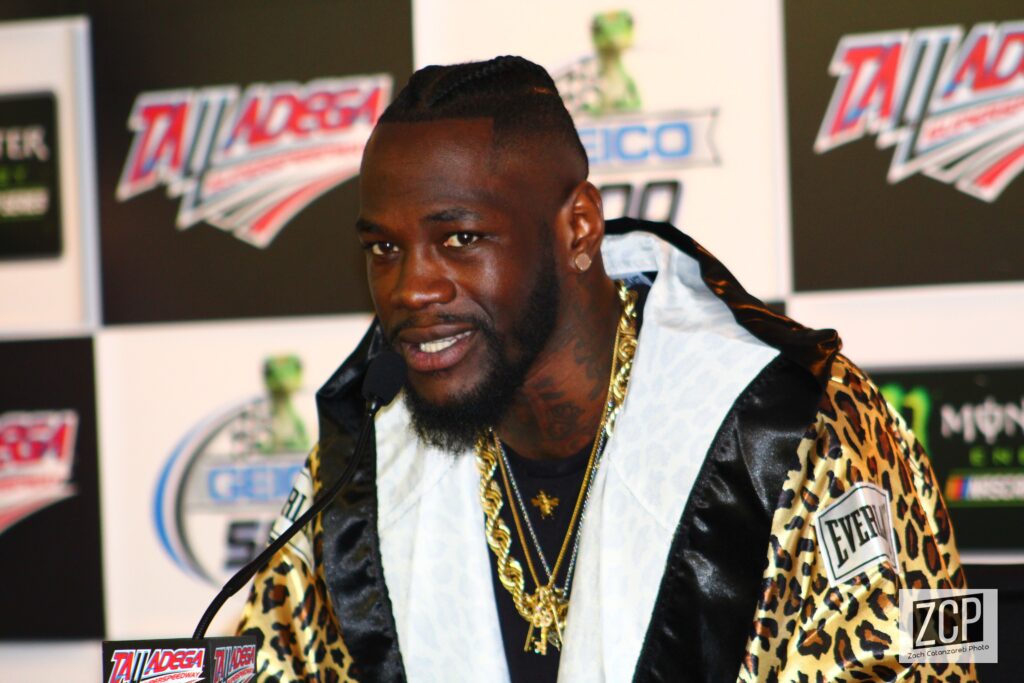
Deontay Wilder posing for a portrait in 2018.Image: Zach Catanzareti Photo / CC BY-SA 2.0 / Wikimedia Commons
Jai Opetaia’s heavyweight gamble has been placed on hold before he could prove whether his championship qualities at cruiserweight would translate against one of boxing’s most dangerous punchers.
Opetaia was scheduled to face former heavyweight champion Deontay Wilder on December 11 at Principality Stadium in Cardiff. According to The Ring, the fight was set for the Tyson Fury–Anthony Joshua undercard, giving Opetaia a major platform for his first serious test against a recognized heavyweight.
That opportunity has now collapsed. Opetaia’s camp says he aggravated an existing hand injury during training, forcing him to withdraw and redirect his attention toward becoming undisputed at cruiserweight. Derek Chisora has publicly disputed that explanation, alleging that an unnamed heavyweight beat up Opetaia during sparring and caused him to abandon the move.
Chisora offered no evidence for the allegation. He identified no sparring partner, named no witness and acknowledged that the story was something he had heard rather than something he personally observed.
The dramatic version will attract attention because boxing has always been fascinated by stories from behind closed gym doors. The public record, however, supports only one firm conclusion: Opetaia will not face Wilder in December, and the biggest heavyweight opportunity of his career has disappeared.
Opetaia’s Camp Says an Existing Hand Injury Was Aggravated
Mick Francis, Opetaia’s co-promoter and manager, told ABC News that the withdrawal resulted from a hand injury originally sustained during Opetaia’s September 12 fight with Noel Mikaelian.
According to Francis, Opetaia aggravated the problem during training for Wilder. He described the withdrawal as a disappointing setback and said the fighter would now focus on recovering before returning to his pursuit of the undisputed cruiserweight championship.
That explanation establishes an important timeline. Opetaia’s camp is not claiming that a completely new injury suddenly appeared during preparations for his heavyweight debut. Francis says the hand had already been damaged in a previous fight and then worsened in camp.
The available reporting does not include a publicly disclosed formal diagnosis or an expected recovery timetable. That means the precise nature and severity of the injury remain unclear outside Opetaia’s team. It does not prove that the explanation is false, but it requires the injury to be presented as the account supplied by Francis rather than independently established medical fact.
Opetaia also addressed suggestions that Wilder’s punching power caused him to reconsider the fight. In a statement reported by The Independent, he apologized to Wilder and his team while rejecting claims that fear had driven his withdrawal.
He reiterated that becoming undisputed at cruiserweight remains his goal.
That response matters because facing Wilder represented a serious physical and strategic risk. Opetaia has established himself at cruiserweight, where his speed, movement and authority have made him an elite fighter. Moving up to face a naturally larger opponent with Wilder’s reputation for sudden knockout power would have asked questions that cruiserweight success alone cannot answer.
Withdrawing from that assignment was always going to create suspicion, especially in a sport where injuries are frequently questioned and fighters are often expected to compete through physical problems. Suspicion, however, is not evidence.
Nothing in the public record establishes that Opetaia withdrew because he was frightened of Wilder.
Chisora’s Sparring Allegation Remains an Unconfirmed Rumor
Chisora provided a competing version during an appearance with talkSPORT Boxing. As reported by Boxing News, he claimed Opetaia was not injured and alleged that an unnamed heavyweight beat him up during sparring, leading Opetaia to leave the gym and abandon the heavyweight move.
It is a serious allegation presented without serious support.
Chisora did not identify the heavyweight involved. He did not name a trainer, camp member or witness who could verify the story. He also made clear that he had only heard a rumor, meaning the account was not presented as something he saw firsthand.
No alleged sparring partner has publicly confirmed Chisora’s version. No named member of Opetaia’s camp has supported it. No medical evidence has emerged to contradict Francis’ explanation, and no independent witness has publicly established that a damaging sparring session caused the withdrawal.
That does not make Chisora’s allegation impossible. Fighters can endure bad days in the gym, and moving from cruiserweight into heavyweight sparring would naturally expose Opetaia to different size, strength and pressure. But possibility is not proof, and a story does not become reliable simply because it sounds believable within boxing culture.
Chisora’s separate position in the Wilder picture also belongs in the context without becoming a basis for speculation. The Independent reported that Chisora confirmed negotiations for a potential rematch with Wilder, although he said any agreement would depend on the money offered.
That fact does not establish why Chisora repeated the sparring rumor, and it would be irresponsible to invent a motive. It does show that he is not merely commenting on the situation as a detached observer. He is also discussing a fight with the opponent Opetaia can no longer face.
His allegation should therefore be judged on the evidence attached to it.
At present, there is none publicly available.
The Withdrawal Changes Opetaia’s Direction, Not the Unanswered Question
The immediate consequences are significant. Opetaia has lost the chance to enter the heavyweight division against a former champion on one of the year’s most prominent cards. Wilder, meanwhile, was still expected to remain on the December 11 event while organizers searched for a replacement, according to The Ring.
For Opetaia, the withdrawal redirects attention toward the division he has not yet finished conquering.
His stated goal is undisputed supremacy at cruiserweight, and returning to that pursuit would be entirely logical. A Wilder fight offered money, attention and the possibility of becoming an immediate heavyweight attraction, but it also interrupted unfinished championship business in Opetaia’s established division.
What the withdrawal does not do is answer whether he can become a successful heavyweight.
It does not prove that he lacks the courage to face Wilder. It does not establish that one difficult sparring session occurred, much less that it forced him out of the fight. It also does not prove that Opetaia’s speed, power, durability and authority would remain equally effective against genuine heavyweights.
Those are sporting questions, and neither a manager’s injury explanation nor an unsupported gym story can settle them.
Opetaia’s achievements at cruiserweight made the Wilder matchup compelling precisely because the transition carried uncertainty. He would have entered with technical advantages and proven championship composure, but he still needed to show that he could manage the size and physical force of a recognized heavyweight.
The fight’s collapse leaves that test incomplete.
If Opetaia returns directly to cruiserweight and pursues unification, the heavyweight move may come to look like a lucrative opportunity temporarily placed ahead of his primary goal. If he recovers and again seeks a legitimate heavyweight opponent, that would indicate the Wilder fight was part of a broader career plan rather than a one-night detour.
Either path would be reasonable. The important part is that his next move will provide more useful evidence than speculation about a private sparring session.
Opetaia’s Next Fight Will Reveal More Than Gym Folklore
The public record currently contains four different categories of information, and keeping them separate is essential.
Francis says Opetaia aggravated a hand injury first sustained against Mikaelian. Opetaia has confirmed his withdrawal, apologized to Wilder and renewed his commitment to becoming undisputed at cruiserweight. Chisora has alleged that an unnamed heavyweight beat up Opetaia in sparring. The diagnosis, recovery timetable, identity of the alleged sparring partner and existence of any corroborating witness have not been publicly established.
That is where responsible analysis has to stop.
Boxing often encourages people to fill gaps with the most dramatic available explanation. A hand injury is routine and frustrating. A champion being driven out of the heavyweight division during sparring is sensational. The second story will travel faster even when it carries much less evidence.
Opetaia can eventually reduce that uncertainty through his choices.
An immediate return to cruiserweight would allow him to resume the title mission his team has repeatedly identified as the priority. It would not necessarily mean that heavyweight has been abandoned, but it would place the move behind unfinished business in his natural championship division.
A future heavyweight return would carry different demands. Opetaia would need an opponent capable of testing whether his movement works against larger men, whether his punches command the same respect and whether his body can withstand the physical pressure of the division.
That examination must happen in a sanctioned fight.
If he performs convincingly against a legitimate heavyweight after recovering, Chisora’s unconfirmed allegation will become little more than another gym story that briefly filled an information vacuum. If Opetaia never revisits the division, questions about the seriousness of the experiment will remain—but even that would not retroactively prove the rumor.
The cleanest answer is not the name of an alleged sparring partner.
It is Opetaia’s next meaningful fight.
LET’S TALK ABOUT IT
Do you believe Opetaia’s heavyweight move remains a serious career plan, or was the Wilder fight primarily a lucrative detour from his pursuit of the undisputed cruiserweight championship?
Should Chisora’s sparring allegation carry any weight without a named witness, medical evidence or confirmation from Opetaia’s camp?
Outlets cited in this story
- Boxing News
- talkSPORT
- The Ring
Spot an error? Send a correction.
More on Jai Opetaia
All 13 Jai Opetaia stories →
Deontay Wilder’s Jai Opetaia Fight Is Reportedly Off — But Cardiff’s Replacement Could Define His Comeback
Deontay Wilder’s planned heavyweight fight against Jai Opetaia has reportedly collapsed less than four weeks before the former champion was scheduled to appear on the Tyson Fury–Anthony Joshua undercard in…
Derek Chisora Offers to Face Deontay Wilder on the Fury-Joshua Card — But the Rematch Would Lower the Stakes
Derek Chisora has offered to step into one of the most recognizable fights available if the Tyson Fury–Anthony Joshua undercard needs an emergency replacement. Deontay Wilder was announced to face…
Deontay Wilder Is Backed to Knock Out Jai Opetaia — But His Power Is Useless If He Cannot Pull the Trigger
Malik Scott believes Deontay Wilder will knock out Jai Opetaia when the former WBC heavyweight champion faces the unbeaten cruiserweight champion on December 11 at Principality Stadium in Cardiff, Wales.…
Jai Opetaia Is Backed to Beat Deontay Wilder — But One Right Hand Could Change His Future
Jai Opetaia will move into the heavyweight division for a featured fight against Deontay Wilder on the Tyson Fury–Anthony Joshua card, and the predictions already reveal the central tension surrounding…