



When boxing fans argue about the face of the sport, the conversation usually begins with popularity. Who sells the most tickets? Who has the largest social-media following? Who generates the loudest reaction when his name appears on a fight poster? Those things matter because professional boxing is still a business, but there is another way […]
When boxing fans argue about the face of the sport, the conversation usually begins with popularity. Who sells the most tickets? Who has the largest social-media following? Who generates the loudest reaction when his name appears on a fight poster? Those things matter because professional boxing is still a business, but there is another way to define the face of boxing that has almost nothing to do with Instagram followers. What if the title belongs to the fighter whose career best represents what elite boxing is supposed to look like: taking difficult assignments, improving after adversity, collecting championships across divisions and continuing to chase dangerous opponents when easier money could probably be found elsewhere?
If that’s the standard, Devin Haney has a legitimate argument.
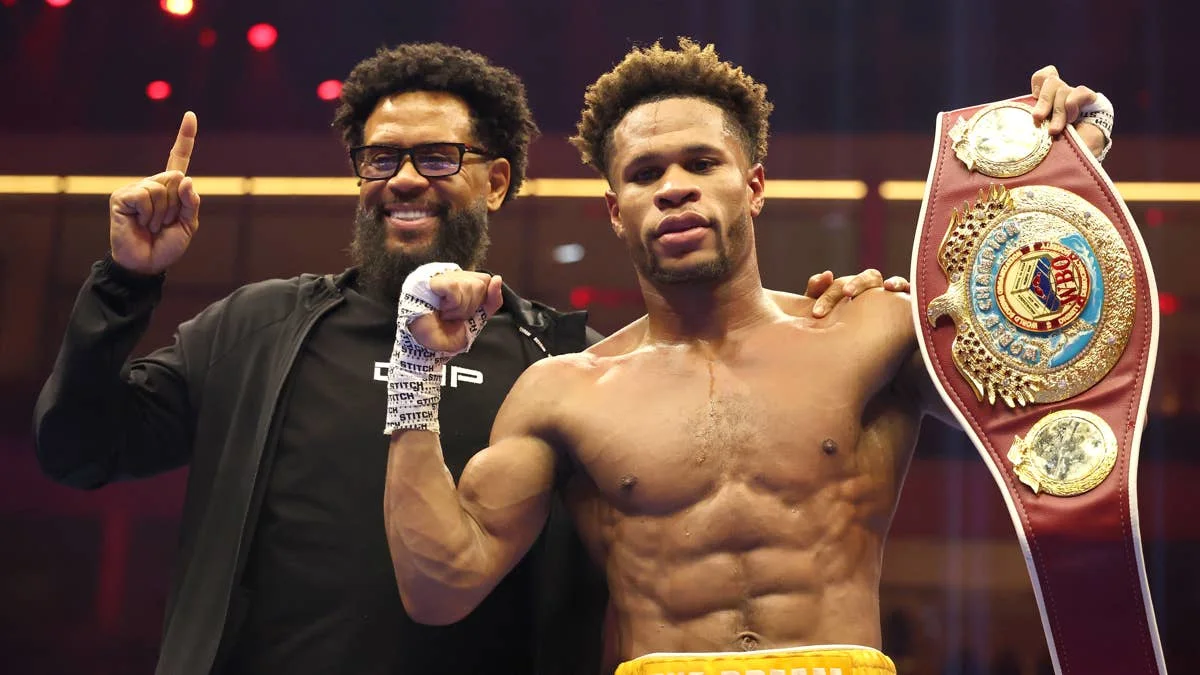
Haney is still only 27 years old, yet he has already been undisputed lightweight champion, WBC junior-welterweight champion and WBO welterweight champion. He went to Australia twice to fight George Kambosos Jr., first taking the undisputed lightweight championship from him and then returning for the contractual rematch. He moved to 140 pounds and defeated Regis Prograis for another championship before eventually moving to welterweight, where he dropped and defeated the previously unbeaten Brian Norman Jr. to become a champion in a third division. The Ring currently ranks Haney No. 1 at welterweight and No. 8 pound-for-pound.
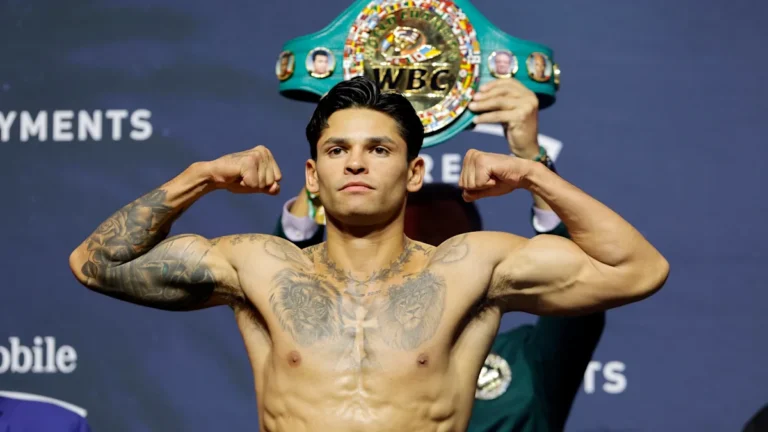
That résumé already deserves respect. What makes Haney’s current position more interesting, however, is everything that happened between those accomplishments. He went through the most damaging night of his career against Ryan Garcia, discovered afterward that Garcia had tested positive for the prohibited substance ostarine, watched the result become a no-contest, endured months of people questioning his chin anyway, and then rebuilt his career while the rematch everybody expected eventually disappeared because Garcia couldn’t complete his side of the arrangement.
Haney didn’t emerge from that experience as the same fighter. His own explanation is that it made him better. Looking at what happened afterward, there’s at least a case that he’s right.
The Ryan Garcia Fight Changed Haney Even Though It Officially Never Became a Loss
There is no reason to soften what happened on April 20, 2024. Garcia hurt Haney badly and dropped him three times in a fight that initially ended with Garcia receiving a majority-decision victory. It was the first night of Haney’s professional career where another fighter made him look genuinely vulnerable, and the images of those knockdowns followed him long after the official result changed.
The circumstances surrounding that performance matter just as much. Garcia tested positive for ostarine in samples connected to the fight and subsequently reached a settlement with the New York State Athletic Commission. The commission suspended him for one year, fined him, required him to forfeit his official purse and changed the result to a no-contest. Garcia has maintained that he didn’t intentionally consume a prohibited substance, but the positive tests and resulting sanctions are established facts rather than somebody’s opinion about what happened.
That’s why I have no problem saying Haney was wronged by what happened, even though I wouldn’t claim we can measure exactly how much the banned substance affected the fight. Haney entered a professional boxing match under the expectation that both fighters would comply with the anti-doping rules governing the event. His opponent tested positive and was sanctioned afterward. In a sport where the consequence of an unfair physical advantage is another person absorbing punches to the head and body, that’s more serious than somebody gaining an advantage in an ordinary athletic competition.
What impresses me about Haney’s story is that he didn’t get to erase the physical or reputational consequences simply because the commission erased the loss. Boxing fans had already seen him get knocked down three times. Critics began questioning his durability, and every future opponent knew exactly which fight to study when trying to figure out how to hurt him. The no-contest protected Haney’s official undefeated record, but it couldn’t return him to the version of his career that existed before Garcia.
He had to rebuild that himself.
Haney Could Have Chased an Easy Redemption Story, but He Kept Moving Up
Haney’s first performance after Garcia didn’t silence everybody. He defeated Jose Ramirez by unanimous decision in May 2025, but the fight was cautious enough to draw significant criticism. ESPN noted that Haney and Ramirez combined for only 503 punches, one of the lowest totals CompuBox had recorded for a 12-round fight. For people already convinced Garcia had permanently changed Haney, the performance became evidence that he was now afraid to engage.
That interpretation ignored something fairly obvious about what Haney had just experienced. A fighter who had been knocked down repeatedly in a controversial fight and then spent a year dealing with the consequences might reasonably return with an emphasis on control. The Ramirez fight wasn’t particularly entertaining, but boxing careers shouldn’t be evaluated as though every performance exists independently from what came immediately before it.
The more important question was what Haney did next.
He moved to welterweight and challenged Brian Norman Jr., an undefeated champion with a reputation for power. Haney didn’t merely survive the assignment. He dropped Norman and won a unanimous decision to capture the WBO championship, becoming a three-division world champion. In an interview before that fight, Haney acknowledged how much the Garcia experience had affected him while rejecting the idea that it had permanently damaged him.
That Norman victory changed the conversation because Haney finally had a result capable of answering the criticism with something more persuasive than an explanation. The argument that he couldn’t take a punch anymore became harder to sustain after he moved into a heavier division and beat an undefeated champion. The argument that he had become permanently gun-shy became less convincing when he was willing to challenge a younger puncher for a championship.
Haney didn’t return to where he was before Garcia. He built something different afterward.
Ryan Garcia Was Supposed to Give Haney the Chance to Settle It
The rematch with Garcia was supposed to become the definitive next chapter.
After Garcia completed his suspension, he and Haney were placed on the same Times Square card in May 2025 with the expectation that both would win and then meet again. Haney completed his part by defeating Ramirez. Garcia didn’t. Rolando “Rolly” Romero dropped Garcia in the second round and defeated him by unanimous decision in an upset that immediately damaged plans for the rematch.
That sequence matters when evaluating Haney because the rematch is sometimes discussed as though Devin somehow failed to pursue the opportunity. He didn’t lose the fight that was supposed to set it up. Garcia did.
Haney has since made clear that he still wants the rematch and describes it as his “dream fight.” He has openly said he needs the opportunity to get that performance back and believes the first fight taught him lessons that improved him as a boxer.
Whether the rematch eventually happens is now partly a business question. Garcia remains a major attraction, and enough history exists between them that people would watch. But Haney’s career no longer needs to remain frozen until Garcia becomes available. That’s one of the most important developments since 2024. Devin went from needing the rematch to restore something people believed Garcia had taken from him to becoming a three-division champion whose career can continue growing whether Garcia participates or not.
Garcia may still represent unfinished business.
He no longer represents Haney’s only path forward.
Now We Have to Talk About the Fighters Who Aren’t Fighting Haney
This is where the “avoided” argument becomes more interesting, although we should be careful about assigning motives we can’t prove.
Keyshawn Davis became the WBO’s No. 1 contender at welterweight and was formally ordered to fight Haney. This wasn’t fantasy matchmaking on social media. The sanctioning organization ordered negotiations, the process eventually reached a purse bid, and Top Rank won that bid with an offer of $8.55 million. Under the mandated split, Haney would’ve received a little more than $6.4 million. Davis was offered a career-high seven-figure purse for his opportunity and nevertheless decided not to proceed with the championship fight.
We don’t need to call Keyshawn scared to recognize how unusual that looks from Haney’s perspective. A mandatory challenger publicly wants the champion, receives the official order, gets a career-high payday attached to the opportunity and ultimately walks away. Whatever Davis’ reasons were, Haney was ready to fulfill the mandatory.
Meanwhile, Shakur Stevenson has publicly identified Haney as his No. 1 priority, and Haney has entertained that matchup as well. The two have even discussed a 144-pound catchweight publicly.
Those facts complicate the idea that literally “everyone” is avoiding Haney. Shakur is publicly asking for him, so the article shouldn’t manufacture a universal ducking narrative that the evidence doesn’t support. The stronger argument is subtler: Haney keeps occupying a position where plenty of fighters mention his name, but converting that interest into actual signed fights has proven surprisingly difficult.
That pattern deserves attention.
Why Would Haney Be Such an Uncomfortable Fight?
If fighters are making business calculations around Haney, the reason isn’t difficult to understand.
Haney doesn’t offer opponents the kind of fight where they can rely on one obvious advantage. He’s long, disciplined and comfortable controlling distance with the jab. His feet allow him to reset exchanges before opponents can consistently answer, and his experience across multiple divisions has forced him to become more adaptable than the younger version who built so much of his game around controlling lightweight opponents from the outside.
The Garcia fight also forced him to confront the part of his game everybody questioned most. Once you’ve been hurt publicly and everybody begins designing their strategy around reproducing it, you either develop answers or eventually get exposed again. Haney’s move to welterweight suggests that leaving the lower divisions may itself have been part of the solution. He has said he feels healthier without the severe weight cuts that accompanied his earlier career.
That makes the current Haney a frustrating opponent from a risk-reward perspective. He’s technically difficult, experienced in championship fights, still only 27 and now physically more comfortable at a heavier weight. Beating him would be significant, but looking bad against him is entirely possible because his style can prevent opponents from doing the things that normally make them impressive.
That’s not necessarily the opponent everybody volunteers to fight.
Is Everybody Waiting for Ring Rust? That’s Where Theory Begins
There is an interesting theory developing around Haney: perhaps some of the fighters around him are perfectly happy to let time pass. If they can’t beat him easily now, maybe inactivity eventually does some of the work for them. Let Haney sit. Let the timing dull slightly. Let a fighter whose game depends heavily on distance, reactions and precision spend enough months outside the ring that those tools become a little less automatic.
I understand why people suspect that, particularly after the Davis fight disappeared.
But right now, that’s a theory rather than something we can establish as fact. There is no credible evidence showing fighters collectively decided to wait Haney out, and boxing negotiations collapse for all kinds of financial, promotional and strategic reasons.
The theory becomes worth discussing because inactivity could genuinely become Haney’s next opponent. His last fight was the Norman victory in November 2025, and The Ring reported earlier this year that he had been waiting for another major opportunity. A technically precise boxer doesn’t benefit from spending his prime waiting for everybody else’s business to align.
That’s why Haney should remain aggressive about getting the next meaningful fight made. Whether it’s Shakur, Garcia, another mandatory or one of the other important welterweights matters less to me than avoiding another year where people spend more time debating Devin Haney than actually watching him fight.
If somebody is hoping ring rust eventually makes Haney easier, the simplest way to defeat that strategy is to stay active.
Maybe We’ve Been Defining the Face of Boxing Wrong
This is where I think Haney’s argument becomes compelling.
If “face of boxing” means the fighter with the largest social-media following, Haney probably isn’t the answer. If it means whoever creates the loudest controversy, there are other candidates. If it means the fighter whose name alone produces the biggest event regardless of opponent, again, somebody else may have the stronger commercial case.
But those definitions turn boxing into a popularity contest.
What happens if we include the actual boxing?
Haney became undisputed at lightweight by traveling to Australia and beating the champion. He honored the rematch and beat him again. He moved to 140 and took another championship. He went through the Garcia ordeal, returned under intense scrutiny, moved to 147 and defeated an undefeated champion to win a title in a third division. He’s still looking toward fights with Garcia, Stevenson and other elite opponents rather than settling into comfortable defenses.
That looks like somebody behaving the way fans claim they want elite fighters to behave.
There is also something important about the fact that Haney’s career hasn’t been perfect. The Garcia night was ugly. The Ramirez return wasn’t entertaining. He has been criticized, mocked and questioned in ways that fighters with carefully managed careers often avoid.
Yet the trajectory continued upward.
Maybe being the face of boxing shouldn’t require pretending adversity never happened.
Maybe it should include what you do after it does.
REAL TALK
The most impressive part of Haney’s story may eventually be that the night which could have damaged his career permanently forced him to become a more complete fighter.
Garcia gave everybody a blueprint for questioning Haney, even though the official result became a no-contest after the positive tests. From that point forward, Devin couldn’t rely on people remembering him as the untouchable technician who dominated at lightweight. He had been hurt in front of millions of people, and every future opponent knew it.
There are two ways a fighter can respond to that kind of public vulnerability. He can spend the rest of his career protecting the weakness, or he can continue taking assignments that force him to find out whether he actually corrected it.
Haney moved up and fought an undefeated puncher.
That’s why the Norman victory means more to me than simply adding another belt. It was evidence that Haney was willing to place the questions created by Garcia directly back into the ring and allow another dangerous fighter to test them.
Now boxing owes him nothing. No fighter is obligated to give Devin Haney an opportunity simply because he has endured adversity, and championships don’t entitle somebody to universal admiration.
But Haney has earned the right to be judged by what he’s actually doing rather than by the worst night people remember.
At 27, he’s undefeated officially, a three-division champion, a former undisputed champion and still improving. One mandatory challenger has already walked away from a lucrative ordered opportunity, while another elite fighter in Shakur Stevenson is publicly calling for the fight. Those are exactly the kinds of matchups Haney needs next because the strongest version of the “face of boxing” argument isn’t that everybody is afraid of him.
It’s that Devin Haney keeps putting himself in positions where the best fighters have an opportunity to prove he isn’t.
If they believe he’s vulnerable, fight him.
If the Garcia fight exposed him, prove it wasn’t temporary.
If the Norman victory was overrated, take the belt.
If he’s boring, beat him.
If he’s not the face of boxing, somebody should have a very good opportunity to make that argument inside the ring.
Until then, maybe the fighter boxing fans spent years calling overrated has quietly assembled one of the best cases for being exactly what the sport says it wants.
LET’S TALK ABOUT IT
If “face of boxing” is based on championships, résumé, willingness to take difficult fights and overcoming adversity—not simply followers and ticket sales—does Devin Haney have the strongest argument right now?
And after Keyshawn Davis declined his ordered title shot, who should actually step up and fight Haney next: Shakur Stevenson, Ryan Garcia, or another top welterweight willing to test whether this version of Devin is really as difficult as people believe?