Jake Paul Cleared to Fight After Anthony Joshua Loss — But His Comeback Still Needs a Credible Test
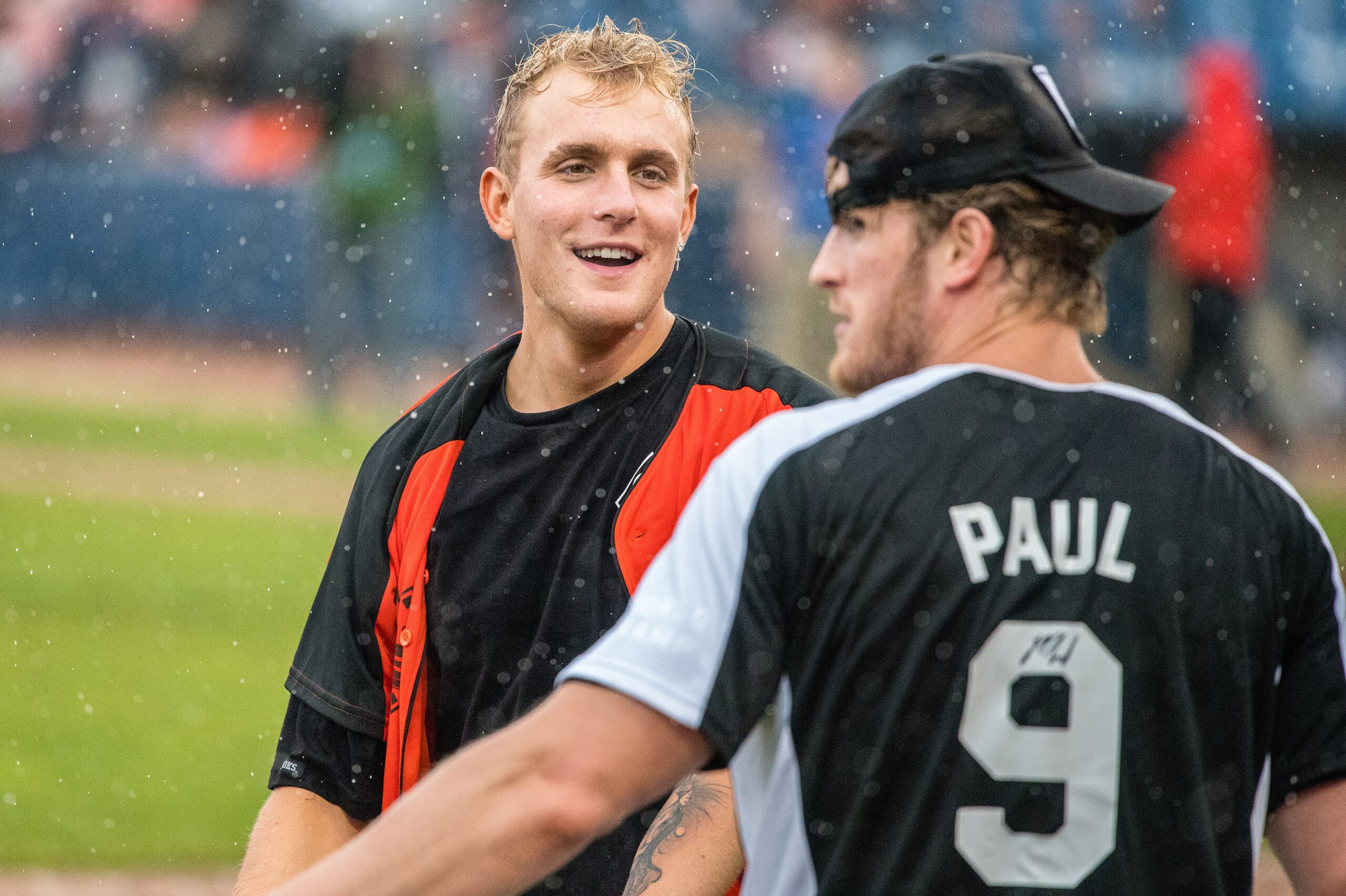
Jake Paul posing for a photograph at a public event in 2019.Image: Erik Drost / CC BY 2.0 / Wikimedia Commons
Jake Paul has been cleared to return to boxing after recovering from the broken jaw he suffered in his loss to Anthony Joshua. That removes the most immediate obstacle to another fight, but it does not answer the larger question created by the most punishing defeat of Paul’s career.
Most Valuable Promotions co-founder Nakisa Bidarian announced on October 8 that Paul had received clearance to return to the ring. The announcement came one day after Paul published an ambitious list of potential opponents that included Canelo Alvarez, Francis Ngannou, Conor McGregor and Deontay Wilder.
No opponent, date, venue or agreement has been announced. The reports also do not identify the physician who cleared Paul, disclose the testing behind that decision or confirm that an athletic commission has licensed him for a scheduled bout.
That distinction matters because Paul is not returning from an ordinary defeat. ESPN reported that Joshua stopped him in the sixth round of their December 19, 2025, heavyweight fight in Miami. Paul subsequently published an X-ray showing fractures in two places in his jaw and later said the injury required two surgeries.
Being cleared is significant after that kind of recovery.
It is also only the beginning.
The Joshua Loss Made Paul’s Health the First Question
Before the Joshua fight, most of the debate surrounding Paul focused on the quality of his opposition and how far his boxing career could realistically progress. After Joshua stopped him, the conversation became more serious.
The concern was no longer limited to whether Paul could compete with an elite heavyweight. It was whether he could physically return after sustaining an injury that required operations and months away from contact.
According to reporting cited by Bleacher Report, Paul underwent one procedure in December 2025 and another in February 2026. ESPN reported on April 16 that his jaw was “recovering nicely,” although he had not yet been cleared to spar. That detail established that the recovery was moving in the right direction while also confirming that Paul was not yet ready for normal boxing preparation.
Bidarian’s October 8 announcement represents an important change in that timeline. Paul can now move beyond rehabilitation and begin making concrete plans for another boxing appearance.
But the available reporting leaves several important details unresolved.
The physician responsible for the clearance has not been publicly identified. The medical examination and testing used to reach the decision have not been disclosed. There is also no confirmation that a particular athletic commission has evaluated Paul’s injury and approved him to compete in a specific jurisdiction.
Medical clearance, commission licensing and competitive readiness are related, but they are not interchangeable.
A doctor can determine that an injury has healed sufficiently for a fighter to resume boxing. A commission must still decide whether that fighter meets its requirements for a scheduled contest. Even after both steps are completed, neither process can guarantee how a repaired jaw will respond when another professional lands clean punches.
Paul has apparently crossed the first threshold.
The others cannot be assumed.
Paul’s Wish List Creates Attention, Not a Fight Schedule
Paul marked his return to the conversation by producing the kind of list designed to dominate several corners of combat sports at once.
Writing “Before I rest,” he named Canelo Alvarez, Francis Ngannou, Conor McGregor, Sean Strickland, Darren Till, Ryan Garcia, KSI, Chris Eubank, Edgar Berlanga, Tom Aspinall, Deontay Wilder and Nate Diaz. According to Paul’s post as reproduced by Boxing 24/7 and Athlon Sports, he proposed both boxing and MMA for McGregor, boxing for Aspinall and MMA for Diaz.
He also included an unnamed person using a derogatory description and listed “World Title” as one of his ambitions. Neither entry represents a confirmed opponent or a sanctioned championship opportunity.
Paul instructed Bidarian to “Make it happen,” but ESPN, World Boxing News and Boxing 24/7 all reported the situation without identifying a completed agreement. There is no evidence in the cited reporting that any of the named fighters has accepted the challenge or entered formal negotiations to become Paul’s next opponent.
Every matchup on the list therefore remains unconfirmed.
The names still serve a promotional purpose. They place Paul alongside elite boxers, crossover attractions and prominent MMA fighters, allowing several possible stories to develop from one social media post. A Canelo fight raises questions about world-class boxing. Wilder and Ngannou create heavyweight spectacle. McGregor, KSI and Diaz revive established crossover rivalries. Garcia, Eubank and Berlanga offer different combinations of credibility and commercial appeal.
But a collection of names does not tell us what Paul is actually prepared to do next.
It does not reveal whether he intends to remain at heavyweight, pursue a smaller boxer under negotiated conditions or prioritize an MMA debut. It does not establish what he means by pursuing a world title, which sanctioning body would be involved or how he would reach a legitimate championship opportunity.
Most importantly, the list does not tell us whether the Joshua loss changed the way Paul and MVP evaluate risk.
That answer will come through matchmaking rather than marketing.
Clearance Does Not Reverse What Joshua Proved
Paul deserves credit for completing a recovery that he says involved a broken jaw and two surgeries. Returning to a contact sport after that process requires patience, discipline and a willingness to confront the circumstances that caused the injury.
The clearance also gives MVP greater freedom to discuss opponents. Paul’s recovery is no longer the sole barrier preventing another fight, and his team can begin evaluating dates, locations and regulatory requirements with more confidence.
What the announcement does not do is erase the Joshua result.
Joshua stopped Paul in the sixth round and demonstrated the physical danger of placing an inexperienced heavyweight against an elite opponent. Paul may have gained attention and respect simply by accepting the assignment, but accepting a difficult fight and proving that one belongs at that level are different accomplishments.
Joshua proved too much for Paul that night.
That does not mean one loss determines how Paul would perform against every future opponent. It does mean that claims about competing at world level now require stronger evidence. A medical announcement cannot provide it, and a wish list filled with famous names cannot substitute for it.
There is also a specific question that only another fight can answer: how will Paul react when he is hit cleanly again?
Doctors can evaluate bone healing and determine whether a fighter is medically fit to resume activity. They cannot recreate the psychological and competitive conditions of a real bout. Paul will have to discover whether the injury has affected his confidence, his willingness to exchange or his response when an opponent applies sustained pressure.
The issue is not whether Paul should immediately face Alvarez, Wilder or another elite name. That would confuse credibility with unnecessary danger.
A legitimate comeback test can be measured without being reckless.
Paul needs an opponent capable of making him defend himself, adjust under pressure and absorb meaningful punches. The matchmaking should allow him to return responsibly after a serious injury while still giving the public useful evidence about his condition.
There is a difference between a manageable comeback fight and an opponent selected to offer virtually no resistance.
The Next Opponent Will Reveal Whether Anything Changed
Paul’s career has always operated at the intersection of boxing and promotion. His ability to attract attention has created opportunities that conventional prospects spend years trying to earn. That has made each opponent selection part sporting decision and part commercial production.
The Joshua fight pushed that formula to its limit.
Paul entered against a heavyweight whose experience, power and ability had been tested at a level Paul had never reached. The result exposed the gap and left Paul with an injury serious enough to require an extended recovery.
His next move will show what lesson his team took from that experience.
One option is a lower-risk comeback designed primarily to rebuild Paul’s timing and confidence. After two jaw surgeries, that approach would be understandable. Fighters returning from significant injuries are not obligated to accept the most dangerous available opponent immediately.
The quality of that opponent would still matter.
A credible professional boxer does not have to be a world champion or even a leading contender. The opponent simply needs enough ability, fitness and ambition to test whether Paul can execute under genuine resistance. Someone capable of applying pressure would help reveal whether Paul’s defense has improved and whether he remains composed when the fight becomes uncomfortable.
Another crossover event might produce more attention, particularly if it involves one of the recognizable MMA names on Paul’s list. It could also leave the central boxing questions unanswered, depending on the opponent, rule set and competitive conditions.
That is why the eventual announcement will matter more than the current list.
If Paul returns against a credible boxer, the matchup would suggest that the Joshua loss produced a serious reassessment rather than merely a pause in the promotional cycle. If MVP chooses an opponent with limited ability to threaten him, the comeback may generate another successful event without providing meaningful evidence about Paul’s competitive ceiling.
Paul does not need to prove everything in one night. He does need to show that his boxing career still has a direction beyond collecting famous names.
The first fight back should tell us whether he has recovered enough to compete, whether the Joshua defeat changed his approach and whether his world-title language has any sporting foundation.
Until an opponent is confirmed, those remain open questions.
LET’S TALK ABOUT IT
Does Jake Paul need to face a credible professional boxer in his comeback, or would a lower-risk opponent be justified after a broken jaw and two surgeries?
And did the Anthony Joshua loss establish Paul’s competitive ceiling, or should his next fight determine how much further he can realistically go?
Outlets cited in this story
- World Boxing News
- ESPN
Spot an error? Send a correction.
More on Jake Paul
All 6 Jake Paul stories →
Jake Paul Makes a Retirement Bet on Cédric Doumbé — But a Win Would Rebuild His Brand Faster Than His Boxing Credibility
Jake Paul needs more than another victory. He needs a convincing reason for the boxing public to move beyond the image of Anthony Joshua stopping him in the sixth round.…
Jake Paul Will Face Cédric Doumbé in Dubai — But This Is a Recovery Test, Not Cruiserweight Contention
Jake Paul’s return to boxing has an opponent, a date and a location. Most Valuable Promotions announced that Paul will face former GLORY kickboxing champion Cédric Doumbé on December 24,…

Jake Paul Announces December 24 Boxing Return in Dubai — But the Matchmaking Will Define His Comeback
Jake Paul is returning to boxing one year after the most physically consequential defeat of his career. Most Valuable Promotions announced on October 29 that Paul will headline a boxing…
MVP Formally Challenges WBA Decision in Bahdi-Schofield Fight
Jake Paul's Most Valuable Promotions (MVP) has appealed to the WBA on behalf of Lucas Bahdi, demanding a rematch with Floyd Schofield III. On October 10, Schofield won a unanimous…