



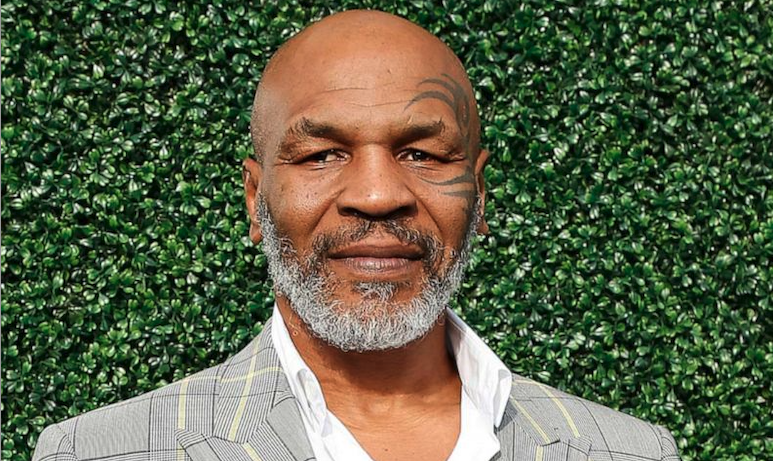
Mike Tyson hasn’t been heavyweight champion in more than 30 years, yet Netflix is preparing to devote not one but two major projects to him this fall. That probably tells us more about Tyson’s place in popular culture than another championship statistic ever could. The first project, TYSON, premieres October 13. Netflix describes it as a […]
Mike Tyson hasn’t been heavyweight champion in more than 30 years, yet Netflix is preparing to devote not one but two major projects to him this fall. That probably tells us more about Tyson’s place in popular culture than another championship statistic ever could.
The first project, TYSON, premieres October 13. Netflix describes it as a four-part documentary series examining Tyson’s entire journey: his difficult childhood in Brooklyn, his almost unbelievable rise through heavyweight boxing, the championships, fame, controversies, incarceration, financial problems, substance abuse and the transformation that followed. Tyson himself participates alongside people who have been part of his life and career.
Then, on November 3, Netflix will release Mike Tyson: Return of the Mike, a one-man stage show built around Tyson telling stories and reflecting on his life with the kind of humor and unpredictability that have become a major part of his public personality. The show was filmed at the Seminole Hard Rock Hotel and Casino in Hollywood, Florida, and is Tyson’s first major one-man stage project since Undisputed Truth more than a decade ago.
Put the two projects together and Netflix isn’t simply documenting an old heavyweight champion.
It’s investing in Mike Tyson as a character whose life remains commercially valuable to people who may not even care about boxing.
Tyson Has Somehow Outlived His Own Boxing Career
There was a time when Tyson’s appeal was easy to explain.
People wanted to see him knock somebody out.
At his peak, there was an urgency surrounding a Tyson fight that few heavyweights have ever duplicated. He became the youngest heavyweight champion in boxing history at 20 years old and eventually unified the division, becoming undisputed champion during one of the most famous runs in heavyweight history.
But the fighter who created that phenomenon hasn’t existed for decades.
That’s what makes Tyson’s continued relevance so unusual.
A significant percentage of the people consuming Mike Tyson content today never watched prime Tyson live. Some weren’t alive when he fought Michael Spinks. Others discovered him through documentaries, podcasts, interviews, movies, social media or even the Hangover films before going backward and watching the fights.
Then Netflix introduced him to another enormous audience through the Jake Paul fight in November 2024. Netflix describes Paul-Tyson as the most-streamed live sporting event ever, giving a 58-year-old Tyson another cultural moment nearly two decades after his final sanctioned professional appearance before that comeback.
That’s extraordinary longevity for any athlete, but especially for a boxer.
Most fighters spend their careers trying to make their boxing accomplishments famous.
Tyson reached a point where his fame became independent of his boxing accomplishments.
The Documentary Has a Difficult Job
There is no shortage of Mike Tyson documentaries, interviews, books and retrospectives.
That creates an obvious challenge for TYSON.
What exactly is left to tell?
Anybody familiar with Tyson already knows the broad outline. Cus D’Amato. The youngest heavyweight champion. Trevor Berbick. The Spinks destruction. Buster Douglas. Prison. Evander Holyfield. The ear bite. Bankruptcy. Retirement. Reinvention.
Those stories have been told repeatedly.
Netflix appears to understand that simply replaying the highlight reel won’t be enough. Its description emphasizes Tyson looking backward through the perspective of the person he has become rather than merely reconstructing the chronology of the person he was. The series is directed by Floyd Russ and consists of four hour-long episodes; interestingly, Netflix originally announced the project in 2024 as three episodes before expanding it to four.
That additional space could matter because Tyson’s life becomes less interesting when it’s reduced to a redemption montage.
His story isn’t that clean.
There are extraordinary accomplishments alongside deeply troubling chapters. Tyson’s life includes violence, incarceration, addiction, financial collapse and controversies that shouldn’t disappear simply because the older version of Tyson is more reflective and likable.
Netflix says the documentary intends to confront those contradictions rather than avoid them. Tyson himself has said that people tend to make themselves the hero when telling their own stories, while he wants to examine both the positive and negative parts of his life.
If the documentary actually follows through on that idea, that’s where it could separate itself from the countless Tyson retrospectives that already exist.
“Return of the Mike” Shows Us the Other Tyson
The one-man show may actually demonstrate Tyson’s transformation even more clearly than the documentary.
Think about what made Mike Tyson famous.
Intimidation.
Violence.
Knockouts.
Fear.
Now Netflix is categorizing Return of the Mike partly as stand-up comedy and personal storytelling. Its own description presents Tyson as somebody telling outrageous stories and reflecting on his life with essentially no filter.
That’s a remarkable evolution of a public identity.
Tyson didn’t erase the intimidating fighter people remember. He learned how to use that history differently.
The stories became content.
The mistakes became conversation.
The strange experiences became comedy.
The intimidating voice became instantly recognizable entertainment.
Even his contradictions became part of the product.
There are plenty of former champions who can explain boxing better than Tyson. There are fighters with cleaner personal histories and champions with longer reigns.
Very few have a life people will sit down and listen to for an hour even when nobody is throwing a punch.
That’s the difference.
Netflix Already Knows Tyson Can Bring an Audience
There is also a straightforward business reason for Netflix to remain interested in Tyson.
The company already saw what his name can do.
Paul-Tyson was a massive streaming event. Whatever boxing fans thought about the sporting legitimacy of a 58-year-old Tyson fighting the much younger Jake Paul, the audience demonstrated that Tyson remained commercially powerful. Netflix subsequently announced the documentary project in December 2024, shortly after the fight.
That makes these new projects part of a broader relationship between boxing, personalities and streaming.
Netflix doesn’t need Tyson to become heavyweight champion again.
It needs people to care about Mike Tyson.
Those are completely different products.
Traditional boxing promotion is built around selling the next fight. Streaming platforms can monetize the fighter’s story long after the competitive career has ended. A documentary, live event, comedy special or biographical series can reach viewers who would never purchase a pay-per-view.
Tyson may be one of the clearest examples of what that model can look like.
This Is What Fighters Mean When They Talk About Building a Brand
Modern fighters hear the word “brand” constantly, sometimes to the point where it becomes meaningless. Build your following. Grow social media. Create content. Develop businesses outside boxing.
Tyson did most of that before athletes had the language we use for it now.
His original brand wasn’t carefully constructed through social media strategy. It grew organically from the extraordinary character people saw inside and outside the ring. At different stages, that fame hurt him as much as it helped him, but eventually Tyson learned how to turn public fascination into something that could survive long after his ability to compete at an elite level disappeared.
That doesn’t mean every fighter should try to become Mike Tyson. Most couldn’t even if they wanted to.
The interesting part is understanding why people remain curious about him.
Tyson’s boxing career had an ending.
His story didn’t.
And those are two very different things.
REAL TALK
There’s something fascinating about watching a person become valuable for reasons completely different from the thing that originally made them valuable.
Young Mike Tyson’s value was obvious. He could walk into an arena and make thousands of people believe somebody might be unconscious within three minutes. His physical gifts, aggression and aura created a level of attention that most fighters spend their entire careers chasing.
Eventually those abilities disappeared, as they do for every athlete.
What remained was the person who had lived through all of it.
That’s where Tyson’s second career really began.
He accumulated experiences that were painful, embarrassing, controversial, funny, tragic and sometimes unbelievable. Instead of spending the rest of his life trying to convince everybody that the bad chapters never happened, Tyson increasingly made talking about those contradictions part of his public identity.
That doesn’t erase the consequences of anything he did, and reinvention shouldn’t be confused with rewriting history. If anything, the reason Tyson remains interesting is that his history is too complicated to fit comfortably into either a hero story or a villain story.
Netflix now gets to sell both versions of that complexity. The documentary can examine the life seriously, while Return of the Mike allows Tyson to turn parts of that same life into storytelling and humor.
There’s a broader idea underneath that which has very little to do with throwing punches. Sometimes the skill that creates your first opportunity isn’t the skill that sustains you forever. Careers end, industries change and physical abilities disappear. The people who continue finding relevance are often the ones capable of understanding what else they have to offer.
Tyson can’t be the 20-year-old heavyweight champion again.
He doesn’t need to be.
At 60 years old, people are still willing to watch Mike Tyson simply explain what it was like being Mike Tyson.
That may ultimately be one of the strangest accomplishments of his entire career.
LET’S TALK ABOUT IT
Why do you think Mike Tyson remains more culturally relevant than so many heavyweight champions who came after him — the knockouts, the personality, the controversy, his reinvention, or some combination of all four?
And when TYSON arrives on Netflix, what part of his story would you want the documentary to explore that previous Mike Tyson documentaries haven’t examined deeply enough?