





Moses Itauma is already back in the gym, and Frank Warren says the 21-year-old heavyweight will return very early in 2027. Normally, that would be encouraging news after a fighter suffers his first professional defeat. In Itauma’s case, though, the opponent chosen for that comeback may tell us more about his future than the return […]
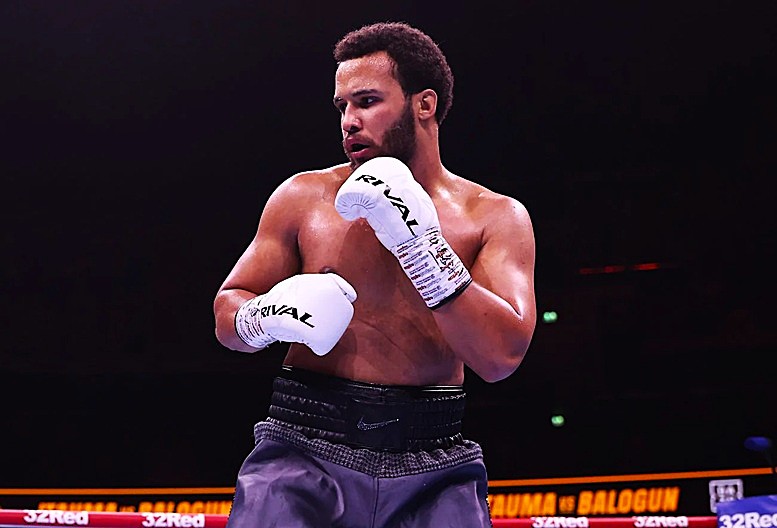
Moses Itauma is already back in the gym, and Frank Warren says the 21-year-old heavyweight will return very early in 2027. Normally, that would be encouraging news after a fighter suffers his first professional defeat. In Itauma’s case, though, the opponent chosen for that comeback may tell us more about his future than the return date itself.
The temptation will be to get Itauma winning again as quickly as possible. Find an opponent he can overwhelm, let him score another spectacular knockout and restart the hype train that was moving at full speed before Filip Hrgovic stopped him in the ninth round of their IBF heavyweight title fight.
I think that would completely miss what Hrgovic taught us.
We already know Moses Itauma can destroy heavyweights early.
What we don’t know is whether he can manage a difficult heavyweight fight when the opponent refuses to disappear.
That’s what his rebuild should be designed to find out.
Hrgovic Didn’t Expose a Lack of Talent
One of the easiest things to do after a heavily promoted prospect loses is rewrite everything we believed about him before the defeat.
Suddenly the prospect was always overrated. The opponents were terrible. The hype was manufactured. Everybody claims they saw the loss coming.
That doesn’t accurately describe what happened against Hrgovic.
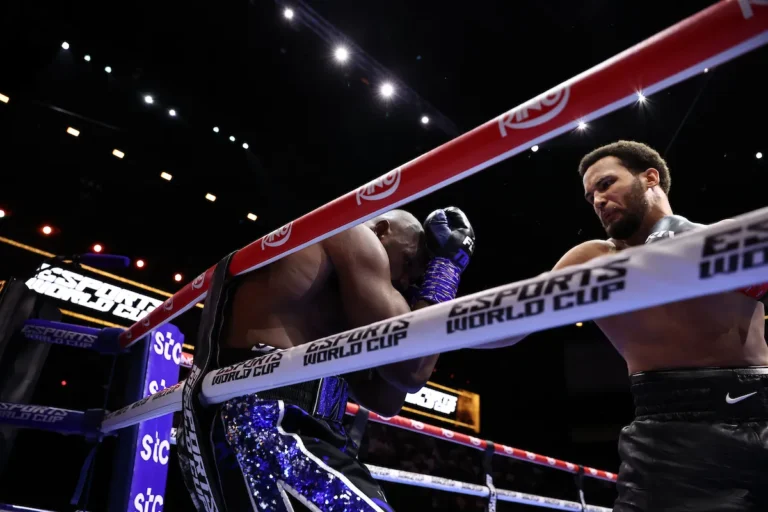
Itauma was extremely effective for much of the fight. He dropped Hrgovic in the second round and used his speed, timing and southpaw skills to control long stretches of the contest. Even Hrgovic has acknowledged how difficult Itauma was to deal with, describing him afterward as extraordinarily fast and talented. Hrgovic said he had never previously been outboxed in that manner during his career.
Then the fight changed.
Itauma had been fighting at an aggressive pace and eventually ran out of energy. Hrgovic, the older and considerably more experienced heavyweight, was still there. By the ninth round, Itauma’s physical condition had deteriorated enough for Hrgovic to take control and force the stoppage.
That doesn’t tell me Itauma can’t compete at world level.
It tells me he encountered a part of world-level boxing his previous career hadn’t forced him to learn.
There’s a significant difference.
Maybe Those Early Knockouts Were Hiding Something
Before Hrgovic, Itauma was 14-0 with 12 knockouts. The extraordinary part wasn’t simply that he kept winning; it was how quickly he was getting opponents out of there.
That became part of his appeal.
Every devastating performance seemed to reinforce the idea that Itauma was operating on a different level from the heavyweights being placed in front of him. Eventually the conversation wasn’t merely about whether he would become heavyweight champion. People were discussing whether he could do it young enough to challenge Mike Tyson’s historic achievement.
That accelerated the entire process.
The problem with destroying opponents early is that spectacular victories don’t necessarily teach you how to survive difficult nights.
If your opponent disappears in two rounds, you don’t have to learn how to pace yourself through ten or twelve.
You don’t have to discover how your legs respond after repeatedly throwing hard combinations for half an hour.
You don’t have to remain disciplined when you’re tired.
You don’t have to decide whether to take a round off, reduce your output, change tactics or accept that the knockout isn’t coming.
Against Hrgovic, all of those questions suddenly arrived at once.
And Itauma didn’t have the answers yet.
Frank Warren Saying “Serious Changes” Matters
This is why Frank Warren’s comments about the comeback are much more interesting than simply hearing that Itauma will fight early next year.
Warren says Itauma is already training again, but he also says there need to be “serious changes” following the Hrgovic defeat. He plans to sit down with Itauma’s team now that the immediate emotion surrounding the loss has settled.
That’s exactly the conversation they should be having.
Because this isn’t a situation where the team needs to convince Itauma that he’s still talented.
Everybody saw the talent.
They need to figure out why a fighter who was controlling a world-title fight deteriorated so dramatically once the fight entered territory he hadn’t previously experienced.
Was the pace too aggressive?
Was the conditioning approach wrong?
Was there too much emphasis on getting Hrgovic out early?
Did Itauma lack enough hard professional rounds before being placed into a heavyweight championship fight?
Were there strategic adjustments that should have been made once it became obvious Hrgovic wasn’t going anywhere?
Those are far more useful questions than trying to erase the loss with another first-round knockout.
Warren Has Already Admitted He Had Reservations About Hrgovic
There’s another detail that becomes much more significant now.
Warren has acknowledged that he originally had concerns about matching Itauma with Hrgovic and had another opponent in mind before Itauma’s team convinced him the Croatian was the right fight.
In hindsight, Warren’s concern looks pretty reasonable.
Hrgovic was exactly the type of heavyweight Itauma hadn’t encountered.
He was experienced, durable and willing to absorb punishment without mentally conceding the fight. Itauma could hurt him without necessarily breaking him.
That’s an entirely different challenge from fighting opponents who begin unraveling once Itauma’s speed and power arrive.
There’s nothing inherently wrong with taking that risk. Itauma was attempting to become heavyweight champion, and eventually every prospect has to leave the developmental stage.
But the Hrgovic fight may have shown that Itauma’s talent had progressed faster than his experience.
Those two things aren’t always synchronized.
So Don’t Give Him an Easy Knockout Next
If I’m matchmaking Itauma’s comeback, I’m not searching for the most dangerous heavyweight available.
That would be an overreaction.
But I’m also not looking for somebody whose primary purpose is making Itauma look spectacular again.
Give him a durable heavyweight who knows how to survive.
Give him somebody who can make him work.
Give him somebody experienced enough to frustrate him without representing another immediate world-title-level assignment.
Most importantly, let the objective be rounds.
If Itauma wins eight or ten rounds without scoring a knockout, that could be more valuable for his development than flattening three overmatched opponents in the first round.
We’ve already seen the highlight-reel version of Moses Itauma.
Now we need to see whether he can become a complete heavyweight.
That requires learning how to win when the fight isn’t going according to the script.
The Immediate Rematch Can Wait
Itauma’s first reaction was exactly what you’d expect from an ambitious young fighter.
He wanted Hrgovic again.
Warren confirmed shortly after the defeat that Itauma asked about an immediate rematch, but Warren told him to step away, spend time with his family and recover before thinking about what comes next.
That was probably the best thing Warren could have told him.
An immediate rematch sounds courageous, but courage and career development aren’t always the same thing.
Itauma is 21.
Why rush?
The attempt to make heavyweight history created a deadline that no longer exists. Once the opportunity to chase Tyson’s age record disappeared, so did the reason to move Itauma at an unnatural speed.
Hrgovic has business of his own anyway. Frank Sanchez stepped aside to allow Hrgovic-Itauma to happen and is positioned for the champion’s next defense. Warren says Hrgovic is expected back in early 2027 and currently owes Sanchez that fight.
That gives Itauma something he probably needed even before the Hrgovic fight.
Time.
Hrgovic’s Situation Is Completely Different
Hrgovic doesn’t need development anymore.
At 34, he needs to capitalize.
He survived the most difficult fight of his professional career and walked away with the IBF heavyweight championship. He has openly discussed unifying the division, while his immediate path appears likely to run through Sanchez.
That’s why these two early-2027 returns shouldn’t really be treated as parallel stories.
Hrgovic is trying to maximize a championship window.
Itauma is trying to rebuild the foundation underneath what could still become a very long heavyweight career.
One fighter has to move quickly.
The other finally has permission to slow down.
And slowing down might be exactly what Itauma needed.
REAL TALK
Sometimes extraordinary talent creates its own problem because it allows you to skip experiences that ordinary people are forced to acquire.
Itauma was so much better than many of his early opponents that he didn’t need every lesson professional boxing normally teaches along the way. He could overwhelm people with speed, power and timing before those fights became complicated enough to expose what he hadn’t learned.
Hrgovic finally made the fight complicated.
That loss doesn’t erase what made Itauma special. If anything, Hrgovic’s own comments reinforce how unusual Itauma’s ability is. The man who actually beat him has said that if Itauma learns from the defeat and recovers properly, he could become extremely difficult for anyone to beat.
But talent and readiness aren’t identical.
Sometimes being capable of reaching the next level doesn’t mean you’re prepared to live there yet.
That’s why Itauma’s team shouldn’t be embarrassed by the idea of rebuilding him. There’s nothing shameful about discovering at 21 that you still have things to learn about heavyweight championship boxing.
The mistake would be learning nothing because everybody is desperate to restore the image of an unbeatable prospect.
Forget undefeated.
That part is gone.
Build the fighter who knows what to do when he’s tired in the ninth round.
Build the fighter who doesn’t panic when his hardest punches aren’t ending the fight.
Build the fighter who can win ugly when spectacular isn’t available.
If Itauma develops those things, the Hrgovic loss may eventually look less like the night his rise ended and more like the night his real heavyweight education began.
And if he earns another opportunity against Hrgovic somewhere down the road, we’ll get an answer far more interesting than whether Moses Itauma can avenge a loss.
We’ll find out whether he actually learned from it.
LET’S TALK ABOUT IT
Should Itauma’s first fight back be designed primarily to restore his confidence, or should Queensberry deliberately find a durable heavyweight capable of forcing him into eight or ten difficult rounds?
And if Itauma rebuilds successfully, would you want to see the Hrgovic rematch immediately once he’s ready for another title shot, or should Moses prove himself against another top heavyweight first?