
Shakur Stevenson’s Next Deal Faces Eddie Hearn’s Financial Line — But His Value Goes Beyond the Ring
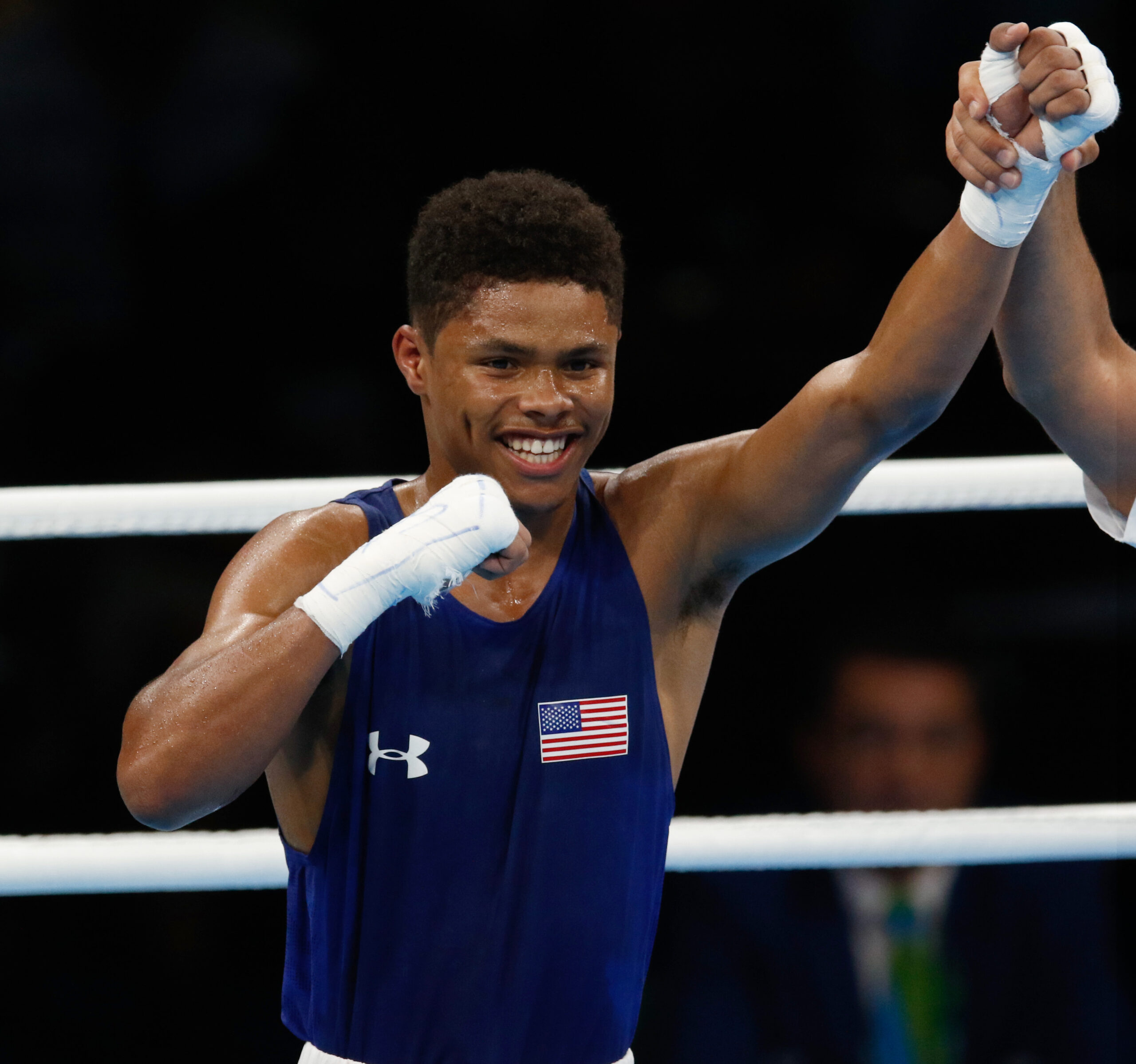
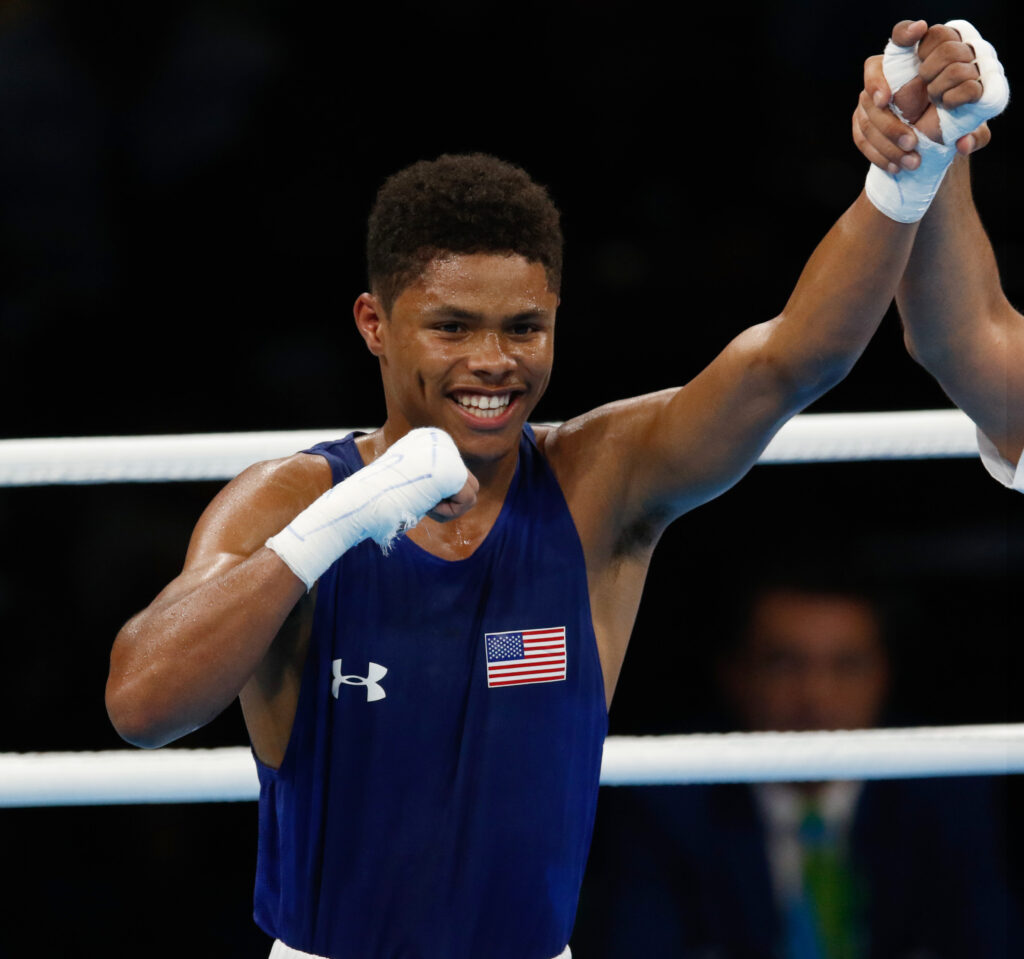
Shakur Stevenson boxes Robenilson de Jesus during the 2016 Rio Olympics.Image: Fernando Frazão/Agência Brasil / CC BY 3.0 br / Wikimedia Commons
Shakur Stevenson has already answered the competitive question. The unbeaten WBO junior-welterweight champion is 25-0 with 11 knockouts, according to BoxingScene, and his dominant victory over Teofimo Lopez reinforced his place among boxing’s elite.
The business question remains open.
Eddie Hearn has expressed interest in working with Stevenson, but the Matchroom chairman has now made clear that admiration will not override financial discipline. In an iFL TV interview reported by Boxing News 24, Hearn said there was “no point doing a deal where you’re just losing money.” His position does not challenge Stevenson’s ability. It challenges whether the revenue attached to Stevenson’s next arrangement can support the financial terms required to secure him.
That distinction matters as Stevenson considers his future after leaving Zuffa Boxing without fighting for the promotion. BoxingScene reported that Stevenson received his requested release on October 19 and planned to establish his own promotional company while remaining willing to work with other promoters.
No agreement with Matchroom has been announced. No confirmed offer, purse demand, guarantee or proposed contract value has been disclosed. According to a separate iFL TV interview reported by Boxing News 24 on November 13, Hearn had spoken with Stevenson and Keyshawn Davis, but neither situation had reached the contractual stage.
The interest is real. The deal is not.
Hearn’s Interest Now Comes With a Clear Financial Condition
Hearn’s latest comments establish the limit of Matchroom’s pursuit. He believes Stevenson is an exceptional fighter, but he is not prepared to sign him under terms that guarantee the company loses money.
According to Boxing News 24, Hearn contrasted Matchroom’s current position with an earlier stage of the company’s expansion, when it may have accepted loss-making deals to establish itself in new markets or strengthen its roster. His point was that Matchroom no longer needs to operate that way.
That does not mean Stevenson lacks commercial value. It means Hearn is unwilling to treat prestige as a substitute for projected returns.
Before drawing that line, Hearn told BoxingScene that he wanted to work with Stevenson if expectations surrounding the champion’s commercial value could be adjusted. He also identified Raymond Muratalla, Gary Antuanne Russell, Dalton Smith and Isaac Cruz as possible opponents.
Those names reveal why this is not simply a question of whether Stevenson is marketable. A fighter’s commercial performance is affected by the opponent, location, broadcaster, event placement, promotion and deal structure. Stevenson against a credible rival with an established audience is a different financial proposition from Stevenson carrying an event without a strong supporting attraction.
Hearn’s position is therefore conditional rather than dismissive. Matchroom may want Stevenson, but it does not want him at any price.
That is an important difference.
Boxing News 24 connected Hearn’s stance to its characterization that Saudi financing is “drying up.” That claim has not been confirmed in the reviewed statements from Hearn, Stevenson, Matchroom or Saudi organizers. No primary source examined for this story specified that Saudi funding for Stevenson or Matchroom had ended or been reduced.
Without that confirmation, the Saudi claim should remain what it is: the outlet’s interpretation, not an established explanation for Hearn’s comments.
Stevenson’s Ability Is Proven, but a Fight Result Cannot Set His Price
Stevenson’s argument at the negotiating table begins with his résumé.
On January 31, he defeated Lopez by unanimous decision at Madison Square Garden to win the WBO junior-welterweight championship. BoxingScene recorded identical scores of 119-109 from all three judges. It was not a narrow victory requiring promotional spin or generous interpretation. Stevenson controlled the fight clearly enough to receive every round on each official scorecard.
That performance demonstrated elite preparation, distance management and technical command against a proven opponent. It strengthened the case that Stevenson belongs among the best fighters in boxing.
It did not establish an exact dollar value for his next contract.
Competitive quality and commercial value are connected, but they are not identical. Promoters must consider how many tickets an event can sell, what a broadcaster is willing to invest, whether sponsors see value in the matchup and how much revenue can realistically be generated after production and promotional costs.
A 119-109 victory can prove that a fighter was dominant. It cannot, by itself, prove that any requested guarantee will produce a profitable event.
That is the tension at the center of Hearn’s comments. Stevenson has built the kind of record that should create leverage. He is unbeaten, holds a world championship and has just comprehensively defeated Lopez. From a sporting perspective, a promoter would have clear reasons to want him.
From a business perspective, the terms still have to work.
It is also important not to assign Stevenson a financial demand that he has not publicly made. None of the reviewed reporting disclosed the purse, guarantee or contract structure he would require from Matchroom. It is unknown whether he wants a multi-fight agreement, a short-term deal or individual co-promotions through his planned company.
There is no documented contract dispute because there is no announced contract.
What exists is a gap between interest and commitment. Hearn is describing the conditions under which Matchroom would proceed, while Stevenson is evaluating his options as a champion with promotional independence.
The Matchroom Warning Changes the Leverage Discussion, Not Stevenson’s Status
Hearn’s comments change the assumption that Matchroom might pursue Stevenson aggressively regardless of cost. They place projected revenue and financial exposure at the center of the conversation.
They also signal that Stevenson’s achievements will not automatically persuade Matchroom to absorb unlimited risk. If Hearn believes the required investment exceeds the likely return, his public position suggests he is prepared to walk away.
That could affect Stevenson’s leverage, particularly if other promoters apply the same calculation. A free agent gains power from having multiple credible bidders. If the market admires the fighter but resists his preferred terms, independence alone does not guarantee a more lucrative arrangement.
Still, Hearn’s warning does not reduce Stevenson’s championship status, erase his unbeaten record or alter what happened against Lopez. It does not prove that Stevenson is asking for unreasonable money. It does not confirm that Matchroom has submitted an offer and been rejected.
It also does not end Matchroom’s interest.
Hearn has publicly discussed compelling opponents and has acknowledged speaking with Stevenson. A financially viable arrangement could still be built around the right matchup, broadcaster or outside partner. Stevenson’s plan to operate his own promotional company may also create options beyond a conventional exclusive agreement.
A co-promotion could allow Stevenson to retain greater control while giving an established promoter responsibility for distribution, marketing or event operations. A single-fight arrangement could test the relationship without requiring either side to make a long-term commitment. Those are possible structures, not reported proposals.
Until actual terms emerge, Hearn’s comments are best understood as a negotiating boundary.
He is not questioning whether Stevenson can fight.
He is questioning what Matchroom should pay for the opportunity to promote him.
The WBO Order May Produce the Next Meaningful Answer
While the promotional discussion remains preliminary, Stevenson already has an official obligation developing around his championship.
On October 27, the WBO ordered Stevenson and designated mandatory challenger Raymond Muratalla to begin negotiations for a junior-welterweight title fight. That order does not mean the fight has been finalized, but it makes Muratalla the most immediate official development surrounding Stevenson’s next appearance.
The matchup could also become an important test of the economics Hearn raised.
If Stevenson and Muratalla reach an agreement, the event’s broadcaster, venue, location and promotional structure will help show how the market values the champion. If the parties do not agree and the process moves in another direction, the eventual outcome may reveal which promoters are willing to assume the financial risk attached to the fight.
The other opponents Hearn mentioned offer different business possibilities. Russell would provide a high-level American matchup. Smith could create interest for Matchroom’s audience in Britain. Cruz brings a distinct following and an aggressive style that would give the promotion an obvious contrast to sell.
None of those fights has been announced. They should be viewed as possibilities Hearn identified, not scheduled contests.
The opponent will matter because Stevenson’s next deal cannot be evaluated separately from the event built around him. A promoter is not purchasing his record in isolation. The promoter is financing a specific fight and projecting what that complete product can generate.
That is why the next agreement may tell us more than the current commentary. A signed contract with disclosed or reliably reported terms would clarify what Stevenson accepted and how much risk another party was prepared to carry. The event’s performance would then provide evidence about whether the investment was justified.
Until then, neither side has been proven right or wrong.
Hearn has outlined the standard Matchroom intends to apply. Stevenson has the opportunity to show that his championship résumé, promotional independence and potential matchups can support a major deal without requiring a promoter to accept a predetermined loss.
LET’S TALK ABOUT IT
Should Stevenson’s 25-0 record and dominant victory over Lopez be enough to justify a major promotional guarantee, or is Hearn right to require evidence that Matchroom can make the numbers work?
And which opponent—Muratalla, Russell, Smith or Cruz—would provide the strongest test of both Stevenson’s elite ability and his commercial value?
Outlets cited in this story
- Boxing News 24
- BoxingScene
Spot an error? Send a correction.
More on Shakur Stevenson
All 15 Shakur Stevenson stories →
Shakur Stevenson’s Mandatory Defense Heads Toward Purse Bids — But His Market Value Is the Bigger Fight
Shakur Stevenson became the WBO junior-welterweight champion by defeating Teofimo Lopez by 12-round unanimous decision on January 31, according to the WBO’s February 2026 divisional record. Now the business surrounding…
Eddie Hearn Holds Talks With Unnamed World Champion — But Matchroom’s American Rebuild Remains Unfinished
Eddie Hearn is attempting to strengthen Matchroom’s American roster, and at least some of those recruitment efforts may have moved beyond preliminary conversations. According to BoxingNews24, Hearn is discussing potential…
Shakur Stevenson Has Eddie Hearn’s Attention — But Matchroom Still Has to Deliver the Fight
Shakur Stevenson is searching for another route forward after his brief relationship with Zuffa Boxing ended before he fought under its banner. Eddie Hearn has now made it clear that…
Shakur Stevenson’s Asking Price Draws Criticism — But a Muratalla Purse Bid Could Reveal His True Market Value
Shakur Stevenson’s decision to leave Zuffa Boxing has placed his value—and his understanding of that value—under immediate scrutiny. Stevenson announced on October 19 that Zuffa Boxing had granted his requested…