
Tyson Fury Gets Tony Sims’ Vote Over Anthony Joshua — But the Prediction Exposes What Boxing Lost
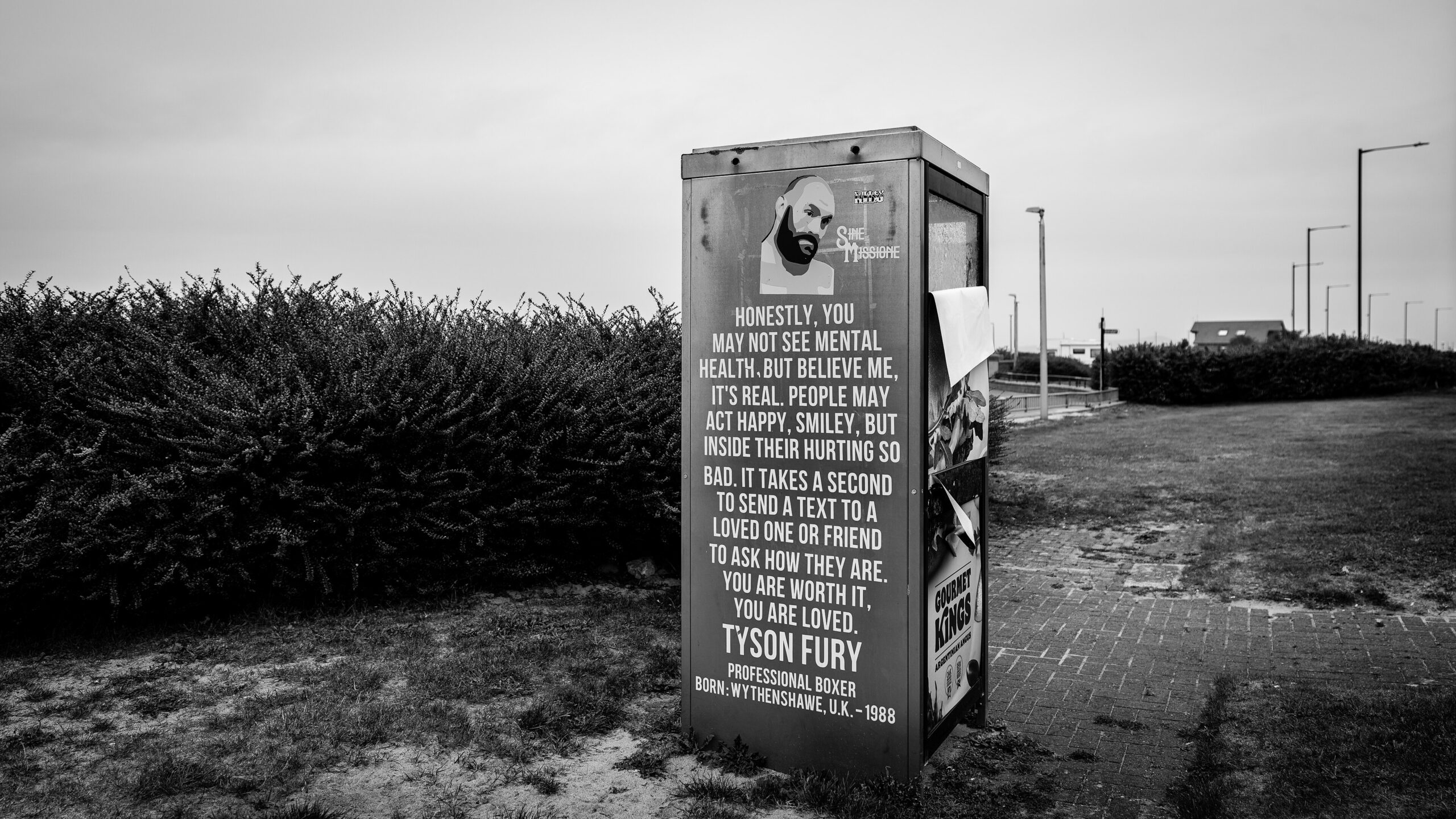
Tyson Fury posing for a portrait.Image: Ian Livesey / CC0 / Wikimedia Commons
Tyson Fury should enter his long-awaited fight with Anthony Joshua as the favorite, according to Joshua’s former trainer Tony Sims. That sounds like a clear prediction until Sims explains why he is making it.
Sims, who trained Joshua during the early part of his professional career, told Seconds Out that he would have favored Joshua five or six years ago. Based on what he has seen from both heavyweights in 2026, however, he now leans toward Fury. Even then, Sims still considers the fight a 50-50 contest because neither former champion has looked convincing enough to make the outcome feel secure.
That uncertainty will follow Fury and Joshua into Principality Stadium in Cardiff on Friday, December 11. Matchroom Boxing lists Fury at 39-2-1 with 25 knockouts and Joshua at 30-4 with 27 knockouts, but those career records do not answer the question now driving the matchup.
The debate is no longer simply about which man is the better British heavyweight. It is about which man can still produce the better performance in 2026.
That shift explains why Sims’ assessment matters. Fury-Joshua has retained its enormous commercial appeal, with promoter Frank Warren telling Sky Sports that both fighters will receive British-record single-fight paydays. No guaranteed purse figures or complete compensation terms have been disclosed, but the scale of the event is clear.
The sporting argument is less clear than the business case.
Tony Sims Is Favoring Fury by Comparison
Sims’ prediction should not be mistaken for a declaration that Fury remains at his dominant best. His position is more cautious than that.
Speaking to Seconds Out, Sims said he would have picked Joshua had the matchup happened five or six years earlier. That was a different stage of Joshua’s career and a different version of the rivalry. Now, Sims believes Fury deserves the edge based on their performances this year.
Boxing News reported Sims’ concern that Joshua “just didn’t look right” against Prenga. Sims also suggested that Joshua may have more “miles on the clock,” raising the possibility that the physical and mental demands of his career have affected him more heavily.
That is an informed opinion from someone familiar with Joshua, but it is still an opinion. The available reporting does not include a direct response from Joshua or Fury to Sims’ assessment, and it does not establish that Joshua has declined more sharply as a matter of fact.
The distinction matters because Sims is not describing a matchup in which one fighter looks excellent and the other appears finished. He said neither man looked outstanding in his latest appearance. His lean toward Fury is therefore comparative: Fury may have more left, or Joshua may have absorbed more wear, but Sims does not sound certain enough about either conclusion to move away from calling the fight 50-50.
That creates an unusual prediction.
Fury is Sims’ pick, but not because Sims sees overwhelming evidence that Fury is operating at a higher level. He is leaning toward Fury because Joshua’s recent form has created the greater concern.
The Case for Fury Is Real, but It Is Not Decisive
Fury’s advantages have always made him a difficult tactical problem. His size and boxing ability can force opponents to solve several problems at once, particularly when he controls distance and dictates the terms of exchanges.
Joshua’s task will be to prevent the fight from becoming comfortable for him.
That may require Joshua to close distance without becoming predictable, apply pressure without wasting energy and create opportunities for his power without giving Fury easy openings to counter or smother his attacks. The exact tactical plan has not been disclosed, but Joshua’s ability to deal with Fury’s dimensions and adaptability will be central to the contest.
Still, Sims’ comments underline why Fury cannot be treated as a safe selection. Favoring him does not mean ignoring questions about his own current form. Sims specifically acknowledged that neither heavyweight looked outstanding, which means Fury also enters Cardiff with something to prove.
The argument for Fury is strongest when it remains narrow: he may be better positioned to produce an effective performance now.
It becomes much weaker if it is stretched into a claim that Fury is unquestionably fresher, still near his peak or certain to control Joshua. The supplied sources do not establish any of those conclusions. They support a cautious preference, not a definitive verdict.
Joshua also remains dangerous because heavyweight fights do not require a fighter to look perfect for every minute. Matchroom lists 27 knockouts among Joshua’s 30 victories. That record is career context rather than proof of his present form, but it explains why Fury cannot afford to treat Joshua’s recent struggles as evidence that the threat has disappeared.
Fury’s own Matchroom-listed record of 39-2-1 with 25 knockouts shows the depth of his experience. It does not guarantee that the version entering the ring in Cardiff will resemble the best version seen earlier in his career.
The records explain why this became a major rivalry.
They cannot tell us how much of each fighter remains.
The Fight Can Settle the Present, Not Rewrite the Past
Fury-Joshua can answer several important questions.
It can show which fighter is capable of delivering the stronger performance now. It can test whether Fury still has the movement, control and tactical discipline required to manage a dangerous heavyweight over the course of a major fight. It can reveal whether Joshua can impose himself physically, handle adversity and execute a plan against an opponent with Fury’s size and boxing ability.
It can also provide the clearest evidence available for Sims’ prediction. If Fury controls the contest, Sims’ belief that Joshua has more miles on the clock will appear significant. If Joshua looks sharper, stronger and more decisive, his former trainer’s concern will have been answered in the ring.
What the fight cannot do is recover the matchup boxing failed to deliver five or six years ago.
A Fury victory in 2026 would not establish that he would have beaten Joshua at an earlier stage. A Joshua victory would not prove that Sims was correct to favor him back then. Fighters change, styles evolve and demanding careers leave effects that are not always obvious until the bell rings.
The winner will deserve full credit for winning the fight that actually takes place. That result should not be turned into a final ruling on every hypothetical version of the rivalry.
This is where the commercial success of Fury-Joshua can distort the discussion. Sky Sports reported that Warren expects British-record single-fight paydays for both men, although no purse figures were disclosed. Those paydays would confirm that the audience still considers the rivalry important.
They would not prove that boxing made the fight at its most meaningful moment.
Years ago, Fury-Joshua could have offered a more direct answer to the question of British heavyweight supremacy. In 2026, the question has changed. Both men have accumulated more fights, more difficult nights and more evidence for critics to interpret as possible decline.
The event remains enormous because the names remain enormous.
The competitive stakes now come with an expiration-date question attached.
Cardiff Will Reveal Which Fighter Has More Left
Principality Stadium provides the right setting for a rivalry of this scale. Fury and Joshua have spent years occupying the center of British heavyweight boxing, and their eventual meeting was always likely to demand more than an ordinary arena.
The atmosphere and financial rewards, however, will become secondary once the fight begins. At that point, the matchup will be decided by the qualities Sims is questioning: durability, timing, confidence, tactical discipline and the ability to perform under pressure.
Joshua does not need to prove that every concern about his career is wrong. He needs to prove that he has enough left to beat Fury.
Fury does not need to recreate the finest performance of his career. He needs to show that his current level is still sufficient to control Joshua and survive whatever danger comes back at him.
That is why 50-50 may be the most revealing part of Sims’ prediction. He leans toward Fury, but the lean rests on uncertainty surrounding Joshua rather than certainty surrounding Fury. One man may have endured more, yet neither has provided enough recent reassurance to make the choice comfortable.
December 11 should settle that present-tense question.
It will show who has more left now, even if it cannot show who would have won when the rivalry was at its sharpest.
LET’S TALK ABOUT IT
Does Fury-Joshua still determine the better heavyweight, or will it only reveal which former champion has more left in 2026?
And if the fight produces British-record paydays, does that justify the delay—or prove boxing can postpone its biggest matchups without paying a commercial price?
Outlets cited in this story
- Boxing News
- Seconds Out
- Sky Sports
Spot an error? Send a correction.
More on Tyson Fury
All 18 Tyson Fury stories →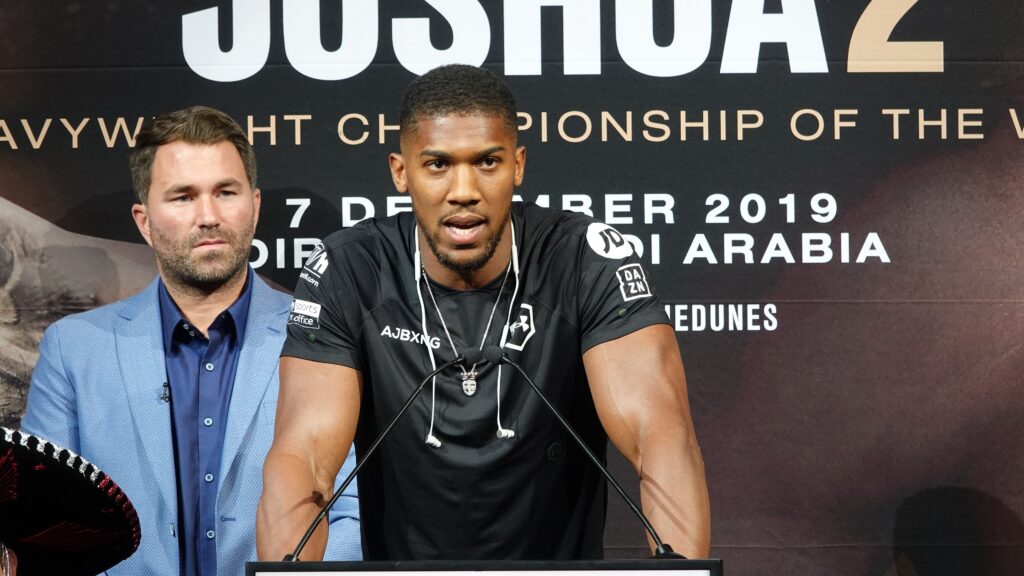
Anthony Joshua’s Best Chance Against Tyson Fury May Be a Dog Fight — But Aggression Carries Its Own Danger
Anthony Joshua may have to abandon the comfort of a measured boxing match if he wants to defeat Tyson Fury. That is the assessment of trainer Adam Booth, who believes…
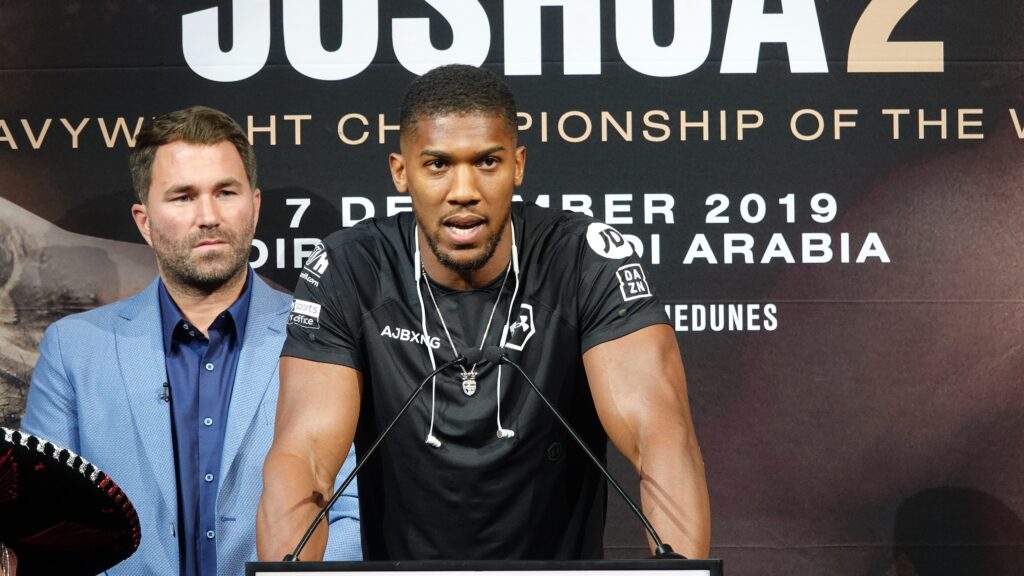
Tyson Fury Discusses an Oleksandr Usyk Trilogy — But Anthony Joshua Comes First
Tyson Fury is already discussing the possibility of fighting Oleksandr Usyk for a third time, but one major obstacle stands between that idea and reality: Anthony Joshua. Fury is scheduled…
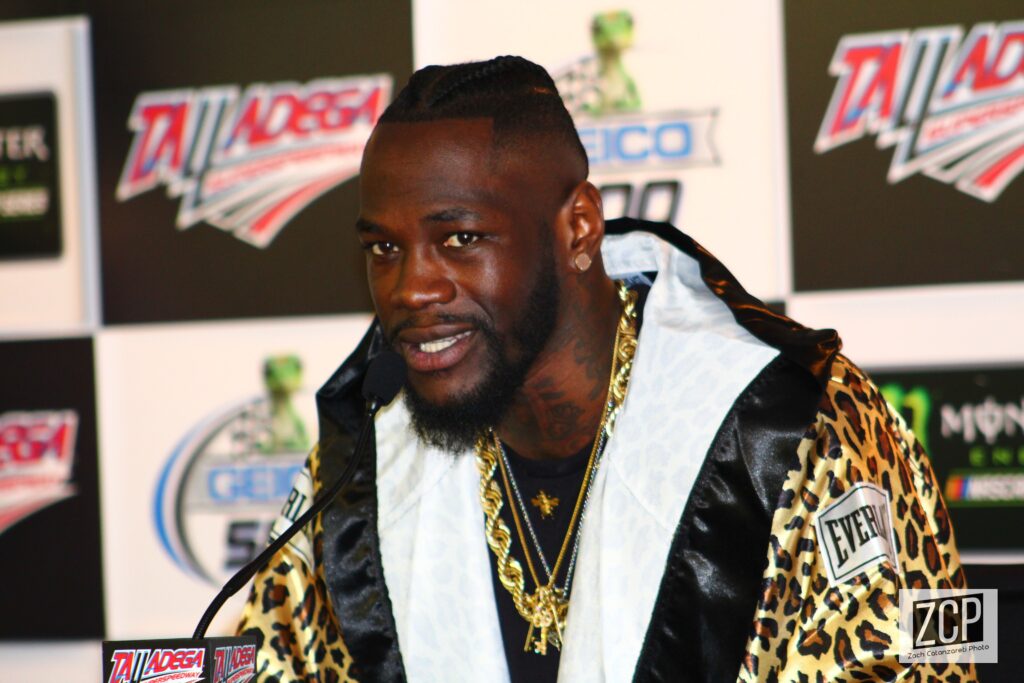
Tyson Fury Says Deontay Wilder Is “Shot to Bits” — But Jai Opetaia Will Test That Verdict
Tyson Fury believes Deontay Wilder should have walked away from boxing when their rivalry ended in 2021. Five years later, Wilder is still fighting—and his former opponent thinks the sport…
Tyson Fury’s Camp Denies Injury Rumor — But Readiness for Anthony Joshua Remains Unproven
Tyson Fury’s camp has denied an unconfirmed injury rumor ahead of his December 11 fight with Anthony Joshua, leaving no verified reason to believe one of British boxing’s biggest matchups…