Canelo Álvarez Is Fighting Christian Mbilli for Another World Title — But This Time His Championship Level Is on Trial
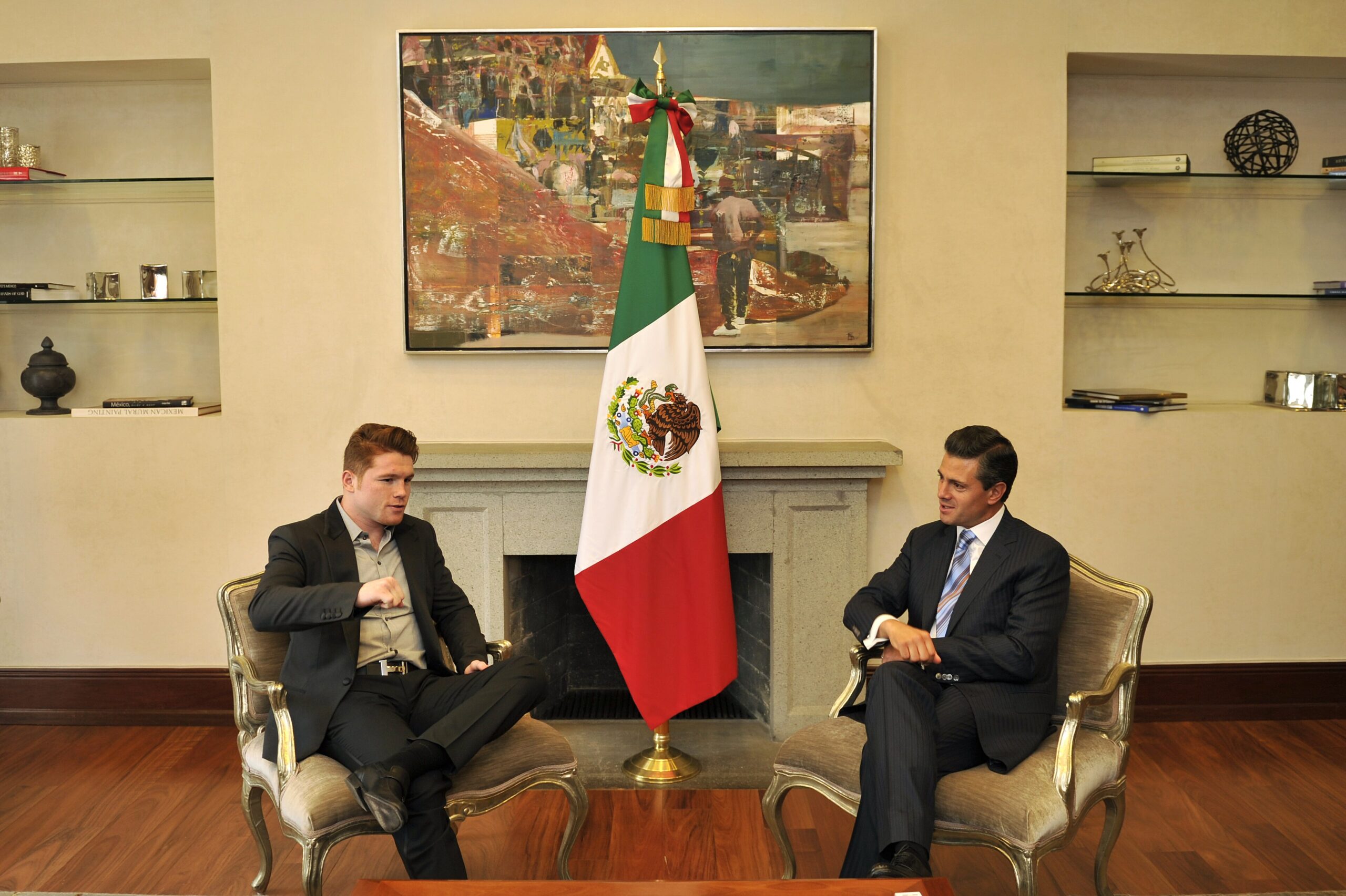
Saúl “Canelo” Álvarez enters Riyadh in an unfamiliar position. He is not defending the super-middleweight division against another challenger. He is trying to take the WBC championship from Christian Mbilli while proving that his loss to Terence Crawford did not signal the end of his years at the highest level.
The WBC lists Mbilli as its champion with a record of 29-0-1 and 24 knockouts. Canelo, now 36, is listed as the organization’s No. 1 contender at 63-3-2 with 39 knockouts. Mbilli was elevated from interim champion in January 2026 after the title became vacant, meaning he enters the October 31 fight as more than an undefeated opponent selected for Canelo’s return.
He is the defending champion.
Both men made the super-middleweight limit at the October 30 weigh-in. According to Sky Sports, Canelo weighed 167.6 pounds and Mbilli came in at 167.8. They are scheduled to contest the championship over 12 rounds, and no main-event result had been reported at publication time.
The immediate question is whether Canelo’s timing, counterpunching and body attack can still control an elite fight. The larger question is whether the physical advantages of a younger, high-output champion have become more important than everything Canelo knows.
Paulie Malignaggi believes they have.
Malignaggi Sees Mbilli’s Pace as the Deciding Factor
Former two-division world champion Paulie Malignaggi has selected Mbilli to defeat Canelo. Speaking to Boxing News, Malignaggi described Canelo as the more skilled boxer but questioned whether those skills would be enough to neutralize Mbilli’s pace and punch volume.
That is a prediction, not a reported result, but it captures the central tension surrounding the fight.
Few observers would argue that Mbilli has developed a deeper technical résumé than Canelo. The Mexican star has spent years facing championship-level opposition and has encountered a much broader range of styles. He has built his reputation on controlling exchanges, punishing mistakes and making aggressive opponents reconsider their approach after feeling his counters.
Mbilli’s challenge is different because it may not be based on solving Canelo technically. His opportunity could come from forcing Canelo to work more often than he wants to work.
A younger fighter who can sustain pressure, throw in combination and return immediately after being countered may create a contest that cannot be controlled through experience alone. Canelo does not necessarily need to match Mbilli punch for punch, but he must make enough of Mbilli’s attacks costly to disrupt that rhythm.
If he cannot, the fight could become less about who owns the cleaner technique and more about who can maintain the required pace across 12 rounds.
That is the path Malignaggi sees for an upset.
Mbilli Has the Championship, but He Still Needs an Elite-Level Statement
Mbilli has earned the right to enter this fight as the champion rather than a supporting character in Canelo’s comeback.
His record establishes that he is difficult to beat, while his 24 knockouts demonstrate the danger behind his pressure. He has also made his intentions clear. Mbilli told Sky Sports that he respects Canelo’s career but is coming to win and is prepared to “shock the world.”
The wording reflects Mbilli’s awareness of how the matchup will be presented. Canelo remains the international star and the historically accomplished fighter. Even as the challenger, he commands the attention normally reserved for the champion.
Mbilli can change that dynamic by winning.
There are still legitimate questions about him. His September 2025 draw with Lester Martinez prevented him from entering this fight with a perfect record and showed that sustained aggression does not automatically produce control. Martinez was able to compete with him across the distance and leave without a defeat.
That result should not be treated as proof that Mbilli cannot handle Canelo. It does establish that the champion can be challenged, disrupted and forced into a closely contested fight.
Martinez, now the WBC interim champion, declined to pick a winner when discussing Canelo-Mbilli and characterized it as a 50-50 matchup. His position carries particular relevance because he has experienced Mbilli’s pressure directly. Martinez did not present Mbilli as an unstoppable force, but he also did not assume Canelo’s experience would settle the matter.
Mbilli therefore enters with two different opportunities. He can retain his championship, and he can produce the performance that moves him from respected titleholder to established elite fighter.
Defeating Canelo would accomplish both.
Canelo’s Counterpunching Could Turn Mbilli’s Strength Against Him
Canelo has openly acknowledged the qualities that make Mbilli dangerous. In an interview with ESPN, he pointed to the champion’s stamina and punch output while arguing that Mbilli will need to do much more than stay active to overcome Canelo’s experience.
That experience remains Canelo’s strongest argument.
Aggression creates pressure, but it also creates openings. Mbilli’s desire to advance and throw combinations could place him within range of Canelo’s counters, particularly if he becomes predictable while closing the distance. Canelo has repeatedly shown the ability to punish opponents who attack without protecting their bodies or recovering their defensive position.
Former champion and ESPN analyst Raul Marquez picked Canelo by unanimous decision for precisely that reason. Marquez believes Mbilli’s aggressive style could give Canelo opportunities to counter and attack the body.
The body work may be the most important part of that prediction.
Canelo does not have to stop Mbilli immediately to change the fight. If he can land cleanly downstairs during the early rounds, he may reduce the champion’s output and make every later advance more difficult. Mbilli’s pressure is most dangerous when it is continuous. Interrupting that pressure, even briefly, would give Canelo the time and space needed to dictate exchanges.
The danger for Canelo is waiting too long.
He has sometimes operated in controlled stretches rather than maintaining a high output throughout every round. That approach can work when his power and precision force an opponent to become cautious. It becomes more dangerous against a champion willing to accept counters in exchange for sustained activity.
Canelo must establish consequences early enough that Mbilli feels them before the pace becomes exhausting. If the challenger spends the opening rounds studying while Mbilli accumulates work, he could find himself needing to increase his own activity at the exact point when the younger man is trying to intensify the pressure.
Canelo’s experience can decide the fight, but only if his body still allows him to execute what his mind recognizes.
The Crawford Loss Changed What Canelo Has to Prove
Canelo lost his super-middleweight championships to Terence Crawford by unanimous decision on September 13, 2025. Mbilli fought Martinez to a draw on the same card.
The Crawford defeat did not erase Canelo’s accomplishments or remove the technical qualities that made him great. It did, however, change his position within the division. He is no longer the dominant champion asking whether another contender belongs at his level.
He is the challenger trying to demonstrate that he still belongs at championship level now.
That distinction matters because past achievements can become misleading when used as evidence of present form. Canelo has faced better opposition than Mbilli and succeeded under brighter lights, but none of those victories can guarantee that he still possesses the reactions, stamina or sustained authority required to control this particular fight.
ESPN analyst Al Bernstein reluctantly selected Mbilli, citing the champion’s work rate and uncertainty about Canelo’s current level. His reasoning differs from Marquez’s Canelo prediction, yet both positions are built around credible evidence.
Marquez sees Mbilli’s aggression creating opportunities for Canelo.
Bernstein sees Mbilli’s activity testing a version of Canelo whose present condition is uncertain.
The divided analysis shows why the records alone cannot settle the matchup. Mbilli is unbeaten, but Martinez demonstrated that he can be held to a draw. Canelo is vastly more experienced, but he is returning from a clear decision loss and attempting to regain a title at 36.
Neither man enters without questions.
There is also no reason to manufacture certainty through numbers that have not been confirmed. No verified purse figures for either fighter were located in the reporting reviewed. The important business inside the ring is already clear enough.
If Canelo controls distance, damages the body and steadily reduces Mbilli’s output, he will show that the Crawford defeat did not remove him from the championship class. A disciplined decision victory could be every bit as meaningful as a stoppage if it demonstrates that he can still impose his terms over 12 rounds.
If Mbilli sustains his pressure, forces Canelo into prolonged exchanges and makes the older challenger fight at an uncomfortable pace, the performance could reveal that physical decline has become more decisive than experience.
The result will matter, but the manner of the result may tell the larger story.
LET’S TALK ABOUT IT
Will Canelo’s timing, counters and body attack be enough to control Mbilli’s pressure for 12 rounds?
And if Mbilli wins, should the result be viewed primarily as his arrival at the elite level or as confirmation that Canelo’s championship years are ending?
Outlets cited in this story
- Boxing News
- Sky Sports
- ESPN
Spot an error? Send a correction. We fix mistakes in the open.