






Dana White wasn’t at the Anthony Joshua-Tyson Fury press conference in London, but his presence was felt anyway. His name came up during the event, the crowd had its own reaction to him, and his increasingly public disagreement with Eddie Hearn has become part of the larger conversation surrounding a fight that really shouldn’t need […]
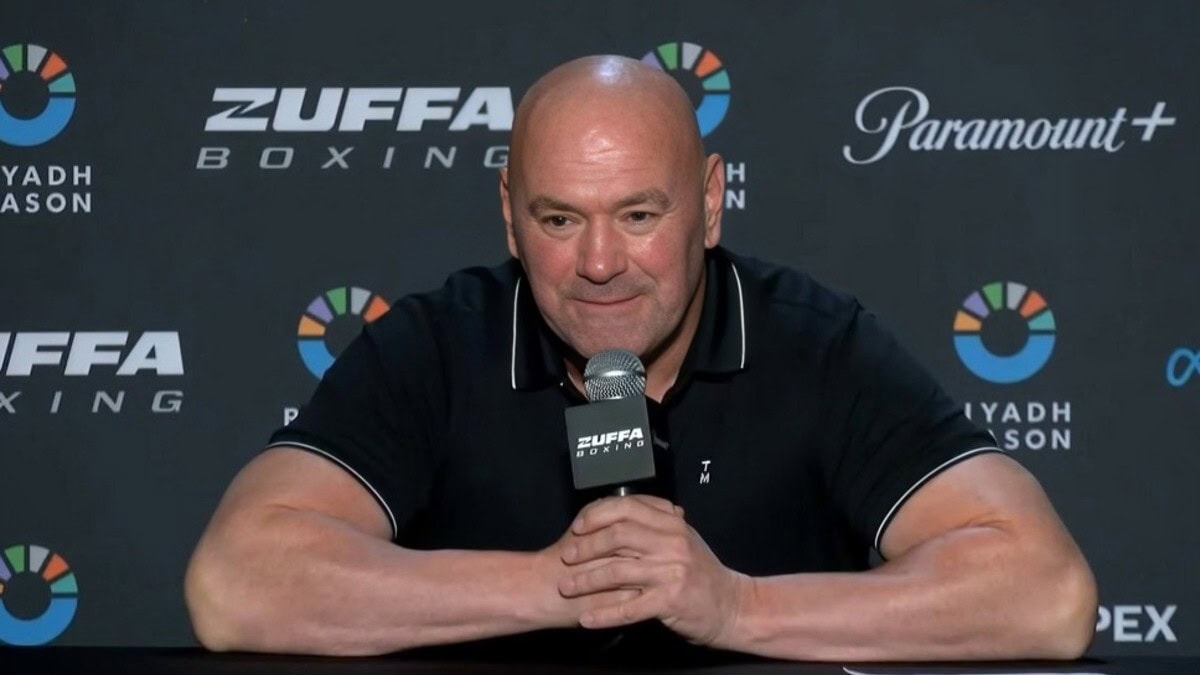
Dana White wasn’t at the Anthony Joshua-Tyson Fury press conference in London, but his presence was felt anyway. His name came up during the event, the crowd had its own reaction to him, and his increasingly public disagreement with Eddie Hearn has become part of the larger conversation surrounding a fight that really shouldn’t need much help generating attention. Fury and Joshua are finally fighting after years of failed attempts, and yet some of the discussion surrounding their December 11 meeting has shifted toward promotional authority, contractual differences and White’s larger criticism of the boxing business.
White’s latest comments are particularly interesting because he moved beyond criticizing individual promoters and questioned where boxing itself has gone culturally. His argument is that boxing has lost significant ground in the United States over the past two decades and has increasingly become what he described as a “very British sport.” There is a legitimate discussion buried inside that observation. Boxing doesn’t occupy the same consistent place in mainstream American sports culture that it once did, and White clearly believes Zuffa Boxing can help rebuild some of what has been lost. The part I question is whether British boxing’s success should be presented as evidence of boxing’s problem when it may actually provide part of the explanation for what American boxing needs to recover.
Fury-Joshua is a perfect example. Neither man is currently heavyweight champion, both have suffered significant defeats, and the fight is happening years later than it ideally should have. Despite all of that, the event remains big enough for Principality Stadium in Cardiff and a global Netflix broadcast. That doesn’t look like evidence of a market that damaged boxing. It looks like evidence of a market that successfully convinced people to remain emotionally invested in fighters even after their undefeated records and championship status changed.
White Has a Point About America, but Britain Isn’t the Problem
The strongest part of White’s argument concerns the United States. Boxing isn’t dead in America, and claims like that usually ignore the substantial audiences, major events and commercially successful fighters the country still produces. Las Vegas remains one of boxing’s most important destinations, and American fighters such as Gervonta Davis, Ryan Garcia, Shakur Stevenson, Jaron Ennis and Keyshawn Davis continue generating attention at different levels. What has changed is boxing’s consistency within mainstream American sports culture. There was a period when major fighters, particularly heavyweight champions, could become national celebrities whose significance extended far beyond people who regularly watched boxing.
That relationship weakened for a number of reasons, and very few of them have anything to do with Britain. Boxing became fragmented across promoters and networks. Major fighters frequently became less active. Pay-per-view placed many important events behind an additional financial barrier, while the proliferation of sanctioning-body championships made the sport increasingly difficult for casual fans to understand. An American viewer who casually follows the NFL knows where the Super Bowl leads. A casual boxing viewer can reasonably ask why four different people are simultaneously introduced as world champion in the same weight class.
White’s criticism of that environment is fair, and Zuffa Boxing gives him an opportunity to demonstrate whether he actually has a better model. If his organization can make fighters easier to follow, put them into meaningful fights more regularly and distribute those events through platforms casual sports fans already use, American boxing could benefit enormously. But that would mean correcting weaknesses in the American boxing business rather than treating Britain’s ability to sustain a passionate boxing audience as part of the problem.
Fury and Joshua Show What Britain Got Right
The remarkable thing about Fury-Joshua isn’t simply that the fight is happening. It’s that people still care.
This matchup arguably should have happened when the two men controlled the heavyweight championship picture and an undisputed title was potentially available. Boxing failed to make it then. Oleksandr Usyk subsequently defeated both fighters, their careers moved in different directions and the competitive stakes changed considerably. Under the logic that often surrounds American boxing, those losses might have permanently reduced the commercial value of the matchup.
British fans didn’t stop caring.
Part of the reason is that Fury and Joshua were developed as personalities and attractions whose relevance extended beyond whether a zero remained next to their records. Joshua filled stadiums and built a following that survived defeats. Fury became one of Britain’s most recognizable sports personalities and maintained public interest through victories, losses, retirements, returns and controversy. By the time they finally arrived at the same press conference, fans weren’t being introduced to a new rivalry. They had been following the story for years.
That continuity matters because boxing has sometimes confused protecting a fighter’s record with building a fighter’s audience. The two aren’t necessarily the same thing. Fans become attached to careers when they understand the journey, know the opponents and have reasons to care what happens next. A loss can actually add another chapter to that journey if the sport doesn’t immediately treat the fighter as damaged merchandise.
American Boxing Could Learn Something From That
White has frequently criticized boxing’s obsession with undefeated records, and this is one area where his philosophy may overlap with something British boxing already does well. British fighters can lose meaningful fights and remain commercially relevant because audiences are often invested in the fighter rather than exclusively in the record. Domestic rivalries also create recognizable stepping stones through a career, giving fans a reason to follow fighters before they reach world-title level.
American boxing still produces exceptional talent, but the sport hasn’t always provided that talent with the same continuity. A fighter can appear on a major card, disappear for eight or ten months, return on another platform and then spend another year waiting for the politically correct opponent. Hardcore fans can follow those movements because we’re willing to search for the information. Casual fans generally aren’t.
This is where Zuffa could genuinely improve the American boxing landscape. Regular events, recognizable broadcast homes and competitive matchmaking could allow viewers to follow fighters as ongoing characters rather than rediscovering them every time a major fight finally gets announced. If White succeeds at doing that, his impact could be substantial. The irony is that the finished product might resemble one of the things British boxing has preserved better than America: a boxing culture where fans follow fighters through the entire career rather than appearing only for the biggest night.
The Hearn-White Fight Is Starting to Distract From the Actual Fight
White’s criticism of the British side also becomes less convincing when every disagreement is reduced to ego or complaining. The tension surrounding Fury-Joshua hasn’t been completely imaginary. Reporting has identified genuine contractual differences involving promotional involvement, venue requirements and drug-testing timelines. People can reasonably argue that personalities made those disagreements harder to resolve, but contractual protections don’t become meaningless simply because enforcing them creates friction.
That matters because White is entering a boxing environment where fighters and promoters have historically operated as independent businesses rather than employees or athletes inside one centralized league. Hearn’s responsibility is to protect Joshua’s interests. Fury’s representatives have their own obligations. White and Zuffa have their interests, and Turki Alalshikh and the event’s other stakeholders have theirs. That structure can be frustrating, but it also means nobody should expect every existing participant in boxing to surrender contractual leverage simply because a powerful new company has arrived.
The real test for White won’t be whether he can win arguments with Eddie Hearn. It will be whether Zuffa can demonstrate that its model produces better fights, more active fighters and a better experience for fans while still creating an economic environment fighters actually want to participate in.
REAL TALK
The more interesting point underneath White’s comments is that boxing probably does need disruption, but disruption doesn’t require assuming everything already established is broken. Sometimes entering an industry from the outside makes its inefficiencies easier to recognize, and White has correctly identified several problems boxing has struggled with for years. At the same time, outsiders can mistake traditions they don’t understand for obstacles when some of those traditions are part of what keeps the audience emotionally connected.
British boxing isn’t perfect, but the continued demand for Fury-Joshua tells us something valuable. Fans there have remained invested in two fighters whose careers have included defeats, failed negotiations and long periods where the matchup seemed unlikely to happen. Their interest survived because the fighters became bigger than individual results. That’s something American boxing could use more of, not less.
If Zuffa can combine that kind of emotional investment with a more organized schedule, easier distribution and matchmaking that doesn’t treat every loss as a commercial disaster, White may actually help rebuild boxing’s American audience. But if the goal becomes simply replacing boxing’s fragmented power structure with one dominant company’s power structure, the sport may eventually discover that organization and improvement aren’t automatically the same thing.
The question shouldn’t be whether boxing became too British. It should be why British boxing has managed to preserve certain kinds of fan loyalty that American boxing has struggled to maintain consistently, and whether Zuffa is smart enough to learn from that while fixing the parts of the business that genuinely need to change.
LET’S TALK ABOUT IT
Is Dana White right that boxing’s growing British identity reflects how much ground the sport has lost in America, or does Britain’s boxing culture actually provide part of the blueprint for rebuilding the American audience?
And if Zuffa Boxing wants to change the sport in the United States, should its biggest priority be better matchmaking, more active fighters or making sure fans can consistently find and follow the same fighters on one platform?