




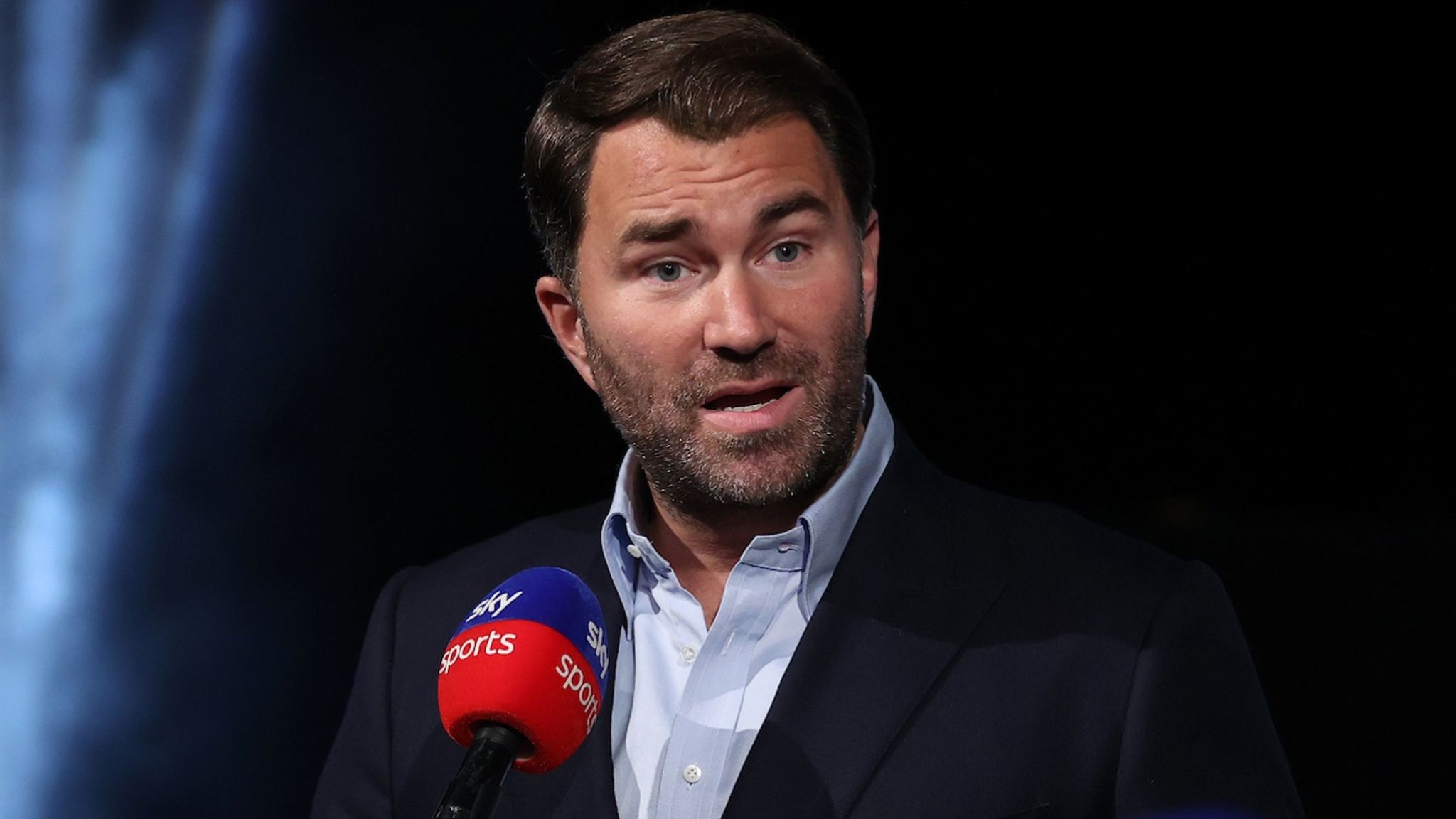
Eddie Hearn isn’t pretending the dispute with Dana White was merely a misunderstanding that everybody quietly resolved behind closed doors. After weeks of White insisting that he would be involved in promoting Tyson Fury versus Anthony Joshua, Hearn walked away from Wednesday’s launch press conference believing he had won the argument. White wasn’t on the […]
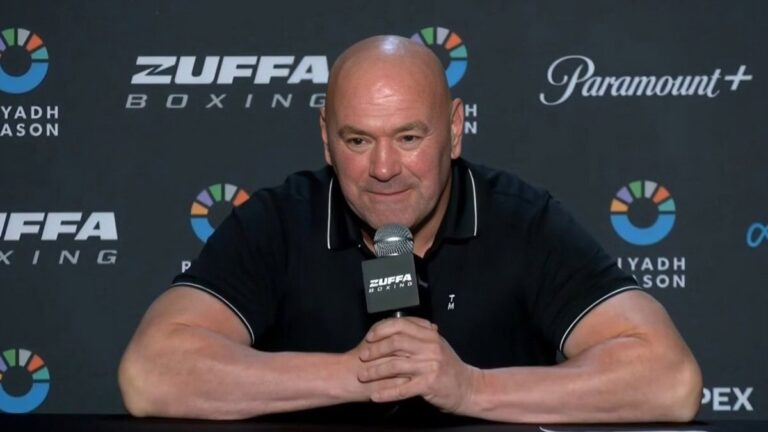
Eddie Hearn isn’t pretending the dispute with Dana White was merely a misunderstanding that everybody quietly resolved behind closed doors. After weeks of White insisting that he would be involved in promoting Tyson Fury versus Anthony Joshua, Hearn walked away from Wednesday’s launch press conference believing he had won the argument. White wasn’t on the stage, Zuffa Boxing wasn’t named among the official promoters, and the December 11 fight remained exactly where Hearn and Anthony Joshua had insisted it needed to be: in the United Kingdom.
Hearn told iFL TV that he felt he had to “stand my ground” because Joshua expected the terms of his agreement to be honored. He acknowledged that ego became part of the dispute and openly described the outcome as a victory, although he also left the door open for White to contribute to the event in some other capacity through his relationship with Turki Alalshikh. What Hearn continues to reject is the specific description White repeatedly used for himself: promoter of Fury-Joshua. At Wednesday’s launch, the event was presented as being promoted by Sela in association with Matchroom Boxing, Anthony Joshua, Gold Star and Queensberry. White and Zuffa weren’t included in that list.
On that narrow question, Hearn has a strong factual basis for taking his victory lap. The more interesting story, however, isn’t whether Eddie Hearn gets to say he beat Dana White in one contractual dispute. Fury-Joshua has exposed an emerging struggle over who gets to control the biggest events in boxing now that White, Zuffa, Saudi investment, streaming platforms and traditional promoters are all trying to occupy the same space.
That battle isn’t finished simply because one press conference ended with Hearn smiling.
Hearn Had Something More Valuable Than a Good Argument
White’s public confidence made this dispute particularly entertaining because he repeatedly spoke as though his involvement was settled. When the fight was initially announced, Netflix material even identified White as a co-promoter, seemingly contradicting Hearn’s insistence that Joshua’s agreement prohibited that arrangement. White continued maintaining that he was involved right up to the press conference, while Hearn kept returning to the same basic position: whatever somebody said publicly, the contract controlled what could actually happen.
That distinction matters because Hearn’s strongest weapon wasn’t his relationship with Joshua, his history promoting major stadium events or his ability to trade insults with White. It was paperwork.
Earlier reporting on the contracts said Joshua’s agreement required the Fury fight to take place in the United Kingdom and barred promotional involvement from White and Zuffa. Hearn also said Fury’s contract contained restrictions involving Zuffa, although the two agreements apparently weren’t identical on every issue, which contributed to the confusion that surrounded the event. Moving the fight elsewhere or materially changing the promotional structure would therefore have required more than somebody deciding another arrangement was commercially preferable.
That is why describing Hearn’s resistance as nothing more than territorial behavior misses an important part of the story. A promoter’s job is partly to protect the contractual interests of the fighter he represents. Joshua wanted the biggest all-British heavyweight fight of his generation staged in Britain, and his agreement reportedly reflected that requirement. If Hearn had simply surrendered those provisions because White, Alalshikh or anybody else preferred a different arrangement, Joshua would have had a reasonable question about why those protections had been negotiated in the first place.
Hearn can be theatrical, and his public celebration obviously contains some promotional performance of its own. But enforcing a favorable contract isn’t merely ego. It’s business.
White Wasn’t Imagining His Involvement Either
The other side shouldn’t be rewritten now that Hearn appears to have prevailed on the promoter label. White wasn’t inventing his connection to the event from nothing. Alalshikh wanted him involved, the initial announcement associated him with the promotion, and White has maintained throughout the dispute that he was part of the team surrounding the fight. Even after the disagreement intensified, he continued saying that his role had been settled.
What appears to have changed is the definition of that role. During a Zuffa broadcast shortly before the launch, Max Kellerman characterized White’s participation more narrowly as working with Alalshikh in a personal capacity rather than serving as an official promoter. Hearn now says he could accept some version of that arrangement and even acknowledges that White may add value to the event. What he wouldn’t accept was White being installed as a promoter in contradiction, as Hearn sees it, with Joshua’s contractual protections.
That makes the outcome more nuanced than “Dana White kicked out of Fury-Joshua.” White may still participate. His relationship with Alalshikh remains important, and Zuffa’s growing presence in boxing isn’t disappearing because Matchroom successfully defended its position on this particular event. What Hearn appears to have prevented is White converting that relationship into the formal promotional authority White publicly claimed he would have.
For boxing, that distinction could become increasingly important.
Fury-Joshua Became a Preview of Boxing’s Next Power Struggle
White isn’t entering boxing as an ordinary promoter looking for a few fighters and television dates. Zuffa’s ambition is much larger. White has openly discussed changing the sport’s business model, building a more consistent schedule, reducing boxing’s dependence on expensive individual pay-per-views and signing major fighters as their existing agreements expire.
Traditional promoters understandably see both opportunity and danger in that model. A company capable of providing regular events, powerful distribution and major financial backing could solve several problems boxing fans have complained about for years. The same company, if it eventually accumulates enough elite fighters and commercial leverage, could also become powerful enough to dictate terms that fighters and rival promoters currently negotiate independently.
That tension helps explain why Hearn’s stand over Joshua matters beyond one heavyweight event. Matchroom spent years building Joshua into one of British boxing’s biggest attractions. Hearn wasn’t going to casually hand promotional control over the biggest remaining fight of Joshua’s career to a new competitor simply because White had entered the boxing business with powerful partners.
White, meanwhile, has little reason to behave like a guest indefinitely. If Zuffa intends to become a dominant force in boxing, eventually it has to participate in events involving fighters and promoters who existed before Zuffa arrived. Fury-Joshua demonstrated how complicated that becomes when the existing contracts don’t give White the authority his broader business relationships might otherwise provide.
The first major collision therefore wasn’t really about whether White could sit behind a microphone at a press conference. It was about whether the new power entering boxing could override the contractual position of one of the established powers already there.
This time, apparently, it couldn’t.
The UK Fight Was Probably the More Important Victory
Hearn himself said the White dispute wasn’t the most serious issue threatening Fury-Joshua. There were several problems surrounding the event, and he said Matchroom was prepared to walk away over matters more significant than White’s promotional designation. The issue Hearn repeatedly emphasized was Joshua’s insistence that the fight take place in Britain.
That may ultimately be the more meaningful result.
Fury-Joshua has been discussed for more than a decade. Both men built enormous followings in Britain, filled stadiums there and became two of the most recognizable British athletes of their generation. By the time the fight finally became realistic, New York and other American locations had been discussed, but Joshua’s side maintained that a matchup marketed as the “Battle of Britain” belonged in Britain.
The final agreement supports that position. Fury and Joshua will meet December 11 at Principality Stadium in Cardiff, with Netflix streaming the fight globally.
There is a legitimate commercial argument for taking enormous boxing events to whichever location produces the largest financial package. Modern boxing is global, and Saudi Arabia’s investment has already demonstrated how quickly traditional assumptions about where major fights belong can change. But certain fights derive part of their value from geography. Fury-Joshua isn’t simply two famous heavyweights who happen to hold British passports. Their shared history inside British boxing is one of the reasons people remained interested after both men lost championships and the possibility of an undisputed fight disappeared.
Hearn understood that, and Joshua apparently cared enough about it to make the location contractual.
Hearn Won This Round, but He Shouldn’t Get Too Comfortable
It would be easy for Matchroom supporters to look at Wednesday’s press conference and conclude that White entered British boxing making demands and immediately discovered he couldn’t bully established promoters out of the way. There is certainly enough material for Hearn to enjoy the moment. White wasn’t there, his name wasn’t among the promoters announced by Michael Buffer, and the fight is happening in Cardiff rather than the American venue White had discussed.
But boxing changes quickly, and White’s long-term leverage won’t be determined by what happened with a contract Joshua had already negotiated.
The real battle begins when fighters become free agents.
If Zuffa can offer elite fighters attractive money, regular activity, powerful streaming distribution and major opponents under one promotional umbrella, Hearn, Frank Warren, Top Rank, Golden Boy and every other established boxing company will have to compete with that proposition. White doesn’t need to take control of Anthony Joshua’s existing contract if he can eventually persuade the next generation of Anthony Joshuas to sign with him before Matchroom does.
That is where Hearn’s victory becomes less comfortable.
Matchroom won this argument because it possessed leverage accumulated years earlier through its relationship with Joshua and the terms negotiated into his agreement. Zuffa’s objective will be to build comparable leverage of its own.
If it succeeds, the next dispute may begin from a very different position.
REAL TALK
There is something revealing about Hearn admitting that ego became part of this. Business people often pretend every decision is purely rational when reputation, authority and pride are almost always somewhere in the room. Hearn didn’t want White publicly declaring himself promoter of an event involving Hearn’s biggest longtime client when Hearn believed the contract explicitly said otherwise. White, after years of criticizing boxing from the outside, wasn’t likely to enter the sport quietly and ask established promoters for permission to participate.
Neither reaction is particularly surprising.
The important part is what happened when personality collided with enforceable leverage. Hearn could stand his ground because he believed Joshua’s contract allowed him to do so. That is a very different situation from somebody simply shouting louder at a negotiating table. Whatever people think of Hearn personally, protecting contractual rights is exactly why fighters hire promoters, managers and lawyers in the first place.
At the same time, this shouldn’t become an argument that traditional boxing has defeated the outsider and can return to business as usual. Zuffa’s challenge exists partly because boxing’s existing system has created legitimate frustrations involving matchmaking, inactivity, fragmented distribution and promotional politics. Hearn can be right about protecting Joshua while White can still be right that portions of boxing’s business need serious change.
The most interesting outcome would be if this rivalry forces both sides to improve. White should have to prove that Zuffa’s model actually produces better opportunities rather than merely concentrating more power in one organization. Hearn and the established promoters should have to prove that fighter independence and traditional promotional structures produce something better than endless contractual roadblocks.
Fury-Joshua gave Hearn the first obvious victory in that larger confrontation, but the real contest between Matchroom’s version of boxing and Zuffa’s version is only beginning.
For now, Hearn gets to enjoy the fact that when Fury and Joshua finally stood on the stage together, the fight was in Britain, the promotional lineup looked the way he had insisted it would, and Dana White wasn’t listed as the promoter.
That’s a win.
It just isn’t the end of the war.
LET’S TALK ABOUT IT
Did Eddie Hearn genuinely protect Anthony Joshua’s contractual interests by standing up to Dana White, or did the public battle create unnecessary drama around a fight that was already difficult enough to make?
And as Zuffa Boxing becomes more powerful, do you think competition with promoters like Matchroom will improve boxing by forcing everybody to offer fighters better deals, or will it create even more promotional wars that prevent major fights from happening?