




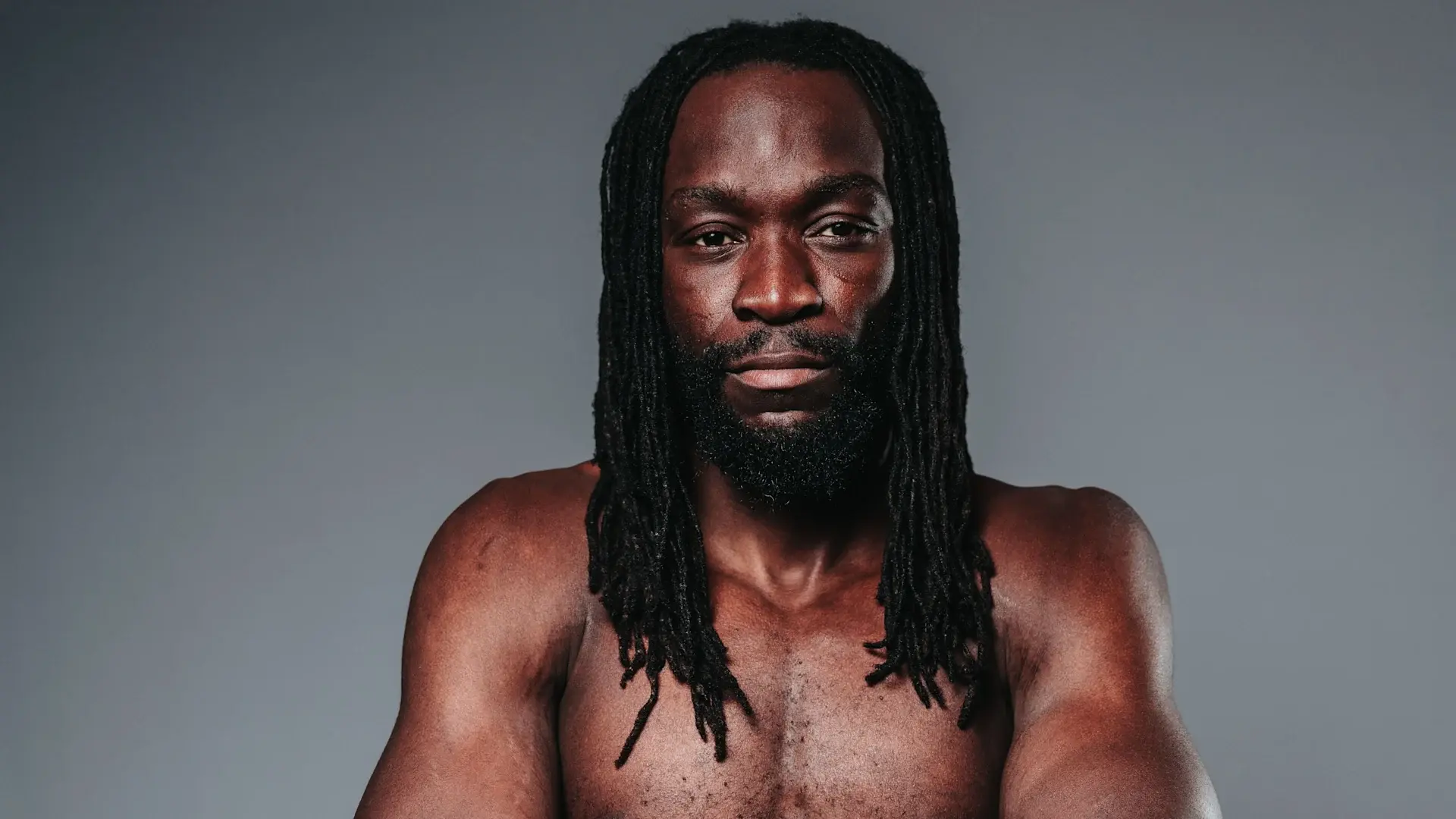
Denzel Bentley is reportedly preparing to give up his WBO middleweight championship rather than proceed with an ordered defense against Yoenli Hernandez. The reported reason could make the decision part of something larger. Reporter Dan Rafael, says Bentley has signed a multi-fight agreement with Zuffa Boxing and is expected to appear on the November 7 […]
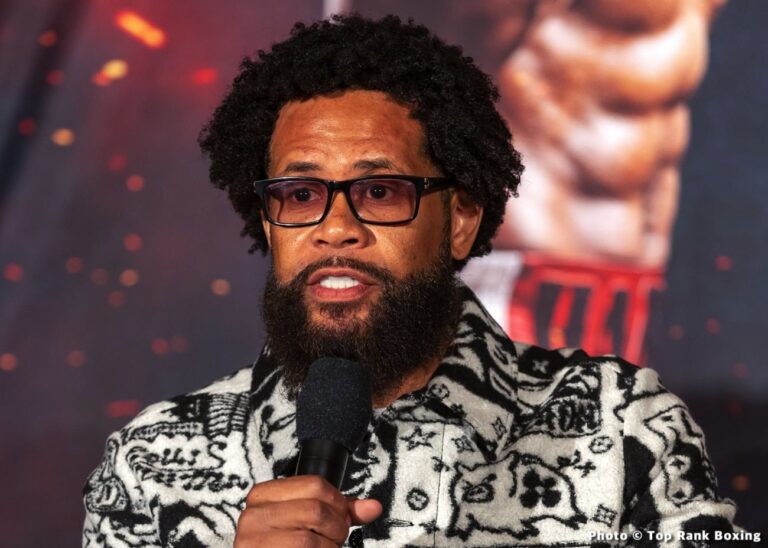
Denzel Bentley is reportedly preparing to give up his WBO middleweight championship rather than proceed with an ordered defense against Yoenli Hernandez. The reported reason could make the decision part of something larger. Reporter Dan Rafael, says Bentley has signed a multi-fight agreement with Zuffa Boxing and is expected to appear on the November 7 Chris Billam-Smith–Chev Clarke card in London. The report also says Bentley intends to relinquish his WBO title after Warriors Boxing won the rights to Bentley-Hernandez with a $200,000 bid. That development remains unconfirmed.
As of September 30, neither Zuffa Boxing nor the WBO had publicly confirmed Bentley’s reported contract or title vacancy in the sources reviewed. His reported appearance on the November 7 card also requires official confirmation.
If the report is accurate, however, Bentley-Hernandez would become the third recent WBO purse-bid proceeding to end without producing the ordered fight.
Hamzah Sheeraz relinquished the WBO super-middleweight championship after reviewing the terms generated for his mandatory defense against Zhanibek “Janibek” Alimkhanuly. Keyshawn Davis declined his mandatory opportunity against WBO welterweight champion Devin Haney after Top Rank won their purse bid. Three ordered fights. Three different reported payouts. Three fighters choosing another direction.
The pattern raises an obvious question:
What is a world title or mandatory position worth if the fighter believes walking away offers more control?
Bentley’s Reported Share Makes the Business Question Easy to Understand
The WBO ordered Bentley to begin negotiations with mandatory challenger Hernandez on September 4. When the parties did not complete an agreement, the organization issued a purse-bid order on September 22. It has been reported that Warriors Boxing won the promotional rights with a $200,000 bid. Under the reported 80-20 division, Bentley’s share would be $160,000, with the remaining portion going to Hernandez. The bid and projected share are reported terms. Bentley’s Zuffa contract and planned title relinquishment are still reports awaiting confirmation. That separation matters.
It would be premature to say Bentley has officially abandoned the championship or that Zuffa has pulled another titleholder away from the WBO. Until the fighter, promotion or sanctioning body confirms the move, the safest description is that Bentley is reportedly preparing to choose a multi-fight Zuffa agreement over the mandatory defense. If that is what happens, the financial logic will be easy to debate. A world champion accepting a mandatory defense takes on competitive risk, preparation costs and the possibility of losing the belt. A reported $160,000 champion’s share may not look attractive if another promoter is offering a longer agreement, stronger event placement or a more favorable sequence of fights.
The available reporting does not disclose the financial terms, duration or guarantees in Bentley’s reported Zuffa deal. It therefore cannot establish that he would earn more by leaving the title behind. But it does show why a low purse bid can weaken a sanctioning body’s practical leverage. The WBO can order the fight, establish the split and recognize a winning bidder. It cannot make the champion believe those terms are worth accepting.
Sheeraz Walked Away From a Larger Purse
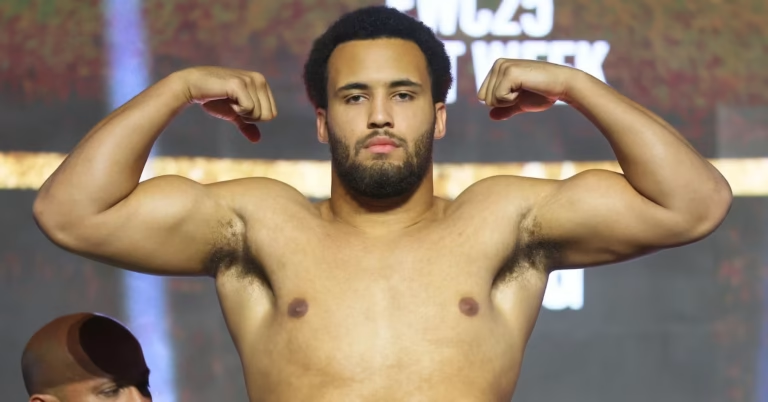
Bentley’s reported situation becomes more interesting when compared with Sheeraz. The WBO designated Alimkhanuly as Sheeraz’s mandatory super-middleweight challenger on August 13. Uncrowned, in reporting published by Yahoo Sports, says Queensberry Promotions won the September 16 purse bid with an offer of $1,001,809. Under the reported 75-25 division, Sheeraz was due $751,356.75, while Alimkhanuly was due $250,452.25. Two days later, the WBO confirmed that Sheeraz had voluntarily relinquished its super-middleweight championship after reviewing the terms produced by the purse bid. That decision was official. The Zuffa connection was not. Uncrowned previously reported that Sheeraz had described Zuffa Boxing as an option he intended to explore when he reached free agency. Calling a promotion an option does not confirm negotiations, much less a signed agreement.
There is also no verified evidence in the reviewed sources showing that Zuffa instructed Sheeraz to relinquish his title or coordinated the timing of his decision. His reported purse was considerably larger than Bentley’s projected share. That makes it difficult to explain both situations through purse size alone. Perhaps Sheeraz did not want the matchup under those terms. Perhaps he values promotional freedom, future positioning or another career route more than the immediate defense. Those remain possibilities, not confirmed explanations, until Sheeraz or his representatives give a fuller account.
What is confirmed is narrower: Sheeraz reviewed the purse-bid terms and surrendered the championship instead of proceeding.
That is enough to create pressure on the WBO without proving who, if anyone, influenced the choice.
Keyshawn Davis Rejected the Largest Reported Share of the Three
The Davis situation removes any easy theory that fighters are walking away only because purse bids are too low. According to the WBO’s official minutes, the organization held purse-bid proceedings on July 30 for Haney’s mandatory welterweight defense against Davis. The Ring reports that Top Rank won with a bid of $8.55 million. The stated 75-25 division would have paid Davis $2,137,500. According to The Ring, Davis’ team informed the WBO on July 31 that he would not proceed with the Haney fight.
That is the largest reported share among the three abandoned situations, and it still did not produce the ordered bout. No reviewed statement from Davis, Zuffa or the WBO confirms that he has signed—or agreed to sign—with Zuffa Boxing. Commentary linking his withdrawal to a future Zuffa move remains speculation. That missing confirmation is critical because placing all three fighters inside one coordinated recruitment strategy creates a cleaner story than the evidence currently supports.
Reporter Jake Donovan characterized the abandoned purse-bid situations as pointing in the same direction, while BoxingNews24 acknowledged that the sequence does not prove Zuffa coordinated the withdrawals. That is the responsible line.
Bentley reportedly has a direct Zuffa agreement, although official confirmation is pending. Sheeraz publicly identified Zuffa as an option. Davis has no confirmed connection to the promotion in the reviewed record. Those are three different levels of evidence.
Treating them as one confirmed campaign would erase the differences.
The Pattern Tests WBO Leverage Without Proving Zuffa Controls It
The three cases do establish something important about purse bids. Winning the bid does not guarantee the fight. A sanctioning body can create a path to a championship bout. It can order negotiations, set deadlines, conduct proceedings and determine how the winning amount will be divided. But the fighter still has the option to withdraw, relinquish the title or pursue another opportunity.
That ability is not new. What makes this sequence significant is the concentration of recent WBO proceedings that failed to produce the expected contests. Davis walked away from a mandatory position after a reported share of $2,137,500. Sheeraz relinquished a championship after a reported share of $751,356.75. Bentley is reportedly preparing to leave after a projected $160,000 share. The range is too wide for one simple financial explanation. If every amount had been modest, the conclusion might be that the purse-bid market failed to value the fighters highly enough. Davis’ reported share complicates that argument. More than purse size must be considered, even if the available sources do not establish exactly which factors controlled each decision. Opponent selection may matter. Timing may matter. Promotional freedom, contract security and longer-term plans may matter. But possibility is not proof. The verified record supports only a limited conclusion: fighters do not automatically value a sanctioning body’s ordered opportunity above every alternative available to them. That puts pressure on the championship structure.
A belt carries status and can improve a fighter’s negotiating position. A mandatory ranking can provide a route to a title without relying entirely on voluntary selection by the champion. Those benefits remain real.
They also come with obligations. Champions must face designated challengers or risk losing the belt. Mandatory contenders may be required to accept the timing, purse division and promotional circumstances produced by the process. If fighters believe another route offers better control or a stronger long-term return, the sanctioning body’s authority ends where participation becomes voluntary. Three abandoned bouts do not prove WBO titles have lost their value. They do suggest that the belt and ranking alone may not control elite matchmaking as effectively as the rules imply.
The Next Contracts and Fights Will Show Whether the Trade Was Worth It
The alternatives now carry the burden of proof. If Bentley’s reported Zuffa agreement is confirmed, the contract terms and level of opposition will determine whether leaving a $160,000 mandatory defense was a strong business decision. Confirmation of his November 7 appearance would provide the first immediate evidence that he exchanged the title obligation for activity under a new platform.
If Sheeraz signs a major promotional agreement or lands a more valuable fight, his decision to relinquish the championship may look like a calculated use of leverage. If no stronger opportunity follows, the title and reported $751,356.75 share may become more valuable in hindsight.
Davis faces the same test on a larger financial scale. Turning down a reported $2,137,500 title opportunity can make sense if the alternative produces more money, better timing or a career path his team considers more valuable. Without a direct explanation or confirmed next move, the public cannot determine what he received—or expects to receive—in exchange for declining Haney.
Several developments would clarify the larger picture.
The WBO or Zuffa could confirm Bentley’s reported signing and vacancy. Bentley’s contract terms could show why the mandatory defense became unattractive. Sheeraz could confirm whether he has held formal Zuffa negotiations. Davis could explain why his team declined the Haney fight. Future Zuffa announcements involving any of the three would strengthen the argument that these decisions form part of a broader market shift. Until then, the strongest evidence concerns the fights that did not happen. The theory connecting all three to Zuffa remains incomplete.
REAL TALK
A sanctioning body can create opportunity. It cannot force a fighter to value that opportunity above everything else. That distinction matters because boxing often treats belts and mandatory positions as if they automatically represent the best available career move. Sometimes they do. A world championship can raise a fighter’s profile, create negotiating leverage and establish a clear place inside the division. But every title also comes with obligations. Every mandatory position comes with timing, an opponent and financial terms the fighter may not control. Bentley’s reported situation presents the easiest business argument. A projected $160,000 share is a modest reported return for a champion accepting the risk of a mandatory defense. Sheeraz walked away from substantially more. Davis declined more than $2.1 million.
Those decisions cannot all be explained by the same number. The alternative path now has to justify the sacrifice. If Zuffa or another promoter gives these fighters stronger contracts, regular activity and meaningful opponents, the abandoned purse bids may become evidence that sanctioning-body leverage is weakening. Fighters may be choosing control over traditional championship routes. If the alternatives produce inactivity, lesser opposition or uncertain direction, the belts and opportunities they left behind will look more valuable. A title is not valuable merely because an organization says it is. Its value depends on what it helps the fighter earn, who it requires him to face and whether keeping it advances the career more than walking away.
A belt creates leverage only when the fighter believes the obligations are worth carrying.
LET’S TALK ABOUT IT
Are fighters gaining useful control by walking away from sanctioning-body orders, or are they weakening the championship structure that gives divisions direction?
Which decision requires the strongest alternative to justify it: Bentley reportedly leaving a $160,000 defense, Sheeraz vacating after a reported $751,356.75 share or Davis declining a reported $2,137,500 title opportunity?
The bids created the opportunities. The fighters’ next moves will reveal what those opportunities were really worth.