





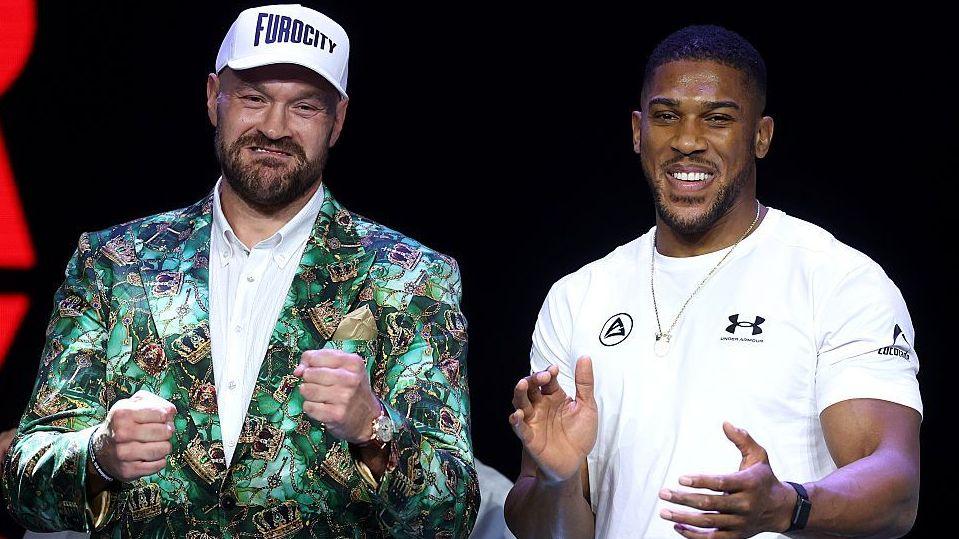
Tyson Fury and Anthony Joshua finally stood face-to-face in London on September 30, formally moving one of British boxing’s most discussed matchups from years of speculation toward an actual fight night. The former heavyweight champions will meet on December 11 at Principality Stadium in Cardiff, Wales, according to Netflix, which will stream the event globally […]
Tyson Fury and Anthony Joshua finally stood face-to-face in London on September 30, formally moving one of British boxing’s most discussed matchups from years of speculation toward an actual fight night.
The former heavyweight champions will meet on December 11 at Principality Stadium in Cardiff, Wales, according to Netflix, which will stream the event globally to its members. The promotion began without the hostility many expected. Fury and Joshua exchanged jokes, offered praise and completed a cordial face-off rather than manufacturing a confrontation for the cameras.
The competitive stakes remain serious. The WBC has designated Fury-Joshua as a final eliminator for Agit Kabayel’s heavyweight championship, giving the winner a defined route toward another world-title opportunity.
That designation changes the meaning of the fight. Fury-Joshua will carry enormous commercial appeal because of the names, history and national rivalry involved, but it is no longer only a lucrative meeting between two famous British heavyweights. The winner can position himself to challenge Kabayel and attempt to return to genuine championship standing.
He will not become champion by winning in Cardiff.
That distinction matters because boxing has a habit of treating recognizable names as though reputation alone can restore them to the top of a division. Fury and Joshua can earn another major opportunity on December 11. Proving either man is once again the world’s leading heavyweight would require another victory after that.
Fury and Joshua Sold Confidence Without Manufacturing Hatred
The first official press conference was notable for what did not happen.
There was no shove, no physical confrontation and no serious attempt to create the appearance of personal hatred. World Boxing News reported that Fury and Joshua laughed during the face-off, while the Associated Press described an unexpectedly friendly promotional event between rivals whose potential meeting has been discussed for more than a decade.
Fury even praised Joshua’s influence on British boxing. According to Associated Press reporting carried by The Washington Post, Fury described Joshua as a longtime role model within the sport and said he sometimes finds himself defending his rival during conversations with boxing fans.
That respect did not prevent either man from predicting a violent result.
Sky Sports reported that Fury promised to attack Joshua rather than approach the fight cautiously. Fury said he intended to “blast” Joshua out and predicted “curtains” once his punches began landing. It was a direct declaration that he expects to impose himself instead of turning the contest into a defensive boxing match.
Joshua responded by treating Fury’s forecast as training motivation. According to Sky Sports, he said the prediction would push him to run farther, spar more and complete additional rounds during camp. Joshua also said he wants to produce a spectacular victory and believes the contest could finish in the opening round.
Those are predictions, not evidence of how the fight will unfold.
Fury’s size, experience and adaptability have helped define his career, but promising to attack Joshua is different from carrying out that strategy against a dangerous puncher. Joshua’s confidence in an early finish reflects ambition, yet a first-round knockout cannot be treated as anything more than his forecast until the fighters enter the ring.
The cordial tone therefore did not remove the edge from the matchup. It simply demonstrated that two rivals can acknowledge each other’s careers without pretending their promotion requires a personal feud.
For now, respect appears to be part of the story rather than an obstacle to selling it.
The WBC Eliminator Gives the Rivalry Current Sporting Value
Fury-Joshua has long been commercially significant. Both men became heavyweight champions, built enormous audiences and occupied the center of British boxing during overlapping eras. Their failure to meet professionally became one of the sport’s most persistent frustrations.
Netflix confirms that they have never fought as professionals.
The WBC’s decision now gives their first meeting a consequence beyond settling a domestic argument. According to the sanctioning body, the contest will serve as a final eliminator for Kabayel’s heavyweight championship. The winner should therefore emerge with a direct route toward challenging for the WBC title.
That does not make Fury-Joshua a world-title fight.
Neither the WBC nor Netflix lists Kabayel’s championship as being contested in Cardiff. The prize is positioning: an opportunity to fight the champion rather than possession of his belt.
The distinction may sound technical, but it is central to evaluating the result honestly. Fury and Joshua are not fighting to determine the reigning WBC heavyweight champion. They are fighting to establish which former champion has earned the chance to confront him.
That adds legitimacy to an event that could otherwise be dismissed as two established stars capitalizing on a rivalry later than originally expected. Whatever anyone thinks of the timing, the winner will have secured something competitively meaningful.
The rivalry supplies the attention.
The eliminator supplies the pathway.
Kabayel remains the destination.
Their Records Establish Experience, Not Present-Day Supremacy
Netflix lists Fury’s professional record at 36-2-1 with 25 knockouts. Joshua is listed at 30-4 with 27 knockouts.
Those records explain why the fight remains important. Both men have competed at the highest level of heavyweight boxing, won major titles and demonstrated enough power to change a contest with one clean sequence. They also carry enough losses and recent uncertainty that neither should be declared fully restored before December 11 provides new evidence.
Fury’s record reflects a long career built on unusual movement, ring intelligence and the ability to adjust his style. Joshua’s record reflects greater vulnerability but also a higher knockout rate and a career repeatedly defined by his willingness to pursue dangerous opponents.
The numbers do not decide what either man is now.
Records summarize what fighters have accomplished across their careers. They do not reveal current timing, punch resistance, conditioning or the ability to execute under pressure after difficult defeats. Those answers have to be produced in the ring.
The press conference offered confidence from both sides, but confidence is expected at this stage of a promotion. Fury says he will attack. Joshua believes he can deliver a spectacular finish. Neither claim establishes present-day superiority before the fight happens.
Official weights will eventually add another piece of information, but no fight-night conclusions can be drawn from them yet because the weigh-in has not taken place. Any figure presented as Fury’s or Joshua’s official weight for this contest would be premature.
The same caution applies to the event’s finances. Boxing News has described the fighters as receiving career-high purses, while Associated Press reporting noted British-media estimates placing the combined purse near $200 million. The contracts have not been disclosed, so neither the exact guarantees nor any revenue shares and bonuses should be treated as confirmed.
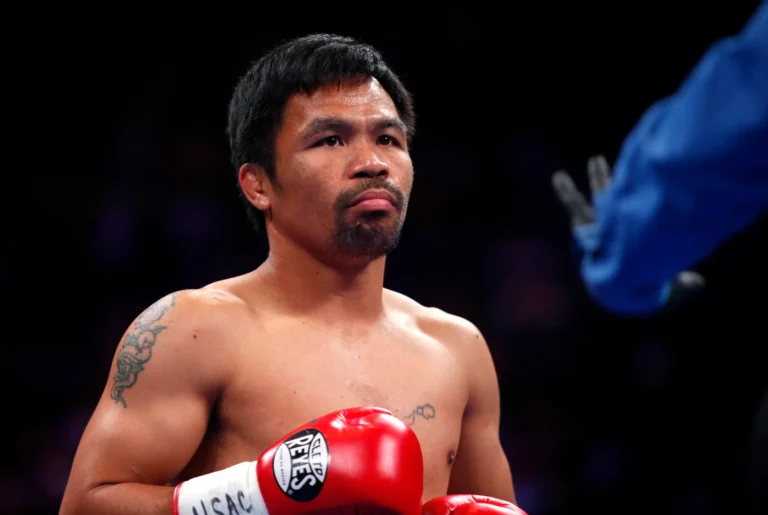
The undercard also remains open. Netflix says supporting bouts have not been announced. Reports that Manny Pacquiao could appear on the card remain unconfirmed unless the event’s organizers formally announce his involvement.
The fight itself is enough. It does not need unsupported numbers or speculative additions to justify attention.
Beating a British Rival Is Not the Same as Beating Agit Kabayel
The winner in Cardiff will have every reason to celebrate.
Fury would be able to say he defeated the other defining British heavyweight of his generation and earned another championship opportunity. Joshua would be able to make the same argument while adding a victory over one of the most accomplished opponents of his career.
Either result would matter.
It still would not settle the larger question of who leads the heavyweight division.
Kabayel cannot be reduced to a belt-holder waiting at the end of a Fury-Joshua storyline. He is the reigning WBC champion and the competitive standard the eliminator winner would still have to overcome. Defeating a familiar rival in a major stadium event and defeating the current champion are separate assignments.
That is especially important because the scale of Fury-Joshua could make its winner appear more significant than the championship itself. Principality Stadium, two globally recognized names and Netflix distribution will give the bout enormous visibility. Kabayel may enter the discussion with less celebrity, but his title makes him essential to any claim of WBC supremacy.
The winner of Fury-Joshua will prove that he can defeat the other man on December 11. He may also show that he remains capable of performing at an elite level, depending on the quality and circumstances of the victory.
He will not have proved that he can defeat Kabayel.
That question deserves its own fight.
A dominant performance in Cardiff could make the winner a compelling challenger and alter how his recent career is viewed. A close or untidy victory could still secure the eliminator while leaving doubts about how either man would perform against the champion. The result will create direction, but the performance will determine how convincing that direction appears.
Fury and Joshua have spent years carrying expectations created by what they accomplished as champions. December 11 gives one of them an opportunity to build a new claim through current evidence.
The first step is winning the rivalry.
The second is defeating the champion.
REAL TALK
Boxing often treats an eliminator like a coronation when the participants are famous enough.
Fury and Joshua are bigger commercial names than most heavyweights, and their first professional meeting deserves major attention. British boxing has pursued this matchup for more than a decade. Seeing them share a stage, exchange predictions and complete an official face-off represents genuine progress after years of failed negotiations and missed opportunities.
But fame cannot change what the WBC designation means.
A final eliminator creates access to a championship fight. It does not award the championship, erase previous defeats or automatically establish the winner as the best heavyweight in the world.
The December 11 result should be judged seriously. Beating Fury would be a major achievement for Joshua. Beating Joshua would be a major achievement for Fury. Either victory could demonstrate that the winner still belongs near the highest level of the division.
Kabayel would remain the next standard.
That is not an attempt to diminish the rivalry. It is the reason the eliminator makes the fight more meaningful. Fury-Joshua will settle a long-running British argument while creating another question with championship consequences.
The winner earns the opportunity.
Beating Kabayel would supply the proof.
LET’S TALK ABOUT IT
Does the WBC final-eliminator designation make Fury-Joshua more meaningful than the rivalry would have been on its own?
And would beating Fury or Joshua be enough to call the winner an elite heavyweight again, or must he defeat Agit Kabayel before that judgment is justified?