




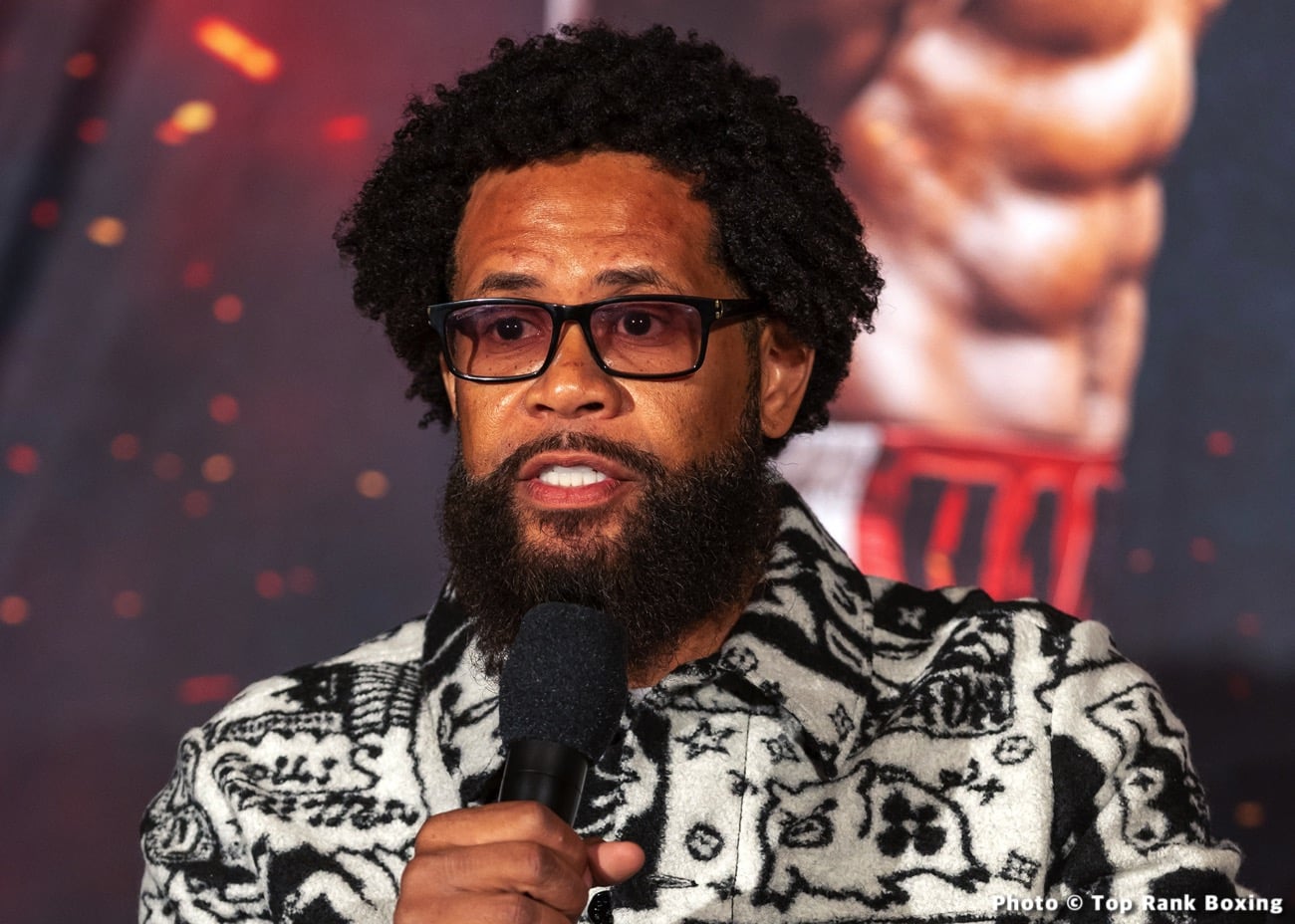
Bill Haney is one of the easiest people in boxing to have an opinion about. He’s outspoken, confrontational when he believes his son is being disrespected, comfortable arguing publicly with fighters and promoters, and willing to turn almost any interview into another chapter of the Devin Haney conversation. That personality makes him polarizing, but it […]
Bill Haney is one of the easiest people in boxing to have an opinion about. He’s outspoken, confrontational when he believes his son is being disrespected, comfortable arguing publicly with fighters and promoters, and willing to turn almost any interview into another chapter of the Devin Haney conversation. That personality makes him polarizing, but it can also distract from something much more significant. If you stop listening to the noise for a moment and study the career he helped construct, Bill Haney has been one of the more innovative boxing managers of the modern era.
That doesn’t mean Bill invented fighter independence. Floyd Mayweather famously turned himself into his own promotional powerhouse, Oscar De La Hoya created Golden Boy Promotions, and generations of fighters have fought for greater control over their careers. What Bill and Devin did differently was begin building that independence before Devin had become a world champion, before he had become a major television attraction and before anybody could guarantee that the gamble would work.
When Devin was a decorated 17-year-old amateur with promoters offering significant signing bonuses, the conventional route was available. The Haneys could have taken the money, signed with an established company and allowed experienced boxing executives to handle matchmaking, promotion and development. Instead, they decided to build the early portion of Devin’s professional career themselves. ESPN reported that they rejected multiple six-figure signing offers, took Devin to Mexico because he was too young to obtain a professional license in the United States and co-promoted his first 21 fights. Ten of his first 15 professional appearances took place on the Mexican club circuit, where the Haneys sometimes broke even and sometimes lost money while learning how the boxing business actually worked.
That decision is the foundation of everything that came afterward. Bill wasn’t simply developing a fighter. He was helping Devin develop leverage.
They Learned the Business Before the Business Could Control Them
Most elite prospects encounter professional boxing from one side of the table. They train, make weight, fight and collect a purse while promoters, matchmakers and managers handle the machinery surrounding them. Bill and Devin deliberately learned the other side as well. They helped stage shows, dealt with matchmaking, paid medical expenses and discovered what it actually cost to move a young fighter through the professional system. ESPN’s account of their rise makes clear that Devin Haney Promotions wasn’t simply a logo attached to somebody else’s operation; father and son were actively involved in building the career from its earliest stages.
That education eventually changed their negotiating position. When Matchroom and DAZN came calling, the Haneys weren’t negotiating as an unknown prospect desperate for a major promoter to rescue him from obscurity. They had already created a television-level fighter and recognizable young brand. ESPN reported that the resulting six-fight Matchroom agreement guaranteed seven-figure purses, beginning with approximately $1 million for the first bout and escalating from there. Promoter Lou DiBella later described the way the Haneys handled that development as exceptionally smart because they waited until Devin had established significant value before making the deal.
That’s one of Bill Haney’s most important contributions to Devin’s career. He understood that independence doesn’t necessarily mean refusing to work with powerful companies. It means trying to avoid becoming permanently dependent on one.
The Haneys worked with Matchroom when Matchroom made sense. They worked with DAZN when DAZN provided the right platform. They later worked with Top Rank and ESPN when that relationship provided the route to George Kambosos Jr. and the undisputed lightweight championship. After that arrangement ended, they worked with Matchroom again for Regis Prograis. BoxingScene reported after the Prograis fight that Devin remained a promotional free agent even while acknowledging the value Eddie Hearn continued bringing to individual events.
The important part wasn’t loyalty to one promoter. It was loyalty to the career plan.
Australia May Have Been Bill Haney’s Best Business Decision
Nothing demonstrates that philosophy better than the Kambosos situation.
By 2022, Devin held the WBC lightweight championship, while George Kambosos Jr. had defeated Teofimo Lopez and possessed the other major belts. Haney wanted undisputed status, but getting it required accepting terms that heavily favored the champion. Devin had to travel more than 8,000 miles to Australia, fight Kambosos in his home market and accept an immediate rematch clause that could require him to return to Australia if he won.
A manager concerned primarily with protecting an undefeated record could have found reasons to reject that arrangement. Bill saw what the opportunity could create.
The Haneys accepted the unfavorable geography because winning would transform Devin’s negotiating position permanently. He went to Melbourne and defeated Kambosos by unanimous decision to become undisputed lightweight champion at 23, then returned to Australia four months later and beat him again. The risk was substantial, but so was the leverage created by succeeding.
There was an additional complication before the first fight. Bill initially couldn’t obtain a visa to enter Australia because of a decades-old conviction. Devin traveled without the father and trainer who had guided virtually his entire boxing career, and Bill wasn’t approved until just days before the bout. He arrived in Melbourne shortly before the fight and was ultimately in the corner when Devin became undisputed.
That episode explains something important about Team Haney’s approach. Controlling your career doesn’t mean controlling every circumstance. Sometimes it means accepting circumstances you don’t like because the opportunity on the other side is worth more than the comfort you’re giving up.
Bill understood the difference.
He Treated Promoters Like Partners Instead of Employers
This may be the part of the Haney blueprint younger fighters should study most closely.
Bill never seemed philosophically opposed to promoters. Team Haney has worked with some of the biggest promotional organizations in boxing. What they resisted was the assumption that a fighter must permanently attach himself to one promotional company before he has enough leverage to negotiate from strength.
That’s a subtle but important distinction.
Promoters provide enormous value. They have broadcast relationships, venue connections, marketing infrastructure, matchmaking expertise and access to opponents. Trying to perform every function independently simply because independence sounds attractive can destroy a career just as easily as signing a bad long-term contract.
The Haneys’ approach was more flexible. Build independently when independence creates leverage, partner when partnership creates opportunity, and preserve enough freedom to change partners when the next objective requires something different.
That is why Devin could work with Matchroom, move to Top Rank for Kambosos and Lomachenko, then return to Matchroom for Prograis without treating every promotional transition like a divorce. The companies were part of the strategy rather than the owners of the strategy.
The WBC itself noted in 2023 that Devin operated under Devin Haney Promotions with Bill, who had been named the Boxing Writers Association of America’s 2023 Manager of the Year. The organization specifically highlighted that structure as giving Haney unusual control over his legacy and career.
Bill Understood Branding Before Devin Had the Résumé
There is another part of Bill’s management that doesn’t receive enough credit. He understood early that a fighter’s value couldn’t depend exclusively on championships that might take years to obtain.
Devin already had a substantial social-media following before turning professional. Rather than treating that as something separate from boxing, Team Haney incorporated it into the development of his professional identity. By the time Matchroom became involved, Devin wasn’t simply an excellent prospect requiring a promoter to introduce him to the public. He already had an audience and a recognizable brand. Eddie Hearn acknowledged as early as 2019 that Bill and Devin Haney Promotions had developed Devin without needing a major promoter to carry them through the early stages.
That approach feels normal now because fighters routinely discuss personal brands, social-media audiences and independent promotion. It was considerably less conventional when a teenage Haney was fighting in Mexican bars and small venues while his father was trying to turn those nights into the foundation of something much larger.
Bill appears to have understood that the objective wasn’t simply to make Devin famous. Fame without leverage can still leave a fighter dependent on somebody else. The objective was to make Devin valuable enough that established boxing companies would eventually compete for the opportunity to work with him.
That reverses the normal relationship.
Instead of the fighter asking a promoter, “Can you make me a star?” the promoter eventually has to explain what it can offer a fighter who already possesses value.
The Training Decisions Matter Too
Bill’s role has never been limited to contracts and promotion. He’s also been Devin’s father and longtime trainer, which creates a complicated relationship because those three jobs don’t always want the same thing.
A father wants to protect his son. A trainer has to expose weaknesses honestly. A manager sometimes has to recommend accepting a dangerous fight because the business opportunity is too important to ignore. Bill has had to operate inside all three responsibilities while Devin progressed from a teenager fighting in Mexico to championship fights involving Kambosos, Vasiliy Lomachenko, Regis Prograis, Ryan Garcia and Brian Norman Jr.
That doesn’t mean every decision Team Haney has made was correct. No serious evaluation of management should require pretending otherwise. Their matchmaking, promotional choices and public behavior can all be criticized individually.
The larger trajectory is difficult to argue with.
Bill helped take a teenager who couldn’t legally begin his professional career in the United States and build him into an undisputed champion, a multi-division titleholder and a fighter capable of negotiating with promoters from a position of independence. Devin himself has repeatedly credited his father with occupying virtually every role around his career.
The results give that statement substance.
The Blueprint Is Bigger Than Devin Haney
This is where I think Bill Haney’s influence becomes more important than whether somebody likes his personality.
The traditional boxing story tells a young fighter to find the right promoter, sign the contract and hope that promoter can navigate him toward championships and money. Team Haney demonstrated another possibility: build enough infrastructure around yourself that promoters become strategic partners rather than permanent gatekeepers.
That model isn’t available to everybody. Financing early fights is expensive. Matchmaking is difficult. Developing relationships with commissions, venues and broadcasters requires expertise. Bill and Devin took financial risks that could easily have produced nothing if Devin hadn’t developed into an elite fighter. Their success shouldn’t be turned into simplistic advice that every prospect should reject promotional contracts and attempt to become his own Floyd Mayweather.
The real lesson is about leverage.
Understand what you’re signing. Understand what the promoter contributes. Understand what you’re contributing. Build your audience. Learn the business. Don’t surrender years of control simply because somebody offers money before you’ve discovered what your eventual value might become.
Most importantly, recognize that independence and cooperation aren’t opposites.
Bill Haney worked with Eddie Hearn.
He worked with Top Rank.
He worked with broadcasters and established promoters whenever those relationships moved Devin toward something Team Haney wanted.
The innovation was maintaining enough independence to leave when the objective changed.
REAL TALK
Boxing history is filled with stories about fighters discovering too late that everybody around them understood the business better than they did. They knew how to fight, while somebody else understood the contracts, television money, promotional options and leverage. By the time the fighter learned how the machinery worked, much of his career had already been negotiated away.
Bill Haney appears to have decided very early that Devin wouldn’t learn the business that way.
That decision required taking risks before there was any guarantee those risks would be rewarded. Fighting in Mexico wasn’t glamorous. Financing developmental fights wasn’t guaranteed to produce a return. Rejecting six-figure signing bonuses sounds brilliant once the fighter becomes a world champion; it would have looked very different if Devin’s career had stalled before reaching television.
That’s why the Haney story matters. The strategy worked because the boxing eventually justified the confidence behind the business plan.
Bill didn’t make Devin an elite fighter by negotiating contracts. Devin still had to enter the ring and beat Kambosos in Australia, defend the undisputed championship, defeat Lomachenko, move up and dominate Prograis, survive the aftermath of the Garcia controversy and continue building his career. Management can create opportunities, but it can’t win rounds.
What Bill helped create was a structure that allowed those victories to increase Devin’s leverage rather than simply increasing somebody else’s control over him.
That may ultimately be the most important part of his contribution.
Bill Haney didn’t eliminate promoters from Devin’s career. He changed the relationship Devin had with them.
Instead of building a fighter who belonged to one promotional company, he helped build a fighter valuable enough that multiple promotional companies had reasons to do business with him.
For the next generation of boxers watching closely, that distinction may be more influential than anything Bill Haney has ever said at a press conference.
LET’S TALK ABOUT IT
Has Bill Haney created one of the best modern blueprints for managing an elite fighter—building independence first and using major promoters strategically instead of signing away long-term control early?
And if you were advising a highly regarded 17-year-old prospect today, would you follow the Haney model and accept the financial risk of building independently, or take the security and infrastructure that comes with signing to a major promoter?