





Moses Itauma entered professional boxing believing he could move faster than almost everybody who came before him, and for a while there wasn’t much evidence suggesting he was wrong. He was knocking out heavyweights almost as quickly as promoters could find them, climbing the rankings while still in his teens and openly chasing Mike Tyson’s […]
Moses Itauma entered professional boxing believing he could move faster than almost everybody who came before him, and for a while there wasn’t much evidence suggesting he was wrong. He was knocking out heavyweights almost as quickly as promoters could find them, climbing the rankings while still in his teens and openly chasing Mike Tyson’s record as the youngest heavyweight champion in history. By late 2025, however, Itauma had started discovering that becoming a heavyweight star involved considerably more than simply beating whoever was placed in front of him.
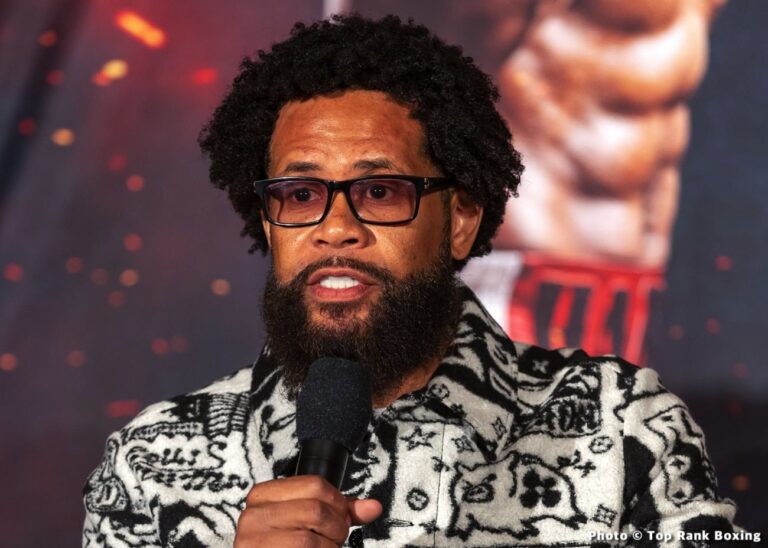
In an interview with The Ring before his fight with Jermaine Franklin, Itauma talked candidly about that education. He said he had begun noticing how many “business-minded people” operated around boxing and how contracts, negotiations, money and what he described as “smoke” became increasingly important as his profile grew. Opponents who might once have viewed him as an inexperienced teenager were beginning to recognize the danger attached to fighting him, and that recognition changed the price of doing business.
Those comments were interesting when Itauma made them. They’re considerably more interesting now.
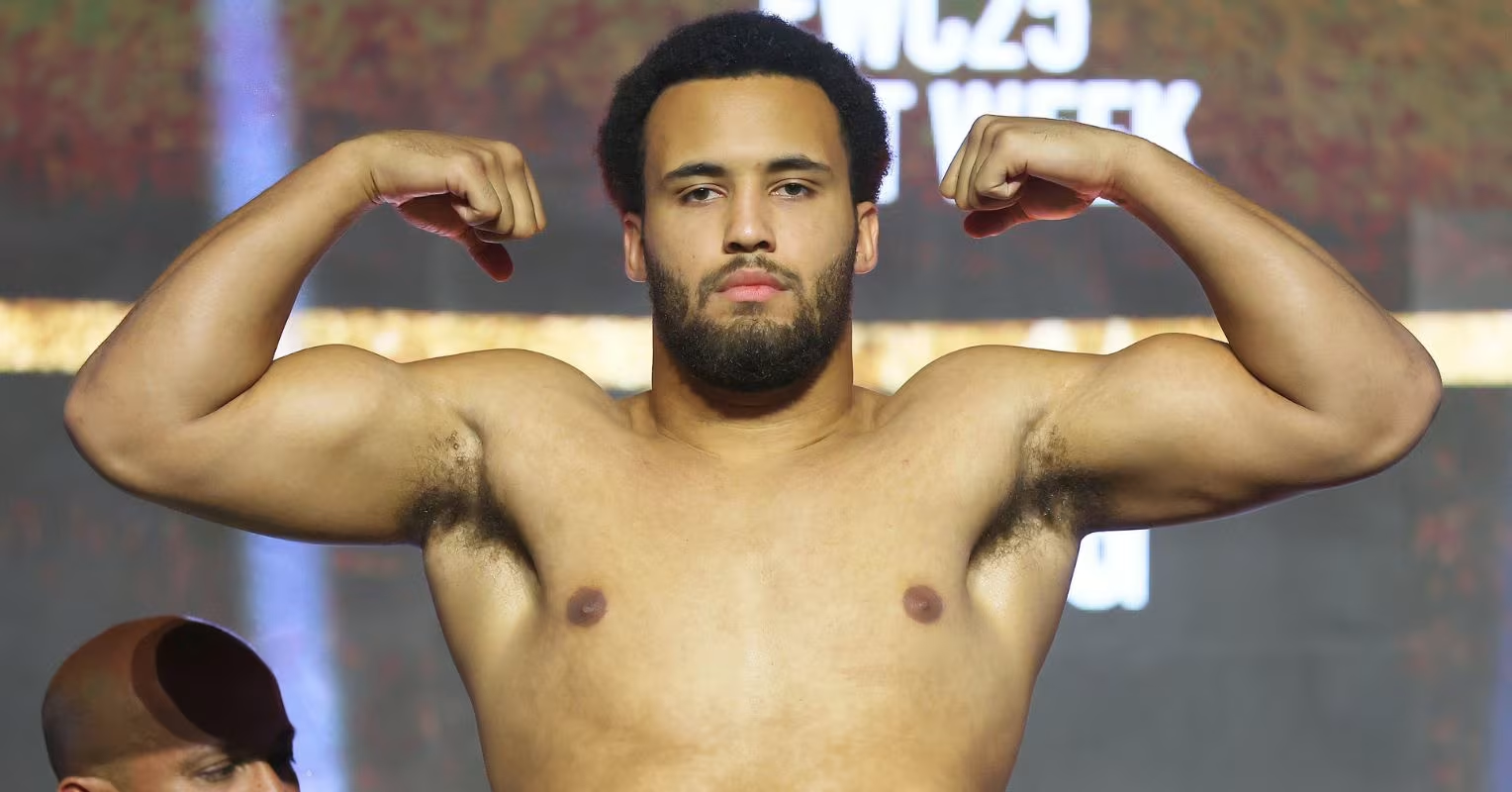
Less than a year later, Itauma had gone from trying to understand the business surrounding heavyweight boxing to fighting Filip Hrgovic for the vacant IBF heavyweight championship. He looked spectacular for much of the fight, dropped Hrgovic in the second round and controlled the action before his energy collapsed late. Hrgovic survived, took over and stopped the 21-year-old in the ninth round. Itauma’s meteoric rise had finally encountered something neither money nor matchmaking could accelerate: experience.
Itauma Was Never Surprised by His Own Rise
One of the most revealing things about Itauma has always been how normal his extraordinary progression seemed to him. When The Ring asked whether he was surprised by how quickly he had become an important figure in the heavyweight division, Itauma essentially said no. He reminded them that he had entered the professional ranks expecting to become world champion by 20. From his perspective, being discussed alongside the division’s important names wasn’t some unexpected consequence of hype. It was roughly where he expected to be.
That confidence helps explain why Itauma’s career moved the way it did. He wasn’t a prospect asking his promoter to protect him for five years while he accumulated an attractive record. He wanted significant fights, and his performances kept making the argument that he was ready for them. Opponents weren’t lasting long enough to expose obvious weaknesses. His speed looked unusual for a heavyweight, his power was producing early endings, and the gap between Itauma and the fighters being placed in front of him often looked enormous.
The problem was that those same spectacular performances made evaluating his development difficult. A two-round knockout tells us plenty about a fighter’s explosiveness, timing and finishing ability, but almost nothing about how he responds when a durable heavyweight survives the initial attack. It doesn’t show how he manages his energy through ten or twelve rounds, how he adapts when the knockout isn’t available or how disciplined he remains once fatigue starts interfering with the decisions his brain wants his body to execute.
Hrgovic eventually asked all of those questions at once.
The Business of Boxing Started Changing Around Him
Itauma had already noticed another consequence of becoming dangerous: opponents began treating him differently during negotiations. In that 2025 interview, he explained that fighters increasingly understood the risk attached to facing him and wanted to be compensated accordingly. The heavyweight title picture was also moving slowly while Oleksandr Usyk considered his future, which meant contenders had additional incentive to preserve their positions rather than volunteer for a dangerous young heavyweight who offered enormous risk without necessarily offering a championship.
That is one of the strange realities of professional boxing. Becoming better doesn’t always make it easier to find opponents. Sometimes it makes matchmaking significantly harder because the people you’re trying to fight perform the same risk-reward calculation that your own team performs.
For a contender looking at Itauma, the calculation was obvious. Why take a potentially damaging loss against a 20-year-old prospect when waiting might produce a championship opportunity or a larger payday somewhere else? Itauma was discovering that rankings don’t function like a tournament bracket where the next person simply agrees to fight because that’s who comes next. Professional boxing is a marketplace, and dangerous fighters without championships can sometimes become products nobody wants to buy.
The irony is that Itauma eventually solved that problem by becoming valuable enough that the reward began matching the risk. His profile kept growing, the opponents became more significant, and eventually he found himself standing across from Hrgovic with the IBF championship available.
That’s where the accelerated business plan met the slower reality of heavyweight development.
Hrgovic Exposed Experience, Not Talent
The easiest reaction to Itauma’s first defeat would be to decide that the hype was wrong. That doesn’t fit what actually happened.
Itauma was extremely effective against Hrgovic for most of their fight. Hrgovic has subsequently described him as the most difficult opponent he has faced professionally and acknowledged being troubled by Itauma’s speed and southpaw skills. The Croatian veteran wasn’t exposing an untalented prospect. He was surviving against an extremely talented one.
That distinction matters because Itauma’s problem wasn’t that his skills suddenly disappeared when he reached world level. His problem was that he couldn’t maintain what he was doing for as long as the fight required. After controlling most of the early action, his energy deteriorated and Hrgovic was experienced enough to recognize the shift, remain patient and punish it. Itauma was stopped in the ninth round after entering a portion of a championship fight his previous professional career had barely prepared him to navigate.
There is a fascinating connection between that result and the way Itauma previously talked about boxing as a business. His rapid rise made commercial sense because every performance seemed to demonstrate that the normal developmental process was unnecessary. If opponents couldn’t last, why continue fighting opponents at that level? If he could beat established names quickly, why wait several years before challenging for a championship?
The Hrgovic fight supplied the answer. Some stages of development aren’t there merely because boxing has always done things that way. Certain experiences can’t be acquired without actually experiencing them.
Those Easy Knockouts Were Both a Gift and a Problem
For most prospects, winning easily is considered ideal. Itauma’s career shows why it can occasionally become complicated.
The better he looked, the less opportunity he had to learn how to operate when he didn’t look good. Early knockouts protected his body from unnecessary punishment and helped build his profile, but they also reduced the number of difficult professional rounds available to him. By the time Itauma fought Hrgovic, reporting noted that he entered the championship fight with only a limited amount of professional-round experience compared with the veteran standing across from him.
There was no realistic way to recreate that difference in the gym. Sparring can be hard, but sparring doesn’t carry the psychological and physical consequences of a world-title fight where somebody you’ve already hurt refuses to leave. In a gym, rounds end and coaches can reset the situation. In a championship fight, fatigue becomes part of the opponent’s strategy, and the man across from you can sense when your body is beginning to betray you.
Hrgovic had lived through difficult professional fights before. Itauma hadn’t.
That’s why the loss shouldn’t automatically be interpreted as evidence that Itauma was pushed to a level he can never reach. It may simply mean he arrived there before accumulating every tool required to remain there.
Frank Warren’s reaction afterward suggests Itauma’s team understands that distinction. Warren has said there need to be “serious changes” before Itauma returns in early 2027, while also revealing that he originally had reservations about making the Hrgovic fight before Itauma’s team convinced him it was the right opportunity.
The Mike Tyson Chase May Have Quietly Distorted the Timeline
The pursuit of Mike Tyson’s age record gave Itauma’s early career an unusual deadline. Becoming heavyweight champion eventually wasn’t enough. There was a historical clock attached to the goal.
That created excitement, but it also encouraged everyone around Itauma to evaluate opportunities differently. A fight that might normally have been considered too early suddenly became attractive because waiting six months could eliminate the possibility of making history.
Itauma himself never treated the Tyson chase as promotional nonsense. The Ring reported that he genuinely intended to become champion by 20 and that his team would have taken the appropriate opportunity if it appeared.
There was nothing inherently wrong with trying. Great fighters often accomplish things because they refuse to accept conventional timelines. But once the record became impossible, Itauma gained something that may prove more valuable than the record itself.
He gained time.
He no longer needs every fight to accelerate toward a historical deadline. He can spend 2027 learning things that would have seemed frustratingly slow when everyone was watching the calendar. He can fight somebody durable enough to make him manage his energy, somebody experienced enough to force adjustments and somebody good enough to punish mistakes without representing another immediate world-title assignment.
At 21, that isn’t moving backward. It’s finally allowing the development to catch up with the talent.
Boxing Became a Job Before Itauma Had Finished Learning It
There is another part of Itauma’s recent interviews that makes his story more complicated. Earlier this year, before the Hrgovic fight, Itauma admitted that some of his original passion for boxing had already started fading as the sport became his profession. He explained that once money became involved and boxing became something he did every day for work, his relationship with it naturally changed. He still enjoyed boxing, but reaching the goals he’d established for himself had become a larger motivation than pure enthusiasm.
That is an unusually revealing admission from somebody so young.
Itauma turned professional as a teenager, became a major heavyweight attraction almost immediately and quickly discovered that professional boxing isn’t simply amateur boxing with bigger crowds. There are negotiations, contracts, promotional relationships, rankings, purses and strategic decisions surrounding every meaningful move. The thing he loved doing became the thing paying him, and the thing paying him became a business involving dozens of people whose interests didn’t always perfectly align with his own.
Then came the first defeat.
That may ultimately force Itauma to decide something more important than who he fights next. He has to determine what relationship he actually wants with boxing now that the undefeated record, Tyson chase and effortless progression are gone.
That question could shape his career more than any technical adjustment.
REAL TALK
Itauma’s story is interesting because success arrived so quickly that he had almost no reason to question the path carrying him forward. Every knockout validated the next step. Every ranking improvement made the next bigger fight appear reasonable, and every opponent who disappeared early reinforced the belief that Itauma might genuinely operate on a different timetable from ordinary heavyweight prospects.
Hrgovic interrupted that momentum, but he may also have given Itauma something the business side of boxing couldn’t provide: an honest measurement of where he was.
There is a difference between somebody slowing your career because they’re protecting their financial interests and somebody slowing your career because you’ve reached a part of the journey you’re not completely prepared for. Itauma had already learned to recognize the first problem. The Hrgovic fight introduced him to the second.
That doesn’t make his previous confidence foolish. If anything, his performance against Hrgovic showed why everybody was excited in the first place. For long stretches, a 21-year-old heavyweight was outboxing an experienced world-level opponent and making the future look like it had arrived ahead of schedule. What happened later simply showed that arriving at the destination and being prepared to stay there aren’t the same thing.
The most important business decision Itauma’s team makes now may therefore be deciding not to treat his career like a business that needs immediate growth.
There is no historical deadline anymore. There is no undefeated record requiring protection. There is no need to manufacture another world-title opportunity before he’s ready.
There is just an exceptionally talented 21-year-old heavyweight who finally knows what he doesn’t know.
That’s not a bad place from which to start again.
LET’S TALK ABOUT IT
Did Moses Itauma’s talent cause his team to move him toward a world title before he had accumulated enough difficult professional rounds, or was the Hrgovic fight exactly the kind of risk a special young fighter should have been allowed to take?
And now that the Mike Tyson record is gone, should Itauma’s team deliberately slow his career down and build experience, or would too much cautious matchmaking risk taking away the confidence and ambition that made him special in the first place?