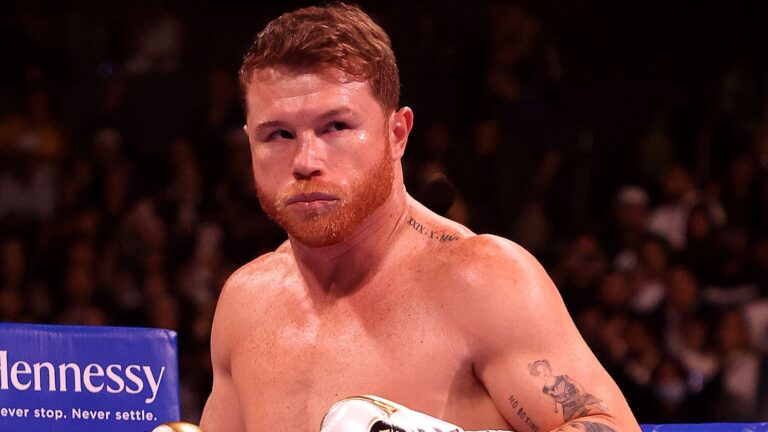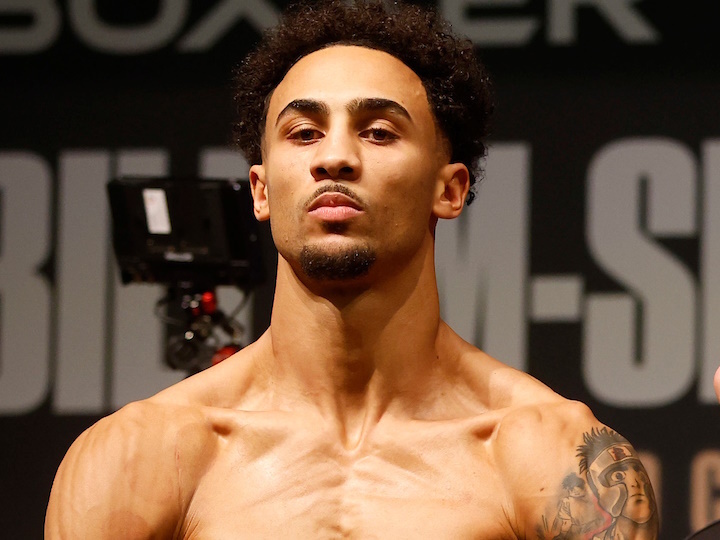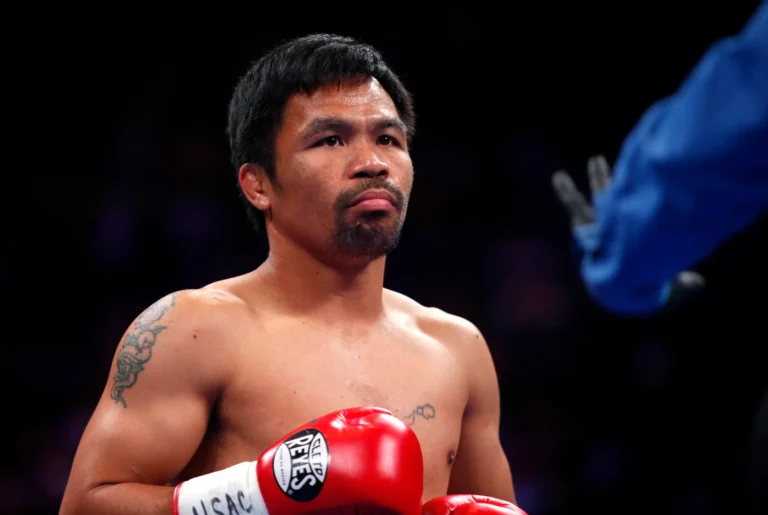

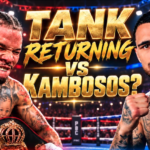




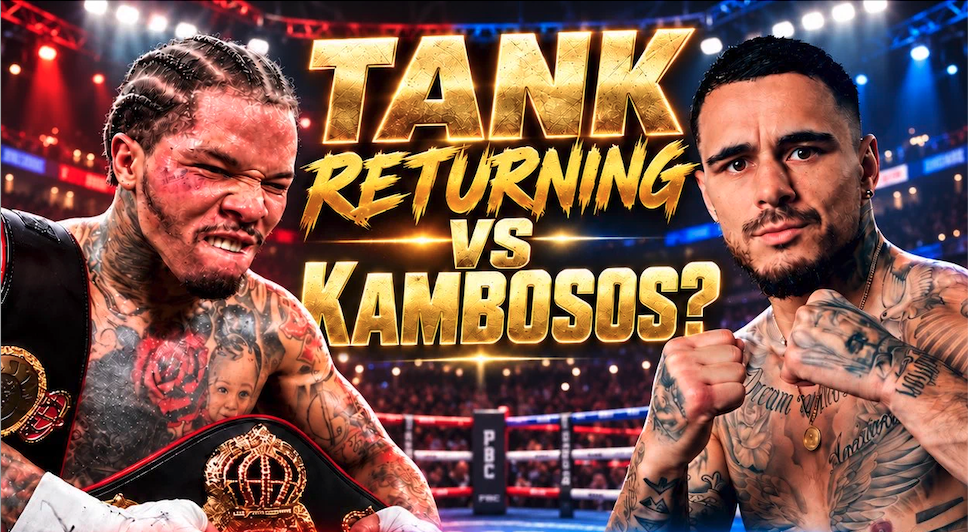
Gervonta “Tank” Davis and George Kambosos Jr. are discussing a possible comeback fight, but the most important part of the matchup may not be either name on the poster. It may be the contract. Kambosos confirmed on October 2 that the teams are “talking” and said he fears no opponent. He also publicly challenged Davis’ […]
Gervonta “Tank” Davis and George Kambosos Jr. are discussing a possible comeback fight, but the most important part of the matchup may not be either name on the poster.
It may be the contract.
Kambosos confirmed on October 2 that the teams are “talking” and said he fears no opponent. He also publicly challenged Davis’ side to stop seeking rehydration clauses, indicating that some form of post-weigh-in restriction has been proposed during negotiations.
Neither fighter nor a promoter has announced a signed agreement. The contracted weight remains unknown, and neither side has disclosed the limit, timing or enforcement terms of the reported rehydration clause.
Those missing details prevent the matchup from being evaluated properly. Matchroom lists Kambosos as a super-lightweight, while Davis remains identified by the WBA as its lightweight champion in recess. If the two former champions are expected to meet across divisions, the difference between an ordinary weight agreement and a restrictive rehydration condition could shape the fight before either man reaches the ring.
Davis–Kambosos may become a high-profile return for both fighters.
For now, it remains an unfinished negotiation.
Kambosos Confirmed the Talks but Challenged the Proposed Terms
Kambosos’ public statement established that discussions are active without claiming that a deal has been completed.
He wrote on X that the teams were talking and emphasized that he does not fear any opponent. In the same message, he told Davis’ side to stop pursuing rehydration clauses.
That complaint is significant because fighters do not usually raise contractual restrictions publicly unless those terms have become part of the negotiation. It does not, however, reveal what Davis’ representatives have proposed.
There is no confirmed weight limit for the fight. The reporting also does not establish how much either fighter would be permitted to weigh after the official weigh-in, when a second weight check would take place or what penalty would apply if the agreed limit were exceeded.
Davis and his representatives had not provided a public response in the reviewed sources.
Without those details, it would be premature to declare the proposed clause unfair or harmless. Rehydration restrictions can vary considerably, and their effect depends on the contracted division, the permitted weight gain, the timing of the check and the physical circumstances of the fighter accepting it.
The principle is straightforward. Fighters typically weigh in before the event and then regain weight as they eat and replace fluids. A rehydration clause adds another contractual limit after the official weigh-in, restricting how much a boxer may regain by a specified time.
That can matter when one boxer naturally competes in a larger division.
It does not automatically mean Kambosos cannot safely meet whatever terms are being discussed. No medical or contractual information in the supplied reporting supports that conclusion. It does mean the public cannot assess the competitive balance until the full conditions are known.
Kambosos has signaled that the issue matters to him.
The next question is whether it becomes a deal-breaker.
Davis Is Targeting a Return, but the Event Remains Unconfirmed
World Boxing News reports that Davis is targeting a return between January and March 2027. The outlet identified Barclays Center in Brooklyn and Las Vegas as possible locations, but no venue has been publicly secured.
Davis trainer Kenny Ellis offered a similar general timeline in September, telling FightHype that Davis would “probably” return at the beginning of 2027.
That supports the possibility of an early-year comeback. It does not confirm a date, opponent or location.
The promoter and broadcaster also remain unannounced. No championship has been attached to the proposed matchup, and there is no confirmed information about financial terms accepted by either fighter.
Davis has not competed since facing Lamont Roach Jr. at Barclays Center on March 1, 2025. Premier Boxing Champions records that fight as a 12-round majority draw.
The result left unresolved questions because Davis entered as the more established attraction but did not secure the victory expected of him. His most recent win came on June 15, 2024, when he stopped Frank Martin in the eighth round, according to PBC.
The WBA currently lists Davis at 30-0-1 with 28 knockouts and identifies him as its lightweight champion in recess. The organization applied that designation on June 26, 2026, after determining that ongoing legal proceedings could prevent him from fulfilling his championship obligations.
The WBA then made its lightweight championship vacant and designated Floyd Schofield and Lucas Bahdi to contest it.
Davis’ champion-in-recess status keeps a connection between him and the organization, but the supplied WBA material does not establish a guaranteed route back to the championship. A return against Kambosos therefore should not automatically be described as a title move.
It may be primarily a commercial comeback designed to restore Davis’ activity and momentum before any championship direction becomes clear.
The Weight Terms Could Matter More Than the Divisional Label
Calling a fight “lightweight,” “super-lightweight” or a catchweight contest only answers part of the question.
The official limit determines what each man must weigh at the contracted weigh-in. A rehydration clause can then determine how much of that weight a fighter is allowed to regain before the bout. The two terms work together, and examining one without the other can create an incomplete picture.
Kambosos is now listed by Matchroom as a super-lightweight. His profile records him at 22-4 with 10 knockouts. Davis, meanwhile, built his championship position at lightweight, although no division has been announced for this proposed fight.
If Kambosos were required to move down, the contracted limit would matter. If he were also restricted after making that limit, the rehydration condition could become equally important. If the bout were staged at a higher weight with a moderate second-day check, the practical effect could be different.
That is why the actual numbers and procedures need to be disclosed before conclusions are drawn.
A clause is not automatically improper simply because Davis’ side requested it. Fighters from different divisions frequently negotiate terms intended to manage size disparities, and both sides are entitled to decide what they will accept.
But negotiating leverage can influence those decisions.
Davis is the larger commercial attraction. Kambosos owns a recognizable name and former championship history, but he is also attempting to rebuild after a difficult recent run. That difference in bargaining power could place pressure on him to accept conditions he would otherwise reject.
Accepting the clause would still be his team’s decision. It would not remove the public’s right to examine how the terms might affect the contest.
The difference between a legitimate size-management provision and a condition that substantially favors one fighter cannot be determined from the phrase “rehydration clause” alone.
The contract must provide the answer.
Both Fighters Need a Return That Proves Something
The proposed matchup carries value because Davis and Kambosos both need to reestablish themselves, although for different reasons.
Davis needs activity after an absence dating to the Roach draw. A victory would restore momentum and provide a clearer starting point for whatever championship or major-event plan follows.
It would not erase the questions raised by the Roach performance.
Roach forced Davis into a competitive fight and left with an official draw. Beating Kambosos could show that Davis has recovered his sharpness, but it would not automatically explain why the Roach fight unfolded as it did or restore the WBA title made vacant during his absence.
Kambosos faces a more urgent competitive problem.
ESPN and The Guardian recorded that Richardson Hitchins stopped him with a body shot in the eighth round of their June 14, 2025 IBF junior-welterweight title fight. Kambosos has not competed since. Boxing News 24 reports that he has lost four of his past six contests, with the official defeats in that stretch coming twice against Devin Haney and once each against Vasiliy Lomachenko and Hitchins.
Those losses came against accomplished opposition, and Kambosos’ recent record should not be reduced to a suggestion that he has no chance. Matchroom records that he became unified lightweight champion by defeating Teofimo Lopez by split decision in November 2021.
That victory established his ability to overturn expectations on a major stage.
Beating Davis would revive Kambosos immediately. It would give him the biggest win of his career since Lopez and restore his relevance across the lightweight and super-lightweight conversation.
The conditions would still shape how the performance was judged.
If Kambosos accepts a demanding weight arrangement and looks depleted, the result could raise questions about whether the contract prevented the best version of the fight. If he performs well under disclosed and mutually accepted terms, those same conditions may become less central afterward.
Either way, the audience should know what both fighters agreed to.
A Signed Agreement Must Answer the Basic Questions
Davis–Kambosos cannot be treated as finalized until the fighters or their representatives announce a completed deal.
That announcement would need to establish the date and venue. World Boxing News has reported an early-2027 target and identified Barclays Center and Las Vegas as possibilities, but possibilities are not bookings.
The promoter and broadcaster must also be confirmed. Any championship involvement would require an official announcement rather than an assumption based on Davis’ WBA designation or Kambosos’ former titles.
Most importantly, the agreement should disclose the contracted weight and the reported rehydration terms.
How much weight can each fighter regain? When will the second check occur? Does the restriction apply equally to both men? What happens if either fighter exceeds it?
Those questions are not technical distractions from the matchup. They are part of the matchup.
Once the terms are known, the competitive questions can receive greater attention. Davis will need to show whether his timing, pressure and finishing ability remain intact after his absence. Kambosos will need to demonstrate that he can rebound from the Hitchins defeat and still perform effectively against a dangerous puncher.
Until then, the names create interest while the missing contract details create uncertainty.
Davis and Kambosos may be negotiating the same fight.
That does not necessarily mean they are negotiating it under equal conditions.
REAL TALK
Boxing contests are shaped by more than speed, power and technique.
The contract can determine the division, gloves, ring dimensions, purse structure and how much weight a fighter is allowed to regain after stepping off the official scale. Those decisions happen away from the crowd, but their effects can become visible once the bell rings.
A rehydration clause is not automatically evidence of wrongdoing. When fighters from different weight classes negotiate, some restriction may be proposed to prevent one boxer from entering with a major size advantage.
The problem begins when the restriction stays vague while the public is asked to judge the contest as though both fighters are meeting under ordinary divisional conditions.
Davis’ drawing power gives his side leverage. Kambosos’ name and former championship status give him access to an opportunity capable of changing his career. Both realities can exist at once.
Kambosos can decide that the reward justifies the terms. Davis can argue that the restriction is necessary to create the matchup. Neither position should prevent scrutiny of what the agreement actually requires.
Weight conditions deserve the same attention as records and recent results because they help determine which versions of the fighters enter the ring.
The promotion sells the matchup.
The contract defines it.
In boxing, an advantage can be created before either fighter throws a punch.
LET’S TALK ABOUT IT
Should Kambosos accept a rehydration clause for the opportunity to face Davis, or should the matchup proceed under the standard limits of an agreed division?
Can Davis–Kambosos be judged as a serious comeback fight before the contracted weight and full rehydration terms are disclosed?