




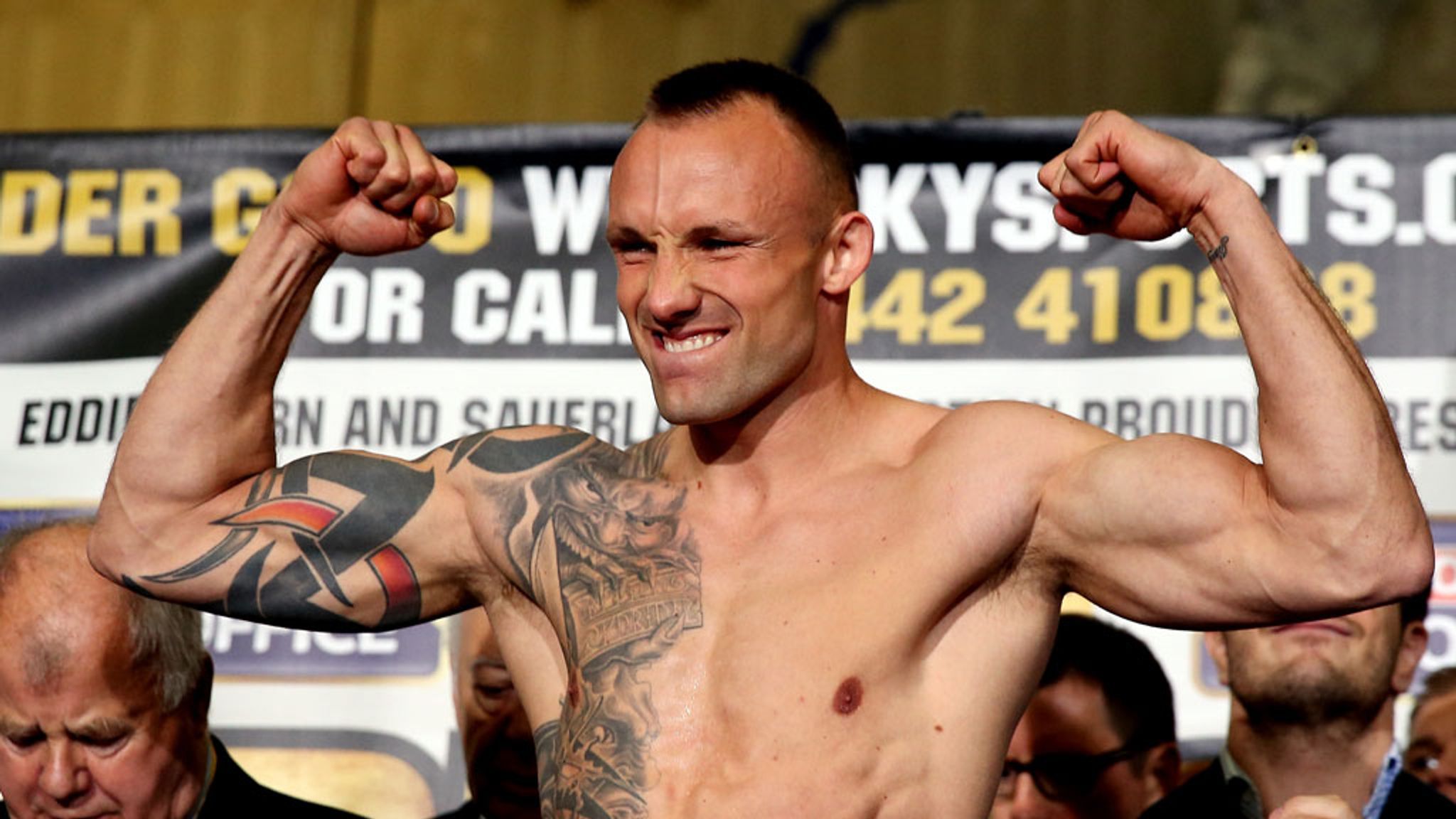
Mikkel Kessler is returning to professional boxing at 47, ending a 13-year absence with an ambition that extends far beyond one nostalgic night in Denmark. Kessler is scheduled to face Bernard Joseph on November 28, 2026, at Brøndby Hallen in Brøndby. Viaplay reported that the former WBA and WBC super-middleweight champion officially announced the fight […]
Mikkel Kessler is returning to professional boxing at 47, ending a 13-year absence with an ambition that extends far beyond one nostalgic night in Denmark.
Kessler is scheduled to face Bernard Joseph on November 28, 2026, at Brøndby Hallen in Brøndby. Viaplay reported that the former WBA and WBC super-middleweight champion officially announced the fight during an October 1 press conference, while Ticketmaster Denmark lists the event as “Mikkel Kessler: The Comeback,” organized by MF Sports.
It will be Kessler’s first professional bout since Carl Froch defeated him by unanimous decision in their May 2013 rematch. Kessler insists this is not an exhibition, publicity stunt or impulsive attempt to revisit his past. According to the Danish news agency Ritzau, he wants to become a world champion again.
That declaration changes the standard by which this return should be judged.
Kessler’s achievements explain why his comeback will attract attention, but championships won in an earlier era cannot establish what he can do now. Bernard Joseph is the first opportunity to measure the fighter returning in 2026—and to determine whether the world-title conversation deserves to continue after November 28.
Kessler Says This Comeback Is Neither a Stunt Nor a Sudden Idea
Kessler understands why his return will be met with skepticism. He has been away longer than many active professionals have had careers, and he is attempting to compete again at an age when most fighters have accepted that their time in the ring is over.
At the October 1 press conference, Kessler acknowledged that people might be surprised by his age and the length of his absence. According to Ritzau, however, he rejected the idea that his comeback was a gimmick, stunt or sudden decision, arguing that anyone describing it that way did not know him.
That distinction matters to Kessler because he is not presenting November 28 as a ceremonial farewell. His stated objective is another world championship.
The ambition should be taken seriously as an expression of his intent, but it is not evidence that a title opportunity exists. No sanctioning body has announced or ordered a championship fight involving Kessler, and the available reporting does not establish that he holds a ranking that would place him near one.
For now, the world title is a goal—not a plan.
This is also not the first time Kessler has considered returning. Ritzau reported that he pursued an earlier comeback in 2017, but the effort was abandoned after he contracted Lyme disease following a tick bite. That history suggests his desire to compete again did not appear overnight, even if the eventual return took years longer than expected.
What cannot be known until he fights is what those years have left him.
Training can reveal whether Kessler still feels strong, coordinated and motivated. Sparring can provide private reassurance to the fighter and his team. Neither can reproduce the pressure of a professional bout in front of a crowd, where timing, reaction speed, stamina and defensive judgment must function against an opponent trying to win.
Kessler can establish that the comeback is sincere with his words.
Only the fight can establish whether it is viable.
Kalle Sauerland Believes a Title Fight Could Come Quickly
Promoter Kalle Sauerland has already discussed an accelerated route toward a championship.
According to Ritzau, Sauerland said he believes he could arrange a world-title fight after the Joseph bout if Kessler wins and decides to continue. That is a promoter’s assessment of what may be commercially possible, not confirmation that a champion, sanctioning body or regulatory authority has agreed to anything.
Sauerland also left room for a more cautious outcome. He acknowledged that the team must evaluate Kessler after November 28 because the former champion may need another fight, may pursue a championship immediately or may decide he does not want to continue.
That is the more revealing part of the discussion.
Nobody—not Kessler, Sauerland or the audience—can confidently know what level of fighter will enter the ring after 13 years away. The first fight must therefore function as an evaluation rather than a formality preceding a title shot.
A convincing victory could demonstrate that Kessler still has enough physical ability and technical control to continue. It would not automatically show that he is prepared for a current world champion or an active contender who has spent recent years competing at a high level.
There is an important difference between earning another fight and earning a championship fight.
Boxing often blurs that distinction when a recognizable former champion returns. Established names can generate attention, ticket sales and broadcast interest without following the same route expected of less famous contenders. Kessler’s reputation gives him commercial leverage, but it should not substitute for current competitive evidence.
Sauerland may be able to create an opportunity through promotion and negotiation. Whether Kessler would be ready for that opportunity is a separate question.
November 28 must begin answering it.
Kessler’s Record Explains the Interest, but Joseph Defines the Test
Kessler is not returning as a former champion whose reputation was built on marketing alone.
Ritzau records his professional career at 46 victories from 49 fights, including 35 knockout wins. The agency also identifies him as a former WBA and WBC super-middleweight champion. His record places him among the most accomplished Danish fighters, while his two meetings with Froch remain central to how international audiences remember his career.
Open Boxing’s WBC championship history records that Kessler defeated Froch by unanimous decision on April 24, 2010, to win the WBC super-middleweight title. The BBC recorded that Froch won their rematch by unanimous decision in London on May 25, 2013.
That defeat remains Kessler’s most recent professional result.
Bernard Joseph enters with a much different résumé. Fightnews and Boxing News 24 list the 36-year-old American at 12-4-1, while Boxing News 24 credits him with five knockout victories. The same outlet reports that Joseph has lost three of his past five fights and has not won since 2025.
Those results do not establish Joseph as a world-level opponent. They also do not make his role meaningless.
Joseph is the first man who will be asked to expose whatever Kessler has lost during the layoff. If Kessler’s reactions have slowed, Joseph must pressure him enough to make that visible. If the former champion can no longer maintain his pace, Joseph must survive long enough to force him into later stages. If Kessler’s defense has deteriorated, Joseph must be willing to attack rather than participate in a respectful celebration.
The test is limited, but it is real.
A strong Kessler performance would show that his skills remain functional against an active professional opponent. It could justify continuing the comeback and moving toward stronger competition. It would also give his team information that cannot be obtained from training alone.
It would not erase 13 years of inactivity.
Beating a 12-4-1 opponent who has lost three of his past five would not prove that Kessler can compete with ranked super-middleweights. It would not demonstrate that his body can withstand the demands of a championship-level contest, and it would not automatically make him a legitimate challenger.
Joseph can confirm whether this comeback deserves another step.
He cannot confirm the entire journey.
November 28 Must Reveal More Than the Final Result
The most valuable evidence may come from how Kessler wins rather than whether his hand is raised.
His timing should be examined from the opening round. Kessler needs to show that he can judge distance, respond to feints and deliver punches without leaving himself exposed. Those skills once operated at championship level, but they depend on reactions that can change significantly with age and inactivity.
Stamina will matter if Joseph extends the fight. Kessler must demonstrate that he can maintain his technique after the initial energy of the comeback wears away. A fighter can look sharp during controlled preparation and still struggle once an opponent forces sustained movement, physical exchanges and defensive concentration.
His response to being attacked may be the most important test. Kessler should not need to absorb unnecessary punishment for the comeback to be considered legitimate, but the audience needs to see how he reacts when Joseph refuses to cooperate. Defense is not evaluated when an opponent remains passive. Recovery cannot be measured until something goes wrong.
That creates an unusual possibility: a quick knockout may generate the most excitement while providing the least information.
If Kessler overwhelms Joseph before being tested, the result would confirm that he can still finish an overmatched opponent. It would reveal less about whether his conditioning, defensive awareness and recovery are dependable enough for a substantial step up.
A longer fight could answer more questions, but it could also expose more risk. At 47, Kessler’s safety must remain more important than the commercial appeal of his championship ambition. Any progression should be based on what he actually demonstrates, not on the size of the event a promoter believes his name can support.
Several basic details also remain unconfirmed in the supplied reporting. The contracted weight and scheduled number of rounds have not been established. Final approval from the relevant boxing authority has not been reported, and complete broadcast and undercard arrangements remain unclear.
The biggest unanswered question will remain even after those details are settled: What happens if Kessler wins?
A measured approach would require him to defeat increasingly credible opposition before entering championship discussions. If he performs poorly, struggles physically or decides the experience was enough, Sauerland has already acknowledged that the comeback could end after one fight.
That possibility should not be treated as failure. Returning after 13 years, testing himself honestly and then making a responsible decision would be more defensible than chasing a title opportunity his performance does not support.
REAL TALK
Boxing loves a comeback because memory can sell a fight before present ability has been established.
Kessler earned that memory. His championship record, knockout power and rivalry with Froch belong to a respected career. Fans who watched him at his best have legitimate reasons to care about seeing him again, particularly in Denmark.
But the fighter who defeated Froch in 2010 is not the fighter entering Brøndby Hallen in 2026.
That is not an insult. It is the unavoidable reality of age and a 13-year absence. Kessler may still possess enough timing, intelligence and physical ability to perform well, but those qualities must now be demonstrated against live opposition.
His name should earn attention, not competitive exemptions.
If Kessler defeats Joseph convincingly, he should be allowed to continue if he remains healthy and genuinely wants another challenge. The next opponent should then provide a more demanding test of where he belongs. A title opportunity should come only after Kessler proves he can handle an active contender operating near that level.
Commercial access and championship readiness are not the same thing.
A famous name and an ambitious statement do not make someone a championship contender.
Mikkel Kessler built his reputation through what he accomplished in the ring. If he wants one more title run, the fighter returning in 2026 must build the case again.
LET’S TALK ABOUT IT
What would Kessler need to show against Bernard Joseph for this comeback to deserve a second fight?
If Kessler wins on November 28, should his championship history earn him an accelerated route toward a title, or should he have to defeat an active ranked contender first?