



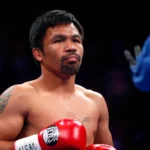


DAZN has reportedly agreed to acquire a controlling interest in The Ring, a development that could place one of boxing’s most influential publications under the control of one of its biggest broadcast platforms. The transaction has not been officially confirmed. Tris Dixon of Total Boxing reported on October 1 that multiple sources supported the central […]
DAZN has reportedly agreed to acquire a controlling interest in The Ring, a development that could place one of boxing’s most influential publications under the control of one of its biggest broadcast platforms.
The transaction has not been officially confirmed. Tris Dixon of Total Boxing reported on October 1 that multiple sources supported the central claim, but their accounts differed on whether control had already changed hands or the process remained ongoing. DAZN declined to confirm or deny what it characterized as market speculation, while Turki Alalshikh had not publicly announced a completed sale in the reporting reviewed.
That uncertainty matters. Until DAZN, Alalshikh or official records confirm the transaction, the reported agreement should not be treated as a finished deal.
But the larger question already deserves attention. The Ring does more than publish boxing news. It ranks fighters, recognizes champions and awards belts carrying historic significance. If a major broadcaster gains control of that operation, boxing will need more than another promise of independence.
It will need visible safeguards proving that commercial interests cannot influence editorial coverage or rankings decisions.
The Reported Deal Has Not Been Officially Confirmed
According to Total Boxing, one unnamed source said Alalshikh had sold DAZN control of The Ring and its championship belt. Another source told the outlet the agreement had been reached “quite a while ago,” while a third described the transaction as a process that was still being completed.
Those accounts support the same broad story but leave the most important procedural question unresolved: Has the deal formally closed?
Subsequent reporting added weight to the original claim. Insider Sport and Bad Left Hook reported that BoxingScene reporter Lance Pugmire had spoken with three boxing officials who supported the central account that DAZN was taking control. Even so, corroboration from unnamed officials is not the same as a public announcement or documented transfer of ownership.
DAZN told Total Boxing that company policy prevented it from confirming, denying or commenting on market speculation involving mergers, acquisitions, partnerships or rights agreements. That response neither validates nor disproves the report.
Alalshikh also had not publicly confirmed completion of the transaction in the reporting reviewed.
Several material details therefore remain unknown. No ownership percentage has been disclosed. There is no confirmed purchase price, no public explanation of whether Alalshikh would retain an interest and no definitive account of which assets would be included.
A controlling interest could involve the publication and website, but the scope might extend further. The Ring’s rankings operation, championship belts and event-branding rights are all commercially and symbolically important. Until the terms are disclosed, it is impossible to determine precisely what DAZN has reportedly agreed to control.
De La Hoya’s “Dead Asset” Attack Goes Beyond the Evidence
Oscar De La Hoya, whose Golden Boy Enterprises previously owned The Ring, responded aggressively to the report.
In a social-media video covered by Bad Left Hook on October 2, De La Hoya called The Ring a “dead asset” and accused its current operation of bias and propaganda. He also interpreted the reported DAZN transaction as evidence that Alalshikh was finished with boxing.
Those are De La Hoya’s opinions. They are not independently established facts.
His history with the magazine and his public disputes with Alalshikh provide important context for evaluating the remarks. De La Hoya has every right to criticize the direction of a publication he once controlled, but his characterization does not prove that The Ring’s coverage or rankings have been manipulated. It also does not establish Alalshikh’s future plans.
Questions about Alalshikh’s wider involvement intensified after the September 30 Fury–Joshua press conference. According to NY Fights, Alalshikh said his health had not been good during the previous four months and spoke about wanting help to complete his remaining boxing “wish list.”
He did not announce that he was leaving boxing.
World Boxing News connected the health comments and reported sale to the possibility of an exit, while Boxing News 24 correctly noted that transferring control of The Ring would not, by itself, prove Alalshikh was withdrawing from promotion or leaving his other boxing interests.
A sale could represent a strategic change, a financial decision or a shift in how one asset is operated. Without confirmation from Alalshikh, claims that it signals his departure remain speculation.
The ownership question is significant enough without turning it into an unsupported story about his health or intentions.
DAZN Control Would Create an Obvious Credibility Test
DAZN is not simply another prospective media owner entering boxing from a distance. It broadcasts major events and maintains commercial relationships throughout the sport.
That does not mean DAZN would interfere with The Ring. Ownership alone would not prove that favorable stories, rankings positions or championship recognition were being directed from the broadcast side of the company.
The conflict would exist at the level of incentives and perception.
A broadcaster benefits when the fighters appearing on its events are viewed as important, highly ranked and worthy of championship opportunities. The Ring helps shape those perceptions through its coverage, divisional rankings and belts. If the same commercial operator controls both the distribution platform and the institution making those judgments, readers are entitled to ask how the two functions are separated.
Consider the basic problem. A DAZN-contracted fighter could rise in The Ring’s rankings before appearing in a major DAZN event. That movement might be completely justified by the fighter’s results. But without transparent procedures, critics could still question whether commercial considerations influenced the decision.
The damage would not require proven manipulation.
Rankings depend on trust, and perceived conflicts can weaken that trust even when every individual decision is defensible. Once readers begin wondering whether a fighter’s platform affects his position, the credibility of the entire system becomes harder to protect.
That is especially dangerous in boxing, where rankings already vary across sanctioning bodies and frequently generate arguments over mandatory positions, title opportunities and the treatment of contenders aligned with different promoters.
The Ring has traditionally claimed a different kind of authority. Its championships are not sanctioning-body titles, yet fighters and promoters have valued them because the brand has carried historical legitimacy. If the publication’s rankings become viewed as another extension of a broadcaster’s business strategy, that distinction could disappear quickly.
The Report Does Not Prove Rankings Have Been Compromised
The concerns surrounding a possible DAZN takeover should not be converted into accusations unsupported by evidence.
The reporting does not prove the transaction has closed. It does not establish that DAZN has influenced—or intends to influence—The Ring’s editorial coverage, rankings or championship decisions. It does not validate De La Hoya’s allegations of bias and propaganda, and it does not make every current ranking illegitimate.
It also does not prove that Alalshikh is preparing to leave boxing.
These distinctions matter because legitimate scrutiny loses force when it becomes mixed with claims that run ahead of the available facts. The strongest argument is not that interference has already occurred. It is that the reported ownership structure would create risks serious enough to require enforceable protections.
Alalshikh announced his acquisition of The Ring from Golden Boy Enterprises in November 2024. Contemporary coverage from Insider Sport said he purchased the full publication and promised a new era featuring editorial independence and a restored rankings system.
A reported transfer to DAZN would not automatically mean those promises were broken. It would, however, reopen the same fundamental question under an ownership structure with even more direct connections to the fights and fighters being covered.
Independence cannot depend entirely on the owner saying it exists.
It must be built into the operation.
Transparency Would Matter More Than Another Promise
The first requirement is official confirmation. DAZN and Alalshikh should state whether an agreement has been completed, what ownership percentage is involved and whether either party retains additional rights or influence.
The included assets should also be identified. Readers deserve to know whether the transaction covers only the magazine and website or extends to the rankings, championship belts and event-branding business.
After that, The Ring would need a published editorial-independence policy explaining who controls hiring, story assignments, headlines and coverage decisions. The rankings operation would require its own protections because editorial independence and rankings independence are related but not identical.
Transparent criteria should explain how fighters enter, rise through and leave each divisional ranking. The identities and relevant affiliations of voters should be disclosed. Decisions involving fighters appearing on DAZN events should be subject to clear conflict-of-interest rules, including recusals where appropriate.
Independent oversight would provide another layer of protection. A rankings board insulated from DAZN’s broadcast and commercial departments could review disputed decisions, publish explanations for significant changes and establish a formal process through which fighters or representatives may challenge factual errors.
None of those measures would eliminate disagreement. Boxing rankings are inherently subjective, and reasonable observers will continue to reach different conclusions.
The objective is not universal agreement. It is confidence that the disagreement concerns boxing judgment rather than corporate preference.
If DAZN ultimately controls The Ring, the company could protect the publication’s credibility by accepting restrictions on its own influence. Without those restrictions, every controversial ranking or championship decision involving a DAZN-affiliated event could become a referendum on ownership.
That would be damaging for DAZN, The Ring and the fighters whose achievements deserve to be judged on their merits.
REAL TALK
Boxing already asks its audience to navigate a maze of promoters, broadcasters, sanctioning bodies and business alliances. Fans regularly see fighters separated by platform politics, titleholders assigned different levels of visibility and rankings that produce more confusion than clarity.
That environment makes The Ring’s independence more important, not less.
A broadcaster owning a boxing publication is not automatically disqualifying. Media companies frequently operate across multiple parts of an industry, and responsible ownership can coexist with credible journalism. The deciding factor is whether the separation between business interests and independent judgment is real, documented and enforceable.
Quiet assurances will not be enough here.
If DAZN gains control, it would have a commercial interest in the success of events and fighters that The Ring covers, ranks and potentially recognizes as champions. That conflict cannot be erased by insisting that everyone involved will behave professionally. It has to be managed through rules that remain effective when a ranking decision becomes commercially inconvenient.
The burden should not fall on readers to prove corruption before asking for transparency. The burden belongs to the owner to demonstrate that interference is structurally difficult and institutionally unacceptable.
Boxing cannot call rankings independent if the people benefiting from them can influence how they are made.
If this reported deal becomes official, protecting The Ring’s name will require more than acquiring its history.
DAZN would have to prove it cannot purchase its judgment.
LET’S TALK ABOUT IT
Can The Ring retain credible rankings and championship belts under the control of a major boxing broadcaster, or would the commercial conflict permanently weaken the brand’s authority?
What safeguards would convince you that DAZN’s interests could not influence The Ring’s editorial coverage, rankings or championship decisions?