Deontay Wilder Is Backed to Knock Out Jai Opetaia — But His Power Is Useless If He Cannot Pull the Trigger
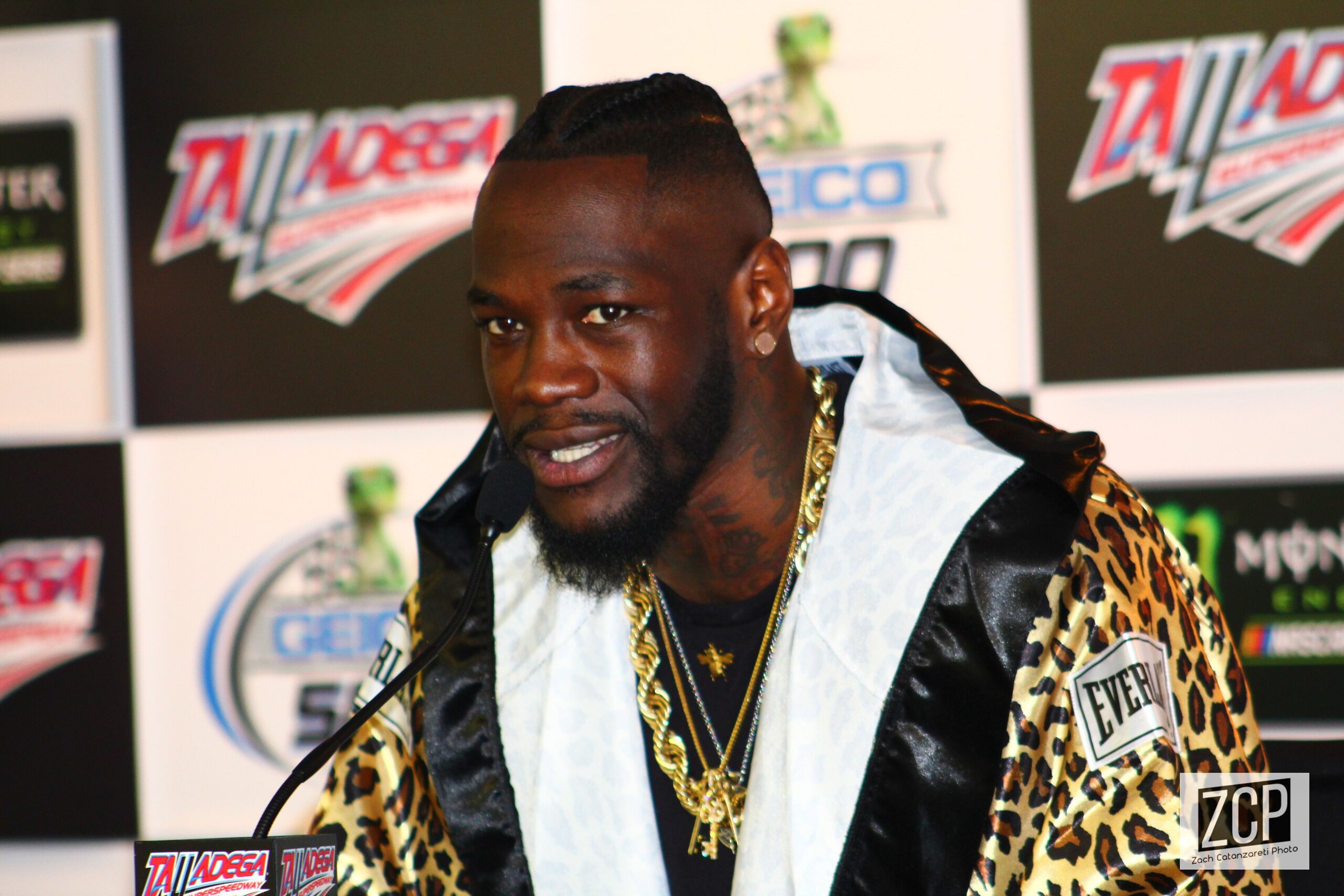
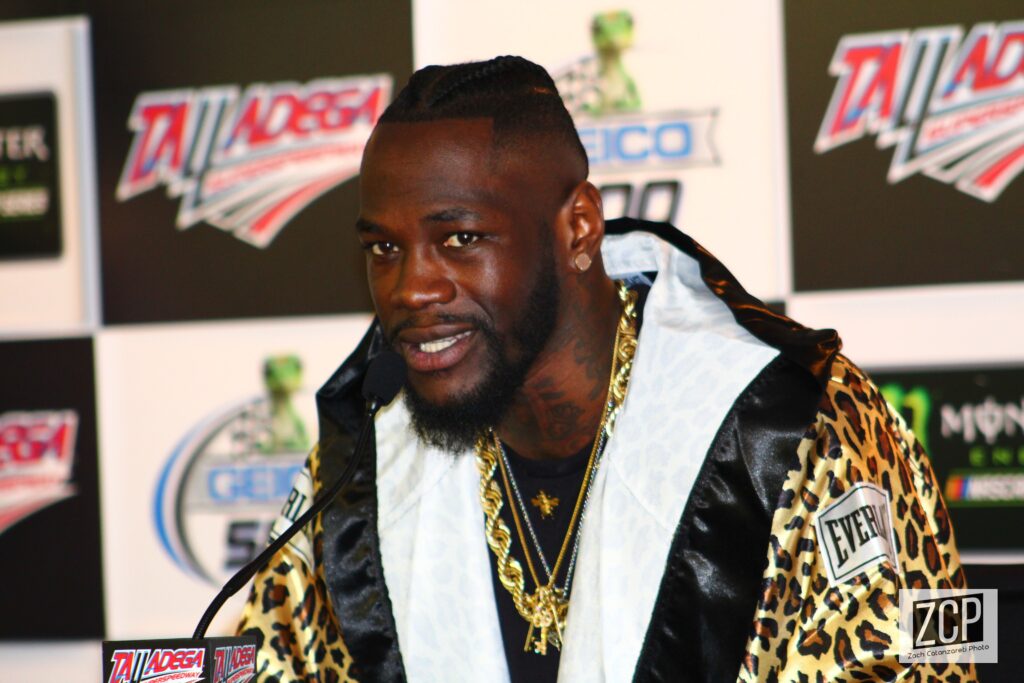
Deontay Wilder speaking at a press event in 2018.Image: Zach Catanzareti Photo / CC BY-SA 2.0 / Wikimedia Commons
Malik Scott believes Deontay Wilder will knock out Jai Opetaia when the former WBC heavyweight champion faces the unbeaten cruiserweight champion on December 11 at Principality Stadium in Cardiff, Wales.
The heavyweight matchup will take place on the Tyson Fury–Anthony Joshua card, which Netflix says will stream globally. Wilder enters with a record of 45-4-1, while Opetaia is listed at 31-0 as he moves above cruiserweight for the most dangerous assignment of his professional career.
Scott’s prediction directs attention toward the most obvious advantage in the fight. Wilder has recorded 43 knockouts, according to The Ring, and his right hand remains one of boxing’s most destructive weapons. Opetaia may be younger, faster and more active, but he will be facing a naturally larger former heavyweight champion capable of changing a fight with one clean punch.
That does not make the outcome simple.
Wilder’s power has never been the unresolved question. The concern is whether he can still recognize openings, create them and commit to throwing when an aggressive elite opponent is attempting to take control. His recent performances against Joseph Parker and Zhilei Zhang showed how little historic punching power matters when the punches do not come often enough.
Opetaia is not merely testing whether Wilder can still hurt an opponent.
He is testing whether Wilder can still pull the trigger.
Scott’s Warning Matters More Than His Knockout Prediction
Scott, Wilder’s former trainer and close friend, gave DAZN a direct prediction: “Deontay by knockout.” The Ring reported the comments while also detailing the conditions Scott believes Wilder must satisfy for that result to happen.
Scott described Opetaia as a special cruiserweight whose power remains dangerous throughout a fight. He warned that Wilder must begin fully alert, avoid retreating to the ropes and refuse to give Opetaia early opportunities. If Wilder remains switched on and lands cleanly, Scott believes the fight will end in a knockout.
The prediction is informed by Scott’s experience with Wilder, but it is not an impartial forecast. Scott has trained him, knows him closely and naturally understands the qualities that made him heavyweight champion. His confidence deserves consideration without being mistaken for certainty.
More importantly, Scott’s tactical warnings reveal the difficulty behind his pick.
Telling Wilder to stay off the ropes and deny Opetaia an early advantage acknowledges that the smaller fighter may be capable of establishing the pace. Opetaia is not expected to stand at a comfortable distance and wait for Wilder to load his right hand. His activity and southpaw offense could force Wilder to make repeated decisions under pressure.
That is where the fight becomes more complicated than power against size.
Wilder has often been dangerous while conceding rounds because opponents knew the threat could remain until the final bell. Waiting for one opening was acceptable when he remained confident that he would eventually see it and attack it. Against Opetaia, extended periods of inactivity could allow the cruiserweight champion to settle into the fight, close distance and make Wilder increasingly reactive.
Scott is predicting a knockout, but his own analysis suggests Wilder cannot afford to behave as though the knockout will create itself.
Wilder’s Recent Punch Output Is the Real Concern
The strongest argument against reducing this matchup to Wilder’s right hand comes from his defeats to Parker and Zhang.
CompuBox recorded Wilder landing 39 of 204 punches against Parker in December 2023, figures cited in contemporaneous reporting by Yahoo Sports and later highlighted by Boxing 247. Parker won a unanimous decision after preventing Wilder from establishing the rhythm or range needed to release his most dangerous weapon.
Wilder’s output fell even further against Zhang in June 2024. According to CompuBox figures published by ESPN and cited by Boxing 247, Wilder landed 16 of 95 punches before being stopped in the fifth round.
Boxing 247 interpreted those numbers as evidence of hesitation. That is the outlet’s analysis, not a confirmed explanation from Wilder or his team. Punch statistics can show how little a fighter threw or landed, but they cannot independently diagnose why he failed to act.
The distinction matters because several explanations may overlap. Wilder could have struggled with confidence, timing, balance, tactical uncertainty or the threat coming back at him. Age and accumulated damage may also influence how quickly a veteran responds to openings that once felt obvious.
Whatever the cause, the visible consequence was the same: Wilder spent long stretches waiting without producing enough offense to alter the fight.
His split-decision victory over Derek Chisora on April 4, 2026, kept him relevant. The Ring reported that result as Wilder’s most recent appearance, and earning a win after the Parker and Zhang defeats gave him a route back into a major event.
It did not automatically settle the question raised by those losses.
Chisora and Opetaia present different problems. Opetaia is unbeaten, confident and arriving after stopping Noel Mikaelian in the ninth round on September 12, according to The Ring. If he applies pressure while maintaining the speed that made him successful at cruiserweight, Wilder may not receive the time he needs to wait for a perfect right hand.
Wilder must demonstrate more than patience. He must initiate exchanges, throw when Opetaia enters range and remain offensively engaged after his first power shots miss.
A weapon that never leaves its holster cannot win a fight.
Opetaia Is Moving Up, but He Is Not Coming to Survive
Opetaia’s move to heavyweight creates legitimate uncertainty. Official weights will not be known until the weigh-in, and success at cruiserweight does not guarantee that his power or durability will translate against a former heavyweight champion.
Wilder is the naturally established heavyweight. He has spent his career dealing with the size and strength of fighters in that division, and one clean right hand could expose the cost of Opetaia moving beyond familiar territory.
That possibility should not turn Opetaia into a passive target in the analysis.
Netflix identifies him as the unbeaten reigning cruiserweight champion and lists his record at 31-0. The Ring credits him with 24 knockouts. His victory over Mikaelian gave him another stoppage before accepting a considerably more dangerous assignment against Wilder.
Opetaia’s strongest route to victory may be tied to the same qualities that make the matchup dangerous for him. He must enter range to work, but doing so consistently could prevent Wilder from operating at his preferred pace. Pressure, combinations and repeated movement around Wilder’s lead foot could make the former champion spend more time resetting than punching.
The risk will exist every time Opetaia closes distance.
Scott’s warning about the ropes is particularly important. If Wilder allows himself to be backed toward the perimeter, Opetaia could attack without giving him the space to extend the right hand properly. Wilder would then have to defend, create room and respond quickly rather than waiting for the action to slow.
Opetaia has never faced a professional assignment quite like this one. He must prove that he can absorb heavyweight force and maintain his effectiveness against a larger opponent.
Wilder faces a different burden. He must prove he can impose his danger before Opetaia’s pace turns theoretical advantages into practical control.
A Knockout Would Answer One Question, Not Every Question
If Wilder knocks out Opetaia, the victory would restore considerable credibility after the Parker and Zhang defeats. It would demonstrate that his power still translates against an unbeaten champion when he can create a clean opening.
It would not erase what happened in those earlier fights.
One successful right hand would confirm that Wilder remains dangerous. It would not necessarily prove that his output, timing and confidence have completely returned across the course of a demanding heavyweight fight. The manner of the performance would matter alongside the result.
Does Wilder begin with purpose, or surrender the early rounds while waiting? Does he throw when Opetaia moves into range? Can he operate away from the ropes? Does he remain active after missing his first major attempts?
Those details will reveal more than the knockout prediction alone.
An Opetaia victory would also require proper context. Defeating Wilder would establish that he can beat a dangerous former heavyweight champion, but it would not answer every question about how he matches up with naturally larger heavyweights across the division. Wilder’s recent record makes him a meaningful test without making him a complete representation of the heavyweight landscape.
The contracted distance should not become part of the analysis until it is officially clarified. Boxing 247 has described the matchup as a 10-round fight, while other reporting has listed 12 rounds. Netflix’s published card does not specify the distance.
What is clear is that both fighters are entering with something important to prove.
Opetaia must show that his skills, pressure and durability survive the move upward. Wilder must show that the right hand remains an active part of his offense rather than a threat everyone discusses while he waits for an opening that never arrives.
LET’S TALK ABOUT IT
Does Wilder’s knockout power make him the rightful favorite against Opetaia, or do his low-output performances against Parker and Zhang suggest that his greatest weapon is becoming harder to use?
And if Wilder struggles to let his hands go again, would that reveal more about his remaining confidence and timing than the result itself?
Outlets cited in this story
- Yahoo Sports
- Boxing 247
- The Ring
- ESPN
- DAZN
Spot an error? Send a correction.
More on Deontay Wilder
All 15 Deontay Wilder stories →
Deontay Wilder and Jarrell Miller Renew Heavyweight Rivalry — But the Fight Remains Unconfirmed
Deontay Wilder needs a new opponent for December 11, and Jarrell Miller says he has been contacted about taking the assignment. That possibility has revived a longstanding heavyweight rivalry, producing…
Deontay Wilder Has Five British Volunteers — Each One Brings a Different Risk
Deontay Wilder needs a new opponent, and Britain’s heavyweight division has not been shy about offering options. Jai Opetaia has withdrawn from his scheduled fight with Wilder on the December…
Jai Opetaia Withdraws From Deontay Wilder Fight — But Derek Chisora Claims Sparring Was the Real Cause
Jai Opetaia’s heavyweight gamble has been placed on hold before he could prove whether his championship qualities at cruiserweight would translate against one of boxing’s most dangerous punchers. Opetaia was…
Bakhodir Jalolov Suggested as Deontay Wilder’s Replacement Opponent — But No Negotiations Have Been Reported
Deontay Wilder needs a new opponent for the December 11 Tyson Fury–Anthony Joshua undercard in Cardiff, and the heavyweight selected could reveal more than organizers intend. Jai Opetaia withdrew from…