






Anthony Joshua and Tyson Fury are finally going to fight, but the road to December 11 has exposed something almost as fascinating as the matchup itself: apparently, even the contracts governing one of the biggest fights in British boxing weren’t always saying the same thing. First there was disagreement over where the fight would take […]
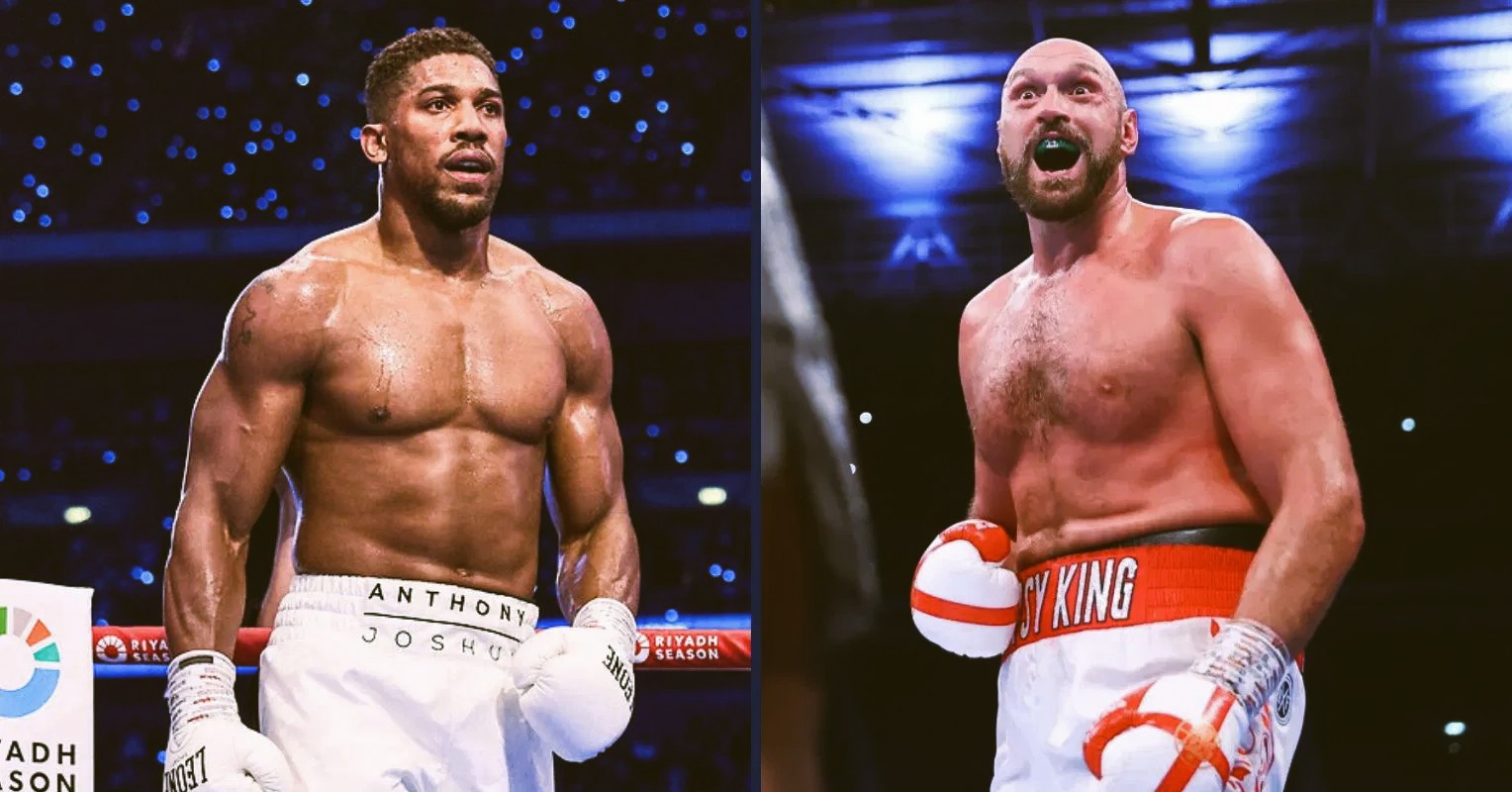
Anthony Joshua and Tyson Fury are finally going to fight, but the road to December 11 has exposed something almost as fascinating as the matchup itself: apparently, even the contracts governing one of the biggest fights in British boxing weren’t always saying the same thing.
First there was disagreement over where the fight would take place. Joshua’s contract reportedly required the event to be staged in the United Kingdom, while Fury’s agreement apparently didn’t contain the same restriction. There were also inconsistencies involving dates. Then Eddie Hearn revealed another discrepancy, and this one deserves considerably more attention because it involved drug testing. According to Hearn, Joshua’s contract required testing to begin when the original agreements were signed, while Fury apparently wasn’t under the same contractual obligation at that point.
That distinction is important because it’s very easy for this story to become something it isn’t. Hearn wasn’t accusing Fury of failing a drug test, and Anthony Joshua publicly said he wasn’t accusing Fury of wrongdoing either. The issue was that Joshua believed both fighters were supposed to be subjected to the same testing protocol, only to discover that the paperwork apparently didn’t require the same thing from both sides.
For a fight this big, that’s a remarkable situation.
The Problem Wasn’t Necessarily Fury — It Was the Paperwork
Hearn was actually careful about how he discussed the situation. He said the testing protocol hadn’t been followed in the form Joshua’s side understood it, but he also acknowledged that Fury may not have been contractually required to enroll when Joshua did. In other words, if Hearn’s description of the agreements is accurate, Fury wasn’t necessarily refusing to honor his contract. The two contracts may simply have created different obligations.
That changes the entire conversation.
It’s one thing if two fighters agree to identical drug-testing requirements and one fighter refuses to comply. It’s something completely different if Fighter A signs an agreement requiring immediate enrollment while Fighter B signs a separate agreement allowing him to enroll later.
In that situation, yelling at Fighter B doesn’t solve the underlying problem.
The real question becomes how two agreements governing the same heavyweight fight ended up establishing different expectations about something as fundamental as anti-doping testing.
That’s especially difficult to understand when we’re talking about Joshua-Fury. This isn’t a small regional show where everybody is scrambling to complete paperwork a few days before the event. It’s a global heavyweight event involving enormous purses, major promotional interests, Netflix distribution and some of the most experienced people in combat sports.
The fight is officially scheduled for December 11 at Principality Stadium in Cardiff.
If any boxing event should have every important detail aligned between both fighters, you would expect this to be the one.
Joshua Had a Reason to Ask Questions
Joshua eventually made the issue public by posting correspondence from VADA, the Voluntary Anti-Doping Association. The email asked whether Fury intended to enroll and noted that opponents are typically enrolled at the same time. Joshua made a point of saying he wasn’t accusing Fury of anything.
That was an important clarification because drug-testing conversations can become accusations extremely quickly.
The existence of a testing discrepancy isn’t evidence that somebody was using prohibited substances. It doesn’t prove Fury was attempting to avoid testing, particularly if his own contract didn’t require him to enter the program at the same time Joshua did.
But Joshua was still entitled to want clarity.
If you’re preparing to fight another heavyweight, especially in an event of this magnitude, there’s nothing unreasonable about wanting assurance that both fighters are operating under comparable anti-doping conditions. The concern isn’t merely catching somebody after the fact. Effective testing is also supposed to create a deterrent throughout the preparation period.
That’s why timing matters.
Testing somebody for several months isn’t necessarily equivalent to testing somebody for several weeks. The longer and less predictable the testing window, the more difficult it becomes to plan around it.
So even without accusing Fury of anything, Joshua’s side had a legitimate reason to ask why the testing periods weren’t aligned.
Fury Has Now Enrolled — But That Doesn’t Erase the Original Problem
The immediate controversy appears to have been resolved. Current reporting says Fury has now entered the VADA testing program and supplied the information necessary for testing, clearing one of the issues that had threatened to interfere with the promotional launch of the fight.
That’s good news.
It means the conversation no longer needs to revolve around whether Fury is going to enroll. Both fighters can move forward toward December 11 with testing in place.
But resolving the problem doesn’t make the way it developed any less interesting.
The drug-testing issue followed an earlier contractual disagreement over location. Joshua’s agreement reportedly specified the United Kingdom, while Fury’s apparently allowed greater flexibility, which helped create the debate over Cardiff versus Madison Square Garden. Eventually Cardiff won out, and the fight was formally announced for Principality Stadium.
Look at the pattern.
Different expectations over location.
Different expectations over timing.
Different expectations over when drug testing begins.
At some point, the question stops being whether Joshua or Fury is being difficult and becomes why the agreements weren’t synchronized before everybody signed them.
This Is What Happens When Boxing Doesn’t Have One Central Rulebook
This is where the story becomes much more interesting than another round of Joshua-versus-Fury drama.
Boxing doesn’t operate like the NFL, NBA or even UFC. There isn’t one central league controlling every major event under one contractual and regulatory structure. Major fights can involve separate promoters, managers, lawyers, broadcasters, financiers, sanctioning bodies, athletic commissions and other commercial partners, all negotiating different pieces of the same event.
That decentralized structure is one reason boxing can produce enormous independent events.
It’s also one reason making those events can become unbelievably complicated.
Joshua and Fury can agree that they want to fight, yet their respective agreements can apparently contain different requirements about where the fight happens and when testing begins.
That’s not really a boxing problem inside the ring.
It’s an infrastructure problem outside it.
And the bigger the fight becomes, the more expensive those inconsistencies can become.
Imagine if the drug-testing discrepancy hadn’t been discovered until considerably later. Imagine if one fighter believed the other had violated an agreement when the other fighter’s contract never contained the same requirement. Suddenly you could have lawyers arguing about breach, promoters publicly blaming one another and fighters questioning whether the event should proceed.
All because two documents describing the same fight didn’t describe every important obligation the same way.
Drug Testing Should Be One of the Easy Things to Standardize
There are plenty of legitimate reasons for Joshua and Fury to have different contractual terms.
They aren’t identical commercial entities. They may receive different compensation structures, sponsorship arrangements, ticket allocations, promotional obligations and other individualized provisions.
That’s normal business.
Drug testing feels different.
If two fighters are entering the same ring under the same rules, there is a strong argument that the fundamental testing protocol should apply equally to both of them: the same program, the same enrollment period and the same general expectations surrounding availability for testing.
That doesn’t guarantee nobody cheats. No testing system can promise that.
It does eliminate one unnecessary question.
Neither fighter should be wondering whether the other person is operating under a materially different anti-doping timeline because somebody failed to make the contracts match.
This becomes even more important at heavyweight. Joshua and Fury are enormous professional fighters capable of producing extraordinary physical force. Anti-doping protocols aren’t simply about protecting the integrity of records and championships; they exist within a sport where the consequences of an unfair physical advantage can involve somebody else’s health.
That’s why this shouldn’t be dismissed as another quirky detail in an unusually difficult negotiation.
The Fight Has Taken So Long That Nobody Wants Another Reason for It to Collapse
There is also a practical reality surrounding all of this.
Boxing fans have been hearing about Joshua-Fury for years.
There were periods when both men held essentially all of the major heavyweight championships and an undisputed fight appeared possible. Negotiations came and went. Careers changed. Oleksandr Usyk eventually defeated both men, and the fight that once represented undisputed heavyweight supremacy became something different.
Yet the public still wanted it.
Now it’s finally scheduled.
December 11.
Cardiff.
Principality Stadium.
At this stage, nobody needs another contractual surprise.
The location issue has been resolved. The drug-testing issue appears to have been resolved. The promotional disputes surrounding the event have created their own headlines.
Eventually the business has to disappear into the background and allow the boxing to become the story.
REAL TALK
What stands out about this situation isn’t that two powerful sides disagreed. That happens in every major negotiation. It’s that something can be written clearly in one person’s agreement and still fail to produce the result that person reasonably believed had been agreed upon for everybody.
Joshua apparently had language requiring a particular testing timeline. From his perspective, that protection was in writing. Yet according to Hearn, Fury’s agreement didn’t necessarily create the corresponding obligation.
That’s a useful reminder of how contracts actually work. It isn’t enough to know what your agreement says when the thing you’re being promised depends on somebody else’s agreement saying the same thing.
That distinction matters in boxing because so many major fights are built through separate contractual relationships. One side can believe a condition has been secured while the other side may never have agreed to it in exactly the same form.
Nobody has to be dishonest for that arrangement to become a mess.
Sometimes the problem isn’t somebody breaking the agreement.
Sometimes the problem is that everybody didn’t sign the same agreement in the first place.
In this case, the situation appears to have reached the sensible destination. Fury is reportedly enrolled in VADA testing, Joshua is moving forward, and the fight remains scheduled.
But boxing shouldn’t need a public controversy to arrive at something that could have been straightforward from the beginning.
When two heavyweights are preparing to punch each other for 12 rounds, the question of whether they’re being tested under comparable conditions shouldn’t require interpretation.
Put the same requirement in both contracts.
Then everybody can argue about something much more interesting.
Like who actually wins the fight.
LET’S TALK ABOUT IT
Should major fights require identical drug-testing language in both fighters’ contracts, or is it enough that both fighters eventually enter the same testing program before fight night?
And with the venue, testing and other contractual issues that surrounded Joshua-Fury, does boxing’s system of separate promoters and separate agreements give fighters necessary negotiating power, or does it make major fights unnecessarily difficult to complete?