Mario Lopez Replaces Max Kellerman on *Inside The Ring* — But Boxing Knowledge Cannot Become the Trade-Off
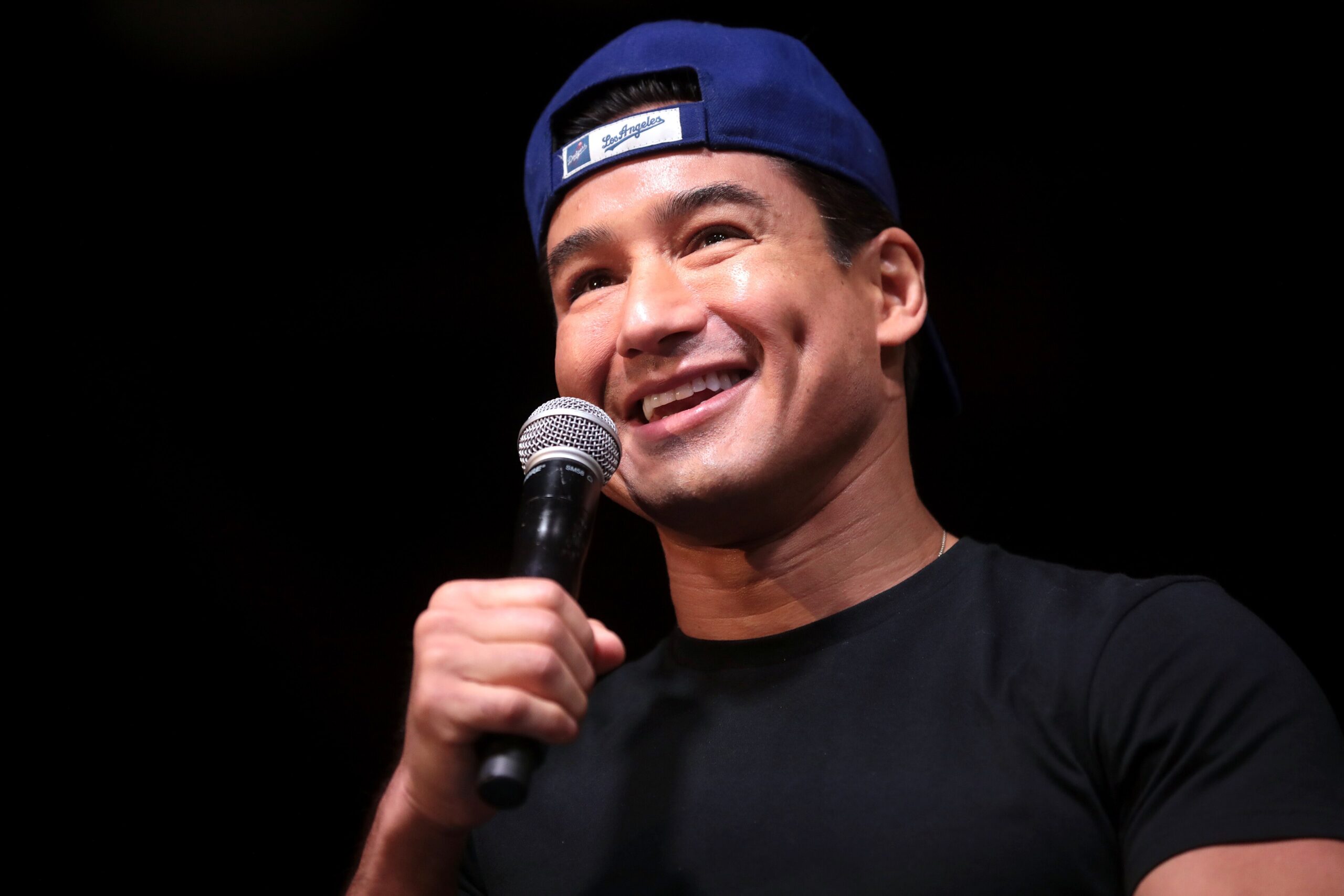
Mario Lopez smiles while speaking into a microphone at a Phoenix event.Image: Gage Skidmore from Surprise, AZ, United States of America / CC BY-SA 2.0 / Wikimedia Commons
Mario Lopez will replace Max Kellerman as the full-time host of Inside The Ring when the boxing program begins its second season on October 8. It is a significant change for a show that launched with Kellerman and reporter Mike Coppinger as its original co-hosts in September 2025.
According to The Ring, Lopez will lead the revamped program alongside the returning Coppinger and a rotating panel of analysts. Regular live episodes are scheduled for Thursdays at 2 p.m. ET, 11 a.m. PT and 7 p.m. BST on DAZN and The Ring’s YouTube channel.
The announcement confirms who will occupy the host’s chair, but it does not explain why Kellerman is leaving it. Front Office Sports reported that neither Kellerman nor former NFL player LeSean McCoy will return for Season 2. The outlet also said representatives for DAZN and producer Omaha Productions did not immediately comment on the personnel changes.
That absence of an explanation matters. It means Kellerman should not be described as fired, pushed out or voluntarily departing unless he or the program’s decision-makers provide further information.
The confirmed change is still enough to raise a larger question. Lopez brings television polish, mainstream recognition and legitimate experience covering boxing. Kellerman represented something different: a deeply informed, historically grounded approach to analyzing the sport.
Season 2 will show whether Inside The Ring can use Lopez’s accessibility to bring more people into serious boxing conversations—or whether polished presentation will begin replacing the scrutiny those conversations require.
Lopez Brings More Than a Recognizable Name
It would be easy to reduce Lopez’s appointment to a celebrity casting decision. His career outside boxing makes him recognizable to a much broader audience than the average fight analyst, and that familiarity could help Inside The Ring reach viewers who would not ordinarily watch a weekly boxing discussion program.
But Lopez is not entering the role without boxing credentials.
The Ring noted that he has worked as a guest color commentator for HBO International and Golden Boy Promotions. He also co-hosted The 3 Knockdown Rule podcast with veteran boxing writer Steve Kim. Those roles required more than an ability to read a teleprompter or introduce a segment. They placed Lopez inside conversations about fighters, matchmaking, performances and the business surrounding the sport.
That experience gives the appointment credibility. Lopez understands boxing’s language, personalities and rhythms, and he has spent enough time around the sport to avoid feeling like an outsider inserted solely for promotional value.
He also possesses skills that can help a television program. Hosting requires controlling the pace of a discussion, directing questions toward the right panelist, transitioning between subjects and making complicated issues understandable without draining them of substance. Lopez has spent years working in television and should arrive comfortable with those responsibilities.
For Inside The Ring, that combination has obvious potential. Boxing frequently struggles to communicate with viewers who are interested in major fights but do not follow every sanctioning-body decision, promotional conflict or undercard result. A host capable of welcoming those viewers without talking down to established fans could make the program more useful.
Accessibility is not the problem.
The question is what the show asks Lopez to make accessible.
Kellerman Represented a Different Kind of Boxing Authority
Kellerman’s value has never been based entirely on conventional hosting polish. His strongest contribution to boxing broadcasting has been his ability to connect what is happening now with the sport’s technical and historical context.
He can discuss a fighter’s tactical choices while recognizing the styles that influenced them. He can challenge an easy narrative, question whether a heavily promoted contender has earned his position and place a performance within a much longer boxing tradition.
That kind of authority is difficult to replace because it is accumulated over years rather than manufactured through production.
Coppinger publicly wrote that he would miss working with Kellerman and praised the guidance Kellerman provided, according to Boxing News 24/7. That reaction does not explain the circumstances behind the change, but it offers some indication of what Kellerman contributed behind the scenes as well as on camera.
His departure therefore represents more than a change in presentation. It removes one of the program’s central analytical identities.
That does not mean Lopez must imitate Kellerman. Attempting to reproduce another broadcaster’s delivery would probably weaken the new format. Lopez needs to lead the show according to his own strengths: energy, familiarity, clarity and an ability to communicate across different levels of boxing interest.
The responsibility for replacing Kellerman’s analytical weight may instead fall on the rotating panel.
The Ring has not yet identified every analyst who will participate, leaving one of the most important parts of the revamped format unresolved. A strong group of contributors could make the program broader without making it shallower. Trainers, former fighters, experienced reporters and independent analysts could bring different forms of expertise while Lopez keeps the conversation moving.
A weak panel would expose the opposite problem. If the analysts are selected primarily for name recognition, promotional relationships or agreeable television personalities, the show could become easier to watch while offering viewers less worth hearing.
Lopez does not need to be Kellerman.
But someone on Inside The Ring still needs to ask the questions Kellerman was expected to ask.
The Record Does Not Explain Why Kellerman Is Gone
The timing of Kellerman’s departure will inevitably encourage speculation, particularly because World Boxing News reported that he recently received criticism over his presentation during the Tyson Fury–Anthony Joshua press conference.
That surrounding context should not be confused with evidence.
World Boxing News explicitly stated that there is no evidence connecting the reaction to that press conference—or separate criticism from Oscar De La Hoya—to the hosting change. No disclosed statement from The Ring, DAZN, Omaha Productions or Kellerman establishes that the criticism played any role in the decision.
The same limitation applies to every other proposed explanation.
There is no confirmed information in the available reporting about Kellerman’s contract, private negotiations or whether he wanted to continue. There is also no disclosed explanation for McCoy’s reported departure. Until someone directly involved addresses those issues, claims about cost-cutting, ratings, internal conflict or dissatisfaction with the first season remain speculation.
What is known is considerably narrower. The Ring announced Lopez as the new full-time host after Season 1 concluded in late August. Front Office Sports reported that Kellerman and McCoy will not return. Coppinger remains with the program, and the show is adding a rotating group of analysts.
Those facts establish a format change, not its motivation.
It is reasonable to interpret Lopez’s appointment as an effort to make the program more inviting to a broader audience. His mainstream profile makes that possibility obvious. But no source has confirmed that expanding the audience was the reason Kellerman was replaced, and the appointment alone does not prove that Inside The Ring intends to weaken its analysis.
The actual content of Season 2 will provide better evidence than assumptions surrounding its new host.
Season 2 Must Prove Accessibility and Scrutiny Can Coexist
The October 8 premiere will offer an initial look at the new structure, but the show should not be judged entirely by one episode. Lopez will need time to establish chemistry with Coppinger, manage a changing panel and determine how aggressively he wants to guide debates.
Several episodes should reveal what the revamped program values.
Does it examine why important fights are not being made, or merely promote the bouts already placed on DAZN’s schedule? Does it challenge questionable rankings and mismatches? Does it examine the influence of promoters and sanctioning organizations with the same energy it uses to celebrate fighters?
Those questions matter because boxing coverage can easily drift into promotion. Networks need attractive programming, promoters need attention for their events, and fighters need platforms to build their names. None of those interests are automatically improper, but a serious boxing show must still be capable of examining the sport’s uncomfortable realities.
That is where the rotating panel becomes essential. Lopez can make a difficult discussion approachable, but the analysts must supply expertise and independence. Coppinger can provide reporting, yet the format also needs voices capable of explaining what happens inside the ring and challenging what happens outside it.
The schedule remains another area to watch. The Ring has officially announced regular Thursday broadcasts, while Front Office Sports reported that the program could operate on a twice-weekly basis. Until the outlets or producers clarify the format, the confirmed Thursday slot is the reliable schedule.
Expansion would create opportunity as well as pressure. More episodes could allow the show to react quickly to breaking news and devote greater attention to divisions or fighters who receive limited mainstream coverage. It could also produce repetitive programming if the analysis is not strong enough to support the additional airtime.
Ultimately, Lopez’s appointment should be evaluated by what the show becomes—not by the assumption that a famous host automatically represents a retreat from serious boxing coverage.
His experience gives the experiment a fair chance.
The substance surrounding him will determine whether it succeeds.
LET’S TALK ABOUT IT
Does Mario Lopez have the right combination of mainstream appeal, television skill and boxing knowledge to lead Inside The Ring?
And should the rotating analyst panel be expected to replace the technical authority Max Kellerman brought to the show’s first season?
Outlets cited in this story
- World Boxing News
- Boxing News 24
- The Ring
- DAZN
Spot an error? Send a correction.
Keep reading
More Business of Boxing →
Senate Unanimously Passes Ali Boxing Revival Act — But Reform Could Concentrate Boxing’s Power
The United States Senate has unanimously passed the Muhammad Ali American Boxing Revival Act, advancing the most consequential federal boxing reform proposal in years while opening a larger debate about…
Tyson Fury Gets Tony Sims’ Vote Over Anthony Joshua — But the Prediction Exposes What Boxing Lost
Tyson Fury should enter his long-awaited fight with Anthony Joshua as the favorite, according to Joshua’s former trainer Tony Sims. That sounds like a clear prediction until Sims explains why…
Shakur Stevenson’s Mandatory Defense Heads Toward Purse Bids — But His Market Value Is the Bigger Fight
Shakur Stevenson became the WBO junior-welterweight champion by defeating Teofimo Lopez by 12-round unanimous decision on January 31, according to the WBO’s February 2026 divisional record. Now the business surrounding…
Shakur Stevenson’s Next Deal Faces Eddie Hearn’s Financial Line — But His Value Goes Beyond the Ring
Shakur Stevenson has already answered the competitive question. The unbeaten WBO junior-welterweight champion is 25-0 with 11 knockouts, according to BoxingScene, and his dominant victory over Teofimo Lopez reinforced his…